Certified Radon Testing in New York: Safeguarding Indoor Air Quality from NYC to the Hudson Valley
With over half of New York’s counties sitting in high-risk radon zones, protecting your home takes more than guesswork. Turn an invisible health risk into a data-backed certainty with certified local testing.
Professional Radon Testing Services: Protecting Your Family
When purchasing property in Manhattan, Brooklyn, Queens, Staten Island, the Bronx, or the suburbs of Westchester, Long Island, and the Hudson Valley including Poughkeepsie, Beacon, Kingston, Middletown, Warwick, and the Philipstown/Putnam County area structural integrity is only half the story. The air you breathe is the most critical safety factor. Radon, a naturally occurring radioactive gas, is the second leading cause of lung cancer in the United States, responsible for approximately 21,000 deaths annually. At Inspecwise, we provide forensic-level Radon Testing in New York, adhering to strict NYS Department of Health (NYSDOH) guidelines and EPA (Environmental Protection Agency) standards. Our mission is to transform an invisible, odorless, and tasteless threat into a data-backed certainty, ensuring your multi-million dollar investment is truly a safe haven.
What is Radon and Why is New York at Risk?
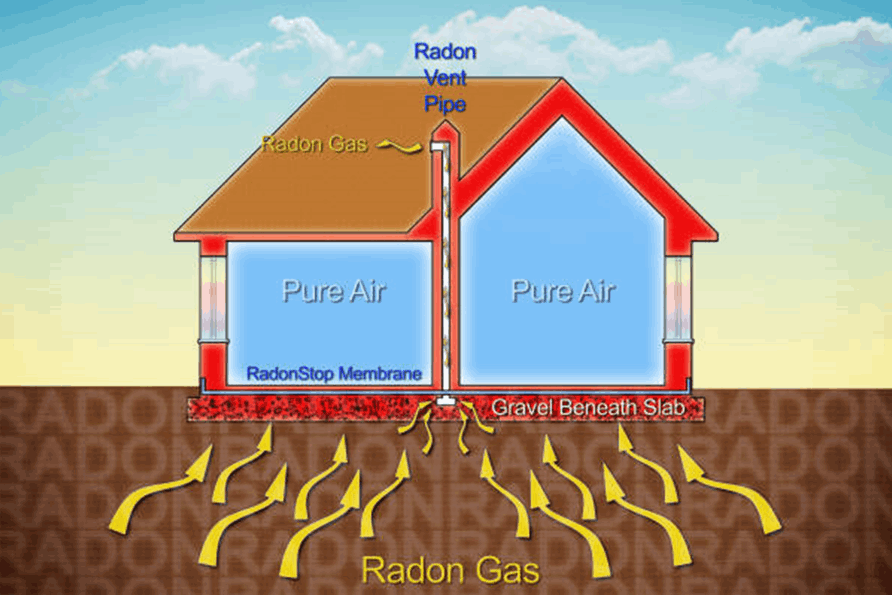
Radon is produced by the natural decay of uranium in the soil and rock beneath our foundations. Because New York’s geology is diverse ranging from the rocky terrain of Westchester and the Bronx to the glacial tills of Staten Island and Long Island, and the granite-heavy bedrock of the Hudson Valley (Dutchess, Ulster, Orange, and Putnam Counties) every home has a unique risk profile.
Common Radon Entry Points
- Micro-cracks in foundation walls and basement floors.
- Sump pumps and floor drains.
- Gaps in suspended floors and service pipes.
- Pores in hollow concrete blocks (CMUs).
The Health Stakes: Why Radon Exposure Matters
The danger of radon lies in its invisibility. Because it has no smell, taste, or color, most homeowners have no idea they’re being exposed until a certified test reveals the problem. Radon decays into radioactive particles that, when inhaled, can damage lung tissue over time. According to the EPA and the U.S. Surgeon General, radon exposure is responsible for far more lung cancer deaths annually than secondhand smoke, and the risk compounds significantly for smokers a smoker living in a home with elevated radon levels faces a dramatically higher lifetime risk than a non-smoker in the same home. This is precisely why the EPA, the NYSDOH, and virtually every radiological health authority recommend testing every home at least once, regardless of its age, construction type, or foundation style, and retesting every two years or after any major renovation to the basement or foundation.
DIY Radon Kits
Home improvement stores sell inexpensive charcoal-based radon kits, making it tempting to treat radon testing as a weekend DIY project.
The Flaw: A charcoal canister has no way of logging whether a window was opened, whether the device was bumped, or whether outdoor weather conditions skewed the reading during the test period.
The Risk: Most real estate attorneys, lenders, and co-op boards in New York will not accept DIY results as the basis for a mitigation credit or closing condition.
Certified Continuous Monitoring
A professional continuous radon monitor produces an hour-by-hour data log with built-in tamper detection, giving both buyers and sellers a defensible, third-party-verified number rather than a single static reading mailed off to a lab weeks later.
Transaction Secure: For a transaction where thousands of dollars in mitigation credits may be on the table, a certified inspection completely secures your investment.
The Reality: The modest cost difference between a DIY kit and a professional inspection is rarely worth the risk of a disputed or rejected result.
New York Radon Risk Zones
According to New York State radon zone data, 34 of New York’s 62 counties fall into Zone 1 (high-risk), meaning more than half of homes tested show levels above the EPA action threshold. Radon risk is generally classified into three radon zones.
Counties such as Ulster, Orange, Putnam, Dutchess, Westchester, and Staten Island (Richmond County) sit on uranium-rich bedrock and are historically classified as Zone 1 or Zone 2.
This means homes in Poughkeepsie, Beacon, Kingston, Middletown, Warwick, and Philipstown should be considered high-priority for testing.
⚠️ Note: The EPA and NYSDOH are clear—zone maps are a planning guideline, not a diagnosis. The only way to know your home’s actual radon level is a certified test.
The Inspecwise Forensic Testing Protocol
Standard DIY charcoal kits (also called charcoal canisters or alpha track detectors) can be inaccurate and easily tampered with. Inspecwise employs professional-grade Continuous Radon Monitors (CRM) to provide an unshakeable profile of your home’s indoor air quality.
- Placement in Lowest Livable Area: Our certified inspectors place devices in the lowest habitable space (basements or crawl spaces) common in Queens and Brooklyn brownstones, as well as Hudson Valley farmhouses and colonials.
- 48-to-72-Hour Deployment (Short-Term Test): To get an accurate snapshot of soil gas accumulation, our high-sensitivity monitors stay on-site for a minimum of 48 hours. This is the standard short-term radon test used in real estate transactions.
- Hourly Data Logging: Our monitors record fluctuations in pressure and temperature, preventing the false positives or negatives common in basic test canisters.
- Forensic Lab Analysis: Data is processed and delivered in a comprehensive digital report within 24 hours of device retrieval.
For homeowners not in a time-sensitive real estate transaction, we also offer long-term radon testing (90+ days), which the NYSDOH considers a more accurate representation of year-round exposure.
The “Inspecwise” Edge: Accuracy Where it Matters Most
In the competitive NYC and Hudson Valley real estate markets, a delayed or inaccurate test can derail a closing. We provide the technical superiority required for high-stakes transactions:
- Anti-Tamper Monitoring: Our digital sensors track if the device was moved or if windows were opened during the test period, ensuring a “Clean” and legal data set for attorneys and lenders.
- NYS-Certified Expertise: We are fully licensed, AARST-NRPP certified, and stay current on NYS Energy Codes and NYSDOH indoor air quality initiatives.
- Rapid Digital Integration: Your radon data is integrated directly into your 24-hour Property Condition Report, featuring high-definition explanations of findings.
- Beyond Just Testing: We leverage Infrared Thermal Imaging alongside radon testing to identify the exact moisture or crack locations where radon may be seeping through your basement envelope. Furthermore, we look at the home holistically; while soil gases are an underground risk, our professional drone roof inspection services ensure the upper envelope of your property is just as secure.
FAQs
How much does professional radon testing cost in New York?
In the NYC and Long Island metro areas, radon testing as an add-on to a home inspection typically ranges from $200 to $450. This is a negligible investment considering that radon mitigation systems can cost between $1,200 and $3,500 — a cost that can often be negotiated as a seller’s credit. Compared to the quality of work we offer, our rates are among the most competitive in the region.
Is radon more common in certain NYC boroughs or Hudson Valley counties?
While radon can be found anywhere, Staten Island (Richmond County), Westchester County, and Hudson Valley counties like Ulster, Orange, and Putnam have higher concentrations of uranium-rich bedrock, historically leading to higher-than-average readings compared to the sand-based soil of eastern Long Island. However, the EPA recommends testing every home, regardless of geography.
Can I sell a house in NY with high radon levels?
Yes, but you are required by law to disclose the results of any radon tests performed. Most Manhattan, Queens, or Hudson Valley buyers will request a mitigation system as a condition of sale. Finding this issue early during the listing process allows sellers to address it before it delays a deal.
Is radon testing required in NY?
New York State does not mandate radon testing for every home sale, but it is standard practice in most residential real estate transactions and is often required by mortgage lenders in high-risk zones. Schools and certain public buildings do have specific NYSDOH radon testing requirements.
What is a radon inspection, exactly?
A radon inspection involves placing a certified continuous radon monitor (CRM) in the lowest livable area of a home for 48–72 hours to measure airborne radon concentration in picocuries per liter (pCi/L), followed by a lab-analyzed digital report.
How do I check for radon gas in my home?
The most reliable method is a professional short-term test using a continuous radon monitor, which detects tampering and logs hourly data. DIY charcoal kits are available but are more prone to inaccurate readings from humidity, temperature swings, or improper placement.
Does Long Island have radon?
While Long Island’s sand-based soil generally produces lower average readings than Westchester or the Hudson Valley, radon has been detected throughout Nassau and Suffolk Counties, and the EPA still recommends testing every home regardless of regional averages.
How long does a radon inspection take?
A standard short-term test requires the monitor to remain undisturbed on-site for 48 to 72 hours, with digital results delivered within 24 hours after retrieval meaning most clients have a complete report in hand within four days of scheduling.
Who does radon testing near me?
Radon testing should always be performed by a licensed, AARST-NRPP certified radon measurement professional rather than a general contractor or the homeowner alone, since accredited certification ensures the equipment is properly calibrated and the results will be accepted by attorneys, lenders, and municipal offices throughout NY.
Can radon affect my water supply?
Yes, radon can dissolve and accumulate in underground water sources, such as private wells. When this water is used in your home for showering, washing dishes, or cooking, the radon gas is released into the air, contributing to the overall indoor radon levels. If your home relies on well water, it is highly recommended to combine your radon testing with our comprehensive Water Quality Testing service to ensure your family’s drinking and breathing environment is completely safe.
Radon Mitigation Services in New York
Testing is only half the job. If your levels come back at or above 4.0 pCi/L, Inspecwise connects you with certified radon mitigation and abatement specialists across the NYC metro and Hudson Valley.
A professionally installed sub-slab depressurization system (the most common mitigation method) typically costs $1,200–$1,500 for a standard system, though homes with complex foundations (common in older Brooklyn brownstones or Hudson Valley farmhouses) can range from $1,500–$3,500.
What to Expect from Radon Mitigation
- Vent pipe and fan system that safely redirects radon gas above the roofline.
- Post-mitigation testing to verify radon levels are below 4.0 pCi/L.
- Documentation to support attorney or real estate negotiations when seller credits are involved.
How the Mitigation Process Typically Works
Diagnostic Assessment
A licensed mitigation specialist inspects your foundation type (slab-on-grade, crawl space, basement, or a combination) to determine the most effective system design.
System Installation
A PVC vent pipe is routed beneath the foundation slab and vented above the roofline while a continuously operating fan creates negative pressure to draw radon gas away from living spaces.
Sealing
Technicians seal major foundation cracks, sump openings, and other radon entry points identified during the inspection.
Post-Mitigation Verification Test
A follow-up radon test, typically conducted 24–48 hours after installation, confirms that radon levels have been reduced below the EPA action level.
Areas We Serve
Inspecwise provides certified radon testing and inspection coordination throughout New York City, Westchester, Long Island, and the Hudson Valley.
New York City
From pre-war Manhattan co-ops to Brooklyn brownstones, Queens two-family homes, Staten Island residences, and properties throughout The Bronx, Inspecwise provides certified radon testing tailored to the unique construction styles found across New York City. Our inspectors are experienced in navigating tight basement access, shared foundation walls, and co-op documentation requirements to deliver accurate, EPA-compliant results.
Westchester & Long Island
Inspecwise serves homeowners, buyers, sellers, and real estate professionals throughout Westchester County, Nassau County, and Suffolk County. With larger single-family homes, finished basements, and varying HVAC systems common throughout the region, our certified inspectors use professional continuous radon monitors to ensure reliable and accurate testing results.
Hudson Valley
We proudly serve communities throughout the Hudson Valley, including Poughkeepsie, Beacon, Kingston, Middletown, Warwick, Philipstown, Ulster County, Dutchess County, Orange County, and Putnam County. Older homes with fieldstone foundations, hillside construction, crawl spaces, and basements often present multiple radon entry points, which is why every inspection includes a careful assessment of the property's foundation and structural characteristics.
Secure Your Peace of Mind: Schedule a Radon Audit Today
Don’t breathe in the invisible threat. Whether you are buying a historic property in The Bronx, a luxury estate in Suffolk County, or a family home in Poughkeepsie or Beacon, trust Inspecwise’s certified forensic experts to guard your health.
Schedule Your Certified Radon Test Now → Serving NYC, Westchester, Long Island, and the Hudson Valley with EPA-compliant, AARST-NRPP certified inspectors.