A light commercial inspection NYC buyers and tenants can trust looks past the paint and the leasing brochure and gets into the systems that actually determine whether a building performs. Small commercial buildings across the five boroughs and Long Island carry decades of patched repairs, mismatched renovations, and mechanical systems that were never designed to serve the tenants currently occupying them. Before you sign a purchase agreement or a lease, you need a clear, technical picture of what you’re taking on, and that’s exactly what a properly scoped light commercial inspection in NYC is built to deliver.
This guide walks through what a light commercial inspection actually covers, which properties fall into this category, what commonly goes wrong in New York buildings, and how a proper inspection report protects your capital. It’s written for buyers, tenants, brokers, and property managers who want a working understanding of the process, not a sales pitch.
What Is a Light Commercial Inspection?
A light commercial inspection evaluates the structural, mechanical, electrical, and site conditions of smaller commercial properties, typically those under roughly 50,000 square feet with moderate occupancy loads and standard utility demands. This is distinct from large-scale industrial assessments or high-rise engineering surveys. A light commercial building inspection looks at the building as a working system: how the roof sheds water, how the electrical panel handles current load, how the HVAC equipment cycles, and how the foundation has held up against decades of settlement and New York’s freeze-thaw cycles.
The inspection produces a factual account of present conditions rather than a design consultation. A qualified inspector isn’t there to tell you how to renovate the space. They’re there to tell you what’s broken, what’s aging out, and what could become a liability once you take ownership or occupancy. That distinction matters because it keeps the report objective and useful during negotiations.
A commercial property inspection NYC owners rely on carries its own set of complications that don’t show up in suburban or newly constructed markets. Buildings here are old. Many were converted from one use to another multiple times over the past century, and the paper trail on those conversions is often incomplete. An inspector working in this market needs to know what a pre-war electrical panel looks like, how a converted brownstone commercial space typically fails, and where NYC’s Department of Buildings violations tend to cluster.
Who Should Order a Light Commercial Inspection?
Buyers, tenants, landlords, lenders, and property managers all have reasons to order a light commercial inspection NYC at different points in a property’s life cycle. Buyers use it during due diligence to confirm the asking price matches actual condition. Tenants use it before signing a triple-net lease to establish a documented baseline. Landlords sometimes order their own inspection before listing a property, so they can address obvious defects and avoid last-minute negotiation surprises. Lenders increasingly request some form of property condition documentation before closing on commercial financing, particularly for buildings older than 25 years, since it directly informs their risk assessment. Property managers use inspection findings as the foundation for ongoing preventive maintenance and long-term reserve studies.
When Should You Schedule a Light Commercial Inspection?
Timing matters as much as scope. A pre-purchase light commercial inspection should happen during the due diligence period, early enough that findings can still influence price negotiations or contingency terms. A pre-lease inspection should happen before you sign, not after you’ve already moved equipment or furniture into the space. Property owners holding a building long-term benefit from a periodic light commercial inspection every three to five years, or sooner if a major system is approaching the end of its expected service life. Waiting until a system fails outright almost always costs more than catching the same issue during a scheduled inspection.
What Properties Qualify as Light Commercial?
Light commercial covers a broad range of everyday business spaces. Office suites, retail storefronts, restaurants, cafés, hair and nail salons, daycare centers, churches, small warehouses, professional service offices, auto repair shops, fitness studios, and small industrial spaces all fall under this category. What connects them isn’t square footage alone it’s that they operate on standard commercial-grade building systems rather than the heavy-duty infrastructure found in manufacturing plants or large distribution centers.
A standalone storefront serving a boutique, salon, or café weighs different factors than a back-office suite. A Retail Space Inspection puts extra weight on storefront glazing, signage attachment points, and street-level drainage, since these spaces take the brunt of foot traffic and weather exposure along commercial corridors. A restaurant space brings grease trap and exhaust hood considerations into the mix. A fitness studio or salon might carry higher electrical draw than the panel was originally sized for. Each property type shares the same inspection foundation structure, envelope, electrical, plumbing, HVAC, and life safety but the emphasis shifts depending on how the space is actually used.
Office suites present a different profile, with shared common areas, elevator coordination, and central HVAC zoning across multiple tenant suites all factoring into how an inspector scopes the work. Medical and dental offices also fall within the light commercial category from a square-footage and use-intensity standpoint, though they carry additional clinical and regulatory requirements that go well beyond a standard light commercial inspection NYC scope.
Why Buyers and Investors Need a Light Commercial Inspection NYC
Commercial transactions move fast in New York, and due diligence windows are often tight. Skipping or rushing a light commercial inspection NYC to meet a closing deadline is one of the most common ways buyers absorb costs that should have belonged to the seller. A roof with five years of remaining life, an electrical service that’s already running near capacity, or a foundation with active settlement cracks are all things a buyer needs to know about before signing, not after.
For investors, a commercial property inspection functions as a risk filter. It tells you whether the asking price reflects the true condition of the building or whether you should be negotiating a credit, a repair contingency, or a price reduction. For owner-occupants, it tells you what your first-year capital expenditure budget actually needs to look like once you move your business in. Either way, the inspection converts unknowns into numbers you can plan around, and it directly supports smarter investment risk management.
Lenders increasingly expect some form of property condition documentation before closing on commercial financing, particularly for buildings older than 25 years. Having a thorough report ready can shorten underwriting timelines and reduce back-and-forth during the loan process. It also gives your broker or attorney concrete language to work with when structuring purchase contingencies.
Multi-suite properties raise their own questions around shared responsibility. When several tenants sit inside the same building, a dedicated Office Building Inspection clarifies which building systems are shared, how central HVAC zoning is distributed across suites, and how elevator and common-area maintenance obligations typically get allocated between landlord and tenants.
What Is Included in a Light Commercial Building Inspection
A proper light commercial inspection NYC moves through every major system in the building and documents both current condition and remaining useful life. The scope generally includes the following categories, each contributing to the overall asset preservation picture that governs long-term operating costs.
Structural Systems and Foundation Evaluation
Inspectors examine foundation walls, floor slabs, load-bearing framing, and any visible signs of structural movement. In New York, this often means checking for settlement cracking in older masonry buildings, evaluating steel or wood framing in converted structures, and looking for water staining that points to long-term moisture problems inside wall cavities. Structural movement doesn’t always announce itself with dramatic cracks sometimes it shows up as doors that no longer close properly or floors with a noticeable slope. Pre-war buildings in particular tend to show cumulative settlement that a trained eye can distinguish from normal building movement.
Commercial co-op buildings add another layer of complexity, since a light commercial inspection NYC unit owner orders may need to account for shared foundation and framing elements that extend beyond the walls of a single commercial unit. Brownstones converted from residential to commercial use are common across brownstone-heavy stretches of Brooklyn and Manhattan, and these conversions often carry structural modifications, such as removed load-bearing walls or altered floor framing, that weren’t always filed or permitted correctly at the time. An inspector familiar with this housing stock knows to look closely at how the original structure was altered and whether those alterations were done to code.

Light Commercial Inspection of Roofing and Building Envelope
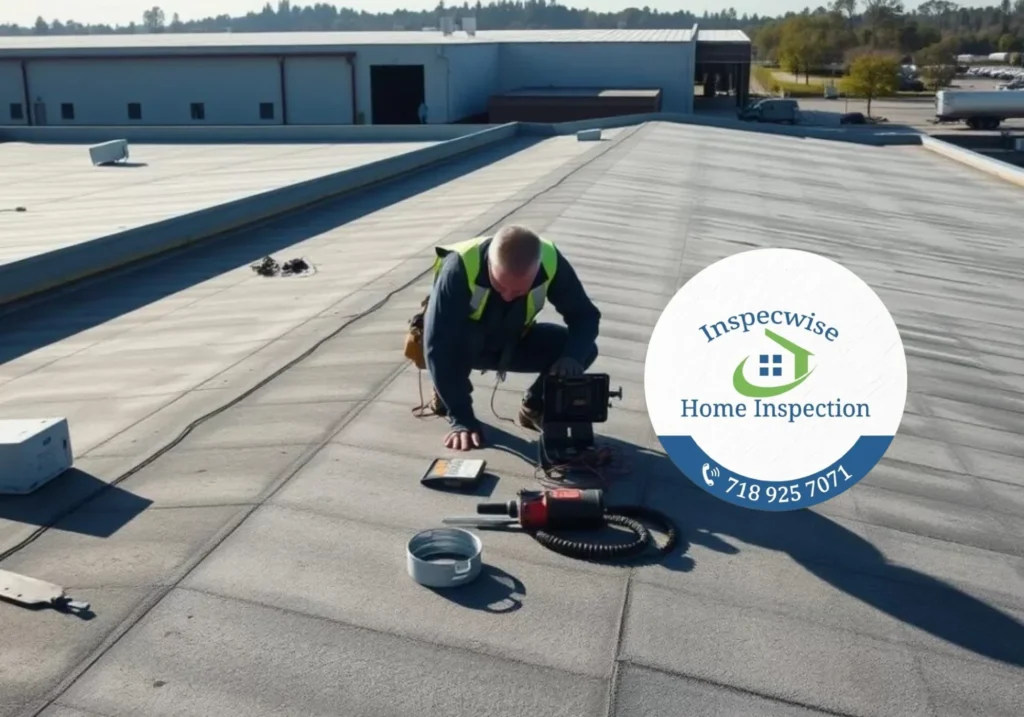
Flat roofs dominate the light commercial landscape across the boroughs, and they’re one of the most common sources of deferred maintenance. A Commercial Roof Inspection examines membrane condition, seam integrity, drainage slope, flashing details, and parapet wall conditions. Ponding water on a flat roof is a frequent finding in NYC buildings and, left unaddressed, accelerates membrane failure well before its expected lifespan is up. The building envelope exterior masonry, window seals, and control joints gets equal attention, since water intrusion through the envelope is one of the leading causes of interior damage in older commercial stock. Buildings subject to Local Law 11 (the Facade Inspection Safety Program, or FISP) face additional exterior wall reporting requirements every five years, and a light commercial inspection often surfaces the same facade conditions that a FISP filing would eventually flag.
Electrical Systems
The inspection covers the main service panel, subpanels, branch circuit wiring, grounding, and general load capacity. Many older NYC commercial buildings still operate on electrical services sometimes as low as 60-amp or 100-amp panels that were adequate decades ago but fall well short of what modern tenants demand. An inspector checks for outdated fuse panels, aluminum branch wiring, double-tapped breakers, and any signs of overheating or improper past repairs. This is one of the categories where deferred maintenance most directly turns into a safety issue rather than just a cosmetic one, and it’s frequently the item that drives the largest capital expenditure surprise for new owners.
Plumbing Systems
Supply lines, drain lines, water heaters, and fixture condition all get reviewed. Aging cast iron or galvanized piping is common in pre-war buildings and tends to show reduced flow and increased corrosion over time. Inspectors also check for backflow prevention where required and look for signs of past leaks around fixtures, floor drains, and utility rooms.
HVAC Systems
Heating and cooling equipment gets evaluated for age, general operating condition, and whether the existing zoning matches how the space is actually laid out. Rooftop units, package units, and split systems are all common in light commercial buildings, and their remaining useful life has a direct bearing on near-term capital planning. An inspector notes visible corrosion, refrigerant line condition, and whether ductwork appears properly sealed and insulated.
Interior and Exterior Components
Flooring, ceilings, interior partitions, and finish conditions are documented, along with any signs of moisture intrusion, pest activity, or structural settlement visible from inside the space. Exterior walls, entry doors, loading areas, signage attachment points, and site lighting are reviewed for both condition and code compliance. Interior findings often corroborate what’s found in the envelope and roof sections of the report.
Parking Areas and Site Drainage
Where parking lots or loading areas exist, inspectors look at pavement condition, striping, drainage patterns, and whether stormwater is directed away from the building foundation. Poor site drainage is a frequent contributor to basement moisture problems in commercial buildings throughout Nassau and Suffolk Counties, where lot sizes tend to be larger than in the boroughs, and coastal moisture exposure along parts of Long Island adds another layer of concern for foundation and framing durability.
For properties with heavier storage, loading dock activity, or light manufacturing use, an Industrial Warehouse Inspection applies a different weighting toward loading area pavement, clear-height structural framing, and heavier-duty electrical distribution than a typical light commercial scope would cover.
Fire Safety and Life Safety Systems
Fire extinguishers, alarm panels, sprinkler coverage where applicable, exit signage, and emergency lighting are all checked against basic life safety expectations. This section is particularly important for buyers taking over a space with an existing certificate of occupancy, since fire safety deficiencies can hold up permitting for any future build-out.
Accessibility Considerations
Entryways, door clearances, restroom configurations, and path-of-travel widths are reviewed against general accessibility expectations. While a light commercial inspection isn’t a substitute for a formal ADA compliance survey, it flags obvious barriers early enough for a buyer or tenant to factor modification costs into their budget.
Environmental Concerns
Inspectors note visible signs of mold, moisture staining, and, where relevant to the building’s age, materials that may warrant further environmental testing, such as older flooring or insulation. This isn’t a lab-based environmental assessment, but it identifies conditions that justify a closer look before you commit to the property.
Deferred Maintenance
Every light commercial inspection NYC report should include a clear summary of deferred maintenance items the small, cumulative repairs that get pushed off year after year until they become expensive. Deferred maintenance is often the single biggest gap between a seller’s asking price and the building’s actual condition, and it’s a recurring theme across nearly every commercial building inspection conducted in this market.
What Isn’t Included in a Standard Light Commercial Inspection
A light commercial inspection is a visual, non-invasive assessment. It doesn’t include destructive testing, opening up walls, running engineering load calculations, or lab-based environmental sampling unless those services are separately scoped. Inspectors don’t move furniture, heavy equipment, or stored inventory to access concealed areas, and systems that are inaccessible or shut off at the time of inspection can’t be fully evaluated. Zoning research, title review, and survey work also fall outside the scope of a standard inspection and are typically handled by your attorney or a licensed surveyor. Knowing these boundaries up front helps set realistic expectations for what the report will and won’t tell you.
How the Inspection Process Works
A typical light commercial inspection NYC engagement starts with scheduling access to the property, ideally with utilities on so mechanical and electrical systems can be tested under normal operating conditions. The inspector walks the site methodically, moving from the roof and exterior envelope down through interior systems, mechanical rooms, and site conditions. Photographs and diagnostic tool readings thermal imaging, moisture meters are taken throughout to support the written findings. Most inspections take between two and six hours depending on property size and complexity. The written Property Condition Assessment typically follows within a few business days, giving buyers or tenants enough runway to act within standard due diligence periods.
Common Defects Found During Light Commercial Inspections
Certain issues show up again and again across commercial inspections in this market. Aging electrical infrastructure is near the top of the list, particularly in buildings still running on undersized legacy services. Flat roof deterioration follows closely behind, driven by ponding water, membrane age, and inconsistent past repairs. Masonry deterioration spalling brick, failed mortar joints, and compromised parapet walls is common across older buildings in Manhattan, Brooklyn, and the Bronx, where exterior walls take a steady beating from freeze-thaw cycles.
Water intrusion shows up repeatedly as both a roof-related and envelope-related problem, and it’s frequently tied to foundation moisture in basement-level commercial units, particularly in flood-prone pockets of Brooklyn and Queens near the waterfront. Older mixed-use buildings, where a ground-floor commercial space sits beneath residential units or above a commercial co-op structure, present their own layer of complexity, since building systems often serve both uses simultaneously and shared responsibility for repairs isn’t always clearly defined in the building’s governing documents. A Mixed-Use Property Inspection approach accounts for that overlap directly rather than treating the commercial unit in isolation.
Signs You Need a Light Commercial Inspection
Some warning signs are obvious enough that they shouldn’t wait for a scheduled inspection cycle. If you own, manage, or are considering a light commercial property, watch for:
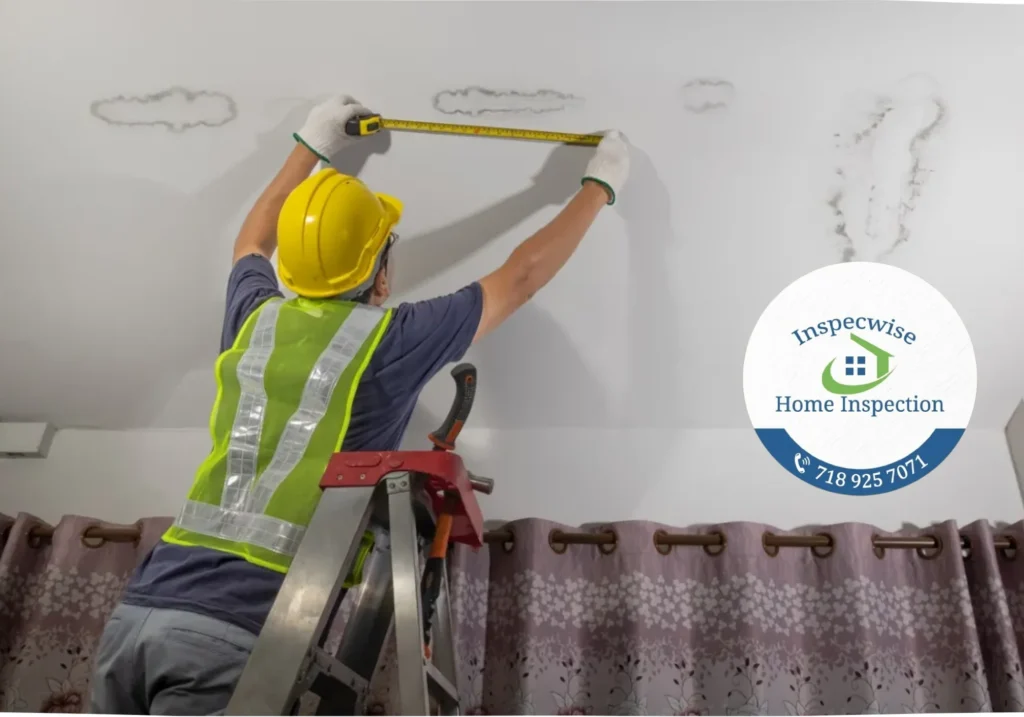
- Water stains on ceilings, walls, or around window and door frames
- Rising utility bills without a corresponding increase in usage
- Roof leaks or visible ponding water after storms
- Flickering lights or breakers that trip repeatedly
- Uneven or sloping floors, or doors that no longer close properly
- HVAC performance issues, such as uneven heating and cooling or unusual noise
- Cracks in exterior or interior masonry, especially near window and door openings
- Drainage problems around the foundation, parking areas, or loading docks
Any one of these on its own might be minor. Several appearing together usually points to a system that’s further along in its failure than it looks from the surface, and it’s a strong signal that a full light commercial inspection is worth scheduling sooner rather than later.
Why Older NYC Commercial Buildings Need More Frequent Inspections
The average age of commercial building stock across Manhattan, Brooklyn, Queens, and the Bronx pushes well past what building systems were originally engineered to last. Pre-war construction, decades of ownership turnover, and repeated tenant build-outs all compound the wear on structural, electrical, and mechanical components. A light commercial inspection NYC property owners schedule on a regular cycle catches small issues a slow roof leak, a panel running hot, a masonry joint starting to fail while they’re still inexpensive to address. Buildings that skip periodic inspection tend to accumulate deferred maintenance quietly until several systems fail around the same time, which is far more disruptive to operations and far more expensive to fix.
This pattern shows up clearly in facility management data over time: buildings maintained on a preventive schedule see steadier operating costs, while buildings managed reactively tend to face clustered, high-cost capital events every decade or so as multiple deferred items reach failure simultaneously. For long-term owners, a periodic light commercial inspection NYC schedule functions less like an expense and more like an asset preservation strategy, since it keeps operating costs predictable and gives ownership a realistic window to plan capital expenditure rather than reacting to emergencies. Long Island properties near the coast face an added variable, since salt air and coastal moisture accelerate corrosion on exposed metal components and shorten the realistic service life of exterior fixtures compared to inland buildings.
Property Condition Assessment Reports
The finished deliverable from a light commercial inspection is a Property Condition Assessment, a structured report that organizes every finding by system, priority, and estimated cost impact. A strong report doesn’t just list problems. It separates immediate safety concerns from near-term capital needs and longer-term reserve planning items, giving you a realistic timeline for what needs attention and when, along with estimates of remaining useful life for major building components.
This document becomes your negotiating tool. Buyers use it to request price adjustments or repair credits. Tenants use it to push for landlord concessions or rent abatement tied to documented conditions. Facility managers use it as the baseline for ongoing preventive maintenance and long-term reserve planning for years after the transaction closes.
Pre-Purchase vs Pre-Lease Commercial Inspections
A pre-purchase commercial inspection and a pre-lease commercial inspection serve different purposes even though they cover similar ground. In a purchase transaction, the report informs the price you’re willing to pay and identifies capital items you’ll be responsible for as the owner. In a lease transaction particularly under a triple-net structure common in New York commercial leasing the report protects the tenant from inheriting building system failures that should have been addressed by the landlord before turnover.
Under a triple-net lease, tenants typically absorb the cost of maintaining and repairing HVAC, plumbing, and electrical systems during the lease term. Without a documented baseline, it becomes difficult to prove which repairs were pre-existing versus which developed during your occupancy. A pre-lease commercial inspection creates that record before you sign anything, giving you leverage to negotiate landlord-funded upgrades, a tenant improvement allowance, or adjusted base rent.
Benefits of Hiring an Experienced Commercial Inspector
Not every inspector who works on residential properties is equipped to run a light commercial inspection NYC engagement. Commercial systems are built to different standards, sized for different loads, and governed by a different set of codes. An experienced commercial inspector understands how to read a multi-tenant electrical distribution setup, how commercial roofing assemblies are supposed to perform over their rated lifespan, and how New York’s building code applies differently to commercial occupancy classifications than it does to residential ones.
Working with someone who inspects commercial properties regularly also means faster turnaround and a report that speaks the language brokers, lenders, and attorneys expect to see. It also means a more accurate read on facility management priorities, since an experienced inspector has seen how deferred items in one system tend to accelerate wear in another. That matters in a market where transaction timelines are often measured in days, not weeks.
The same principle applies to specialized property types. A healthcare tenant or buyer, for instance, is better served by a dedicated Medical Office Inspection, which layers clinical and regulatory considerations on top of the standard light commercial scope rather than treating a clinical space like an ordinary office suite.
Why Choose Inspecwise
Inspecwise brings a team of certified commercial inspectors with hands-on experience across office buildings, retail storefronts, restaurants, small industrial spaces, and mixed-use properties throughout New York City and Long Island. Every light commercial inspection NYC engagement is built around the same principle: give buyers, tenants, and investors an honest, technically grounded picture of the property so they can make decisions with real data instead of guesswork.
Our reports are detailed, well-organized, and written to hold up during negotiations, financing reviews, and long-term facility management planning. We use professional-grade diagnostic tools, including thermal imaging and moisture detection equipment, to catch problems that a purely visual walkthrough would miss. Turnaround times are fast because we understand how quickly commercial deals move in this market, and accuracy never gets sacrificed to meet a deadline.
Frequently Asked Questions
What is considered a light commercial building? Generally, any commercial property under roughly 50,000 square feet with standard-intensity use offices, retail, restaurants, salons, small warehouses, and similar spaces falls into the light commercial category, as opposed to large industrial or high-rise properties.
How long does a light commercial inspection NYC take? Most inspections take between two and six hours depending on the size of the property, the number of systems involved, and site accessibility. Larger or more complex spaces may require additional time.
How much does a commercial property inspection cost in NYC? Pricing depends on square footage, property age, and system complexity. It’s best to request a quote based on the specific property, since costs vary meaningfully between a small storefront and a multi-suite office building.
Do I need an inspection if I’m only leasing, not buying? Yes. A pre-lease inspection documents the property’s condition before you take occupancy, which matters significantly under triple-net leases where tenants are responsible for system repairs during the lease term.
Do lenders require commercial inspections before closing? Many lenders request some form of property condition documentation before approving commercial financing, particularly for older buildings, since it informs their underwriting and risk assessment.
Can inspectors estimate remaining useful life for building systems? Yes. A qualified inspector provides estimated remaining useful life for major components like the roof, HVAC equipment, and electrical service, which supports capital expenditure and reserve planning.
What’s the difference between a light commercial inspection and a Property Condition Assessment? The inspection is the on-site evaluation process. The Property Condition Assessment is the written report that organizes those findings into prioritized repair items, cost estimates, and long-term capital planning guidance.
Can an inspection help me negotiate a lower purchase price? Yes. Documented deficiencies give buyers leverage to request price reductions, repair credits, or seller-funded repairs before closing.
Schedule a Professional Light Commercial Inspection NYC
A light commercial property is one of the largest financial commitments most business owners and investors make, and the condition of its roof, electrical service, plumbing, and structure has a direct bearing on what that commitment actually costs over time. A thorough light commercial inspection NYC buyers, tenants, and owners can rely on turns guesswork into documented fact, giving you the leverage to negotiate from a position of knowledge rather than assumption.
Inspecwise has spent years evaluating commercial properties across every borough and Long Island, and that local experience shows up in the depth and accuracy of every report we deliver. Whether you’re closing on a purchase, signing a lease, or simply making sure a property you already own is holding up the way it should, a professional inspection is one of the most cost-effective steps you can take to protect the investment.
Call Inspecwise at 718-925-7071 to schedule a light commercial inspection NYC business owners and investors trust, or to ask any questions about scope, timing, or pricing before you commit.
Serving All 5 Boroughs and Long Island: Manhattan • Brooklyn • Queens • The Bronx • Staten Island • Nassau County • Suffolk County
Call Inspecwise now: 718-925-7071
Licensed, Certified, and 100% NYC Local