Lead Paint Inspection NYC property owners can rely on needs to account for one thing most people get wrong: a ‘clean’ inspection from years ago doesn’t mean the building is compliant today. The threshold for what legally counts as lead-based paint has been lowered over time, and a building that passed a decade ago can be out of compliance now without a single new coat of paint being applied.
I’ve run XRF surveys in pre-war brownstones in Park Slope with six layers of original woodwork, and in converted manufacturing lofts in Long Island City where the lead was on the structural steel, not the walls. The hazard looks completely different depending on the building type, the borough, and the era of construction. This guide walks through how testing actually works, what triggers legal obligations in NYC, and what each borough’s building stock tends to hide.
The Regulatory Framework: Local Law 1 and HPD Enforcement
New York City’s Housing Preservation and Development department enforces Local Law 1 of 2004 and its later amendments, which are among the strictest lead poisoning prevention statutes in the country. The burden of identification and remediation sits entirely with the property owner the city does not wait for a complaint before it can act.
Which buildings are covered. Proactive lead paint tracking is required for any residential building with three or more units built before 1960. Buildings from 1960 to 1978 are also covered if the owner has actual knowledge that lead-based paint is present for example, from a prior test result or a previous violation. Enforcement escalates sharply if a child under six resides in the unit, and “resides” is interpreted broadly by the city: it covers a child who lives there full-time or one who spends regular time there, such as through a home daycare arrangement.
The lowered threshold. This is the part most owners miss. New York City’s actionable lead threshold used to track the older federal standard. It has since been lowered significantly, which means paint that would have been certified lead-free under the old rule can now trigger a violation under the current one. A “lead-free” letter from years back is not proof of anything unless it was issued under the current threshold. If an HPD inspector finds peeling or cracked paint in a unit with a young child present, the violation is issued immediately, and the compliance clock starts running fast the owner has a compressed window to bring in a certified risk assessor, complete testing, and finish authorized remediation.
Many property owners schedule a complete Home Inspection New York alongside lead testing because peeling paint is often only one part of a larger issue. Water intrusion, aging electrical systems, deteriorated windows, and structural movement can all contribute to conditions that increase lead exposure. Reviewing the property as a complete system helps buyers and owners prioritize repairs instead of addressing hazards one at a time.
How Lead Paint Testing Actually Works
Certified technicians use a combination of field instrumentation and lab verification, and which method applies depends on the surface.
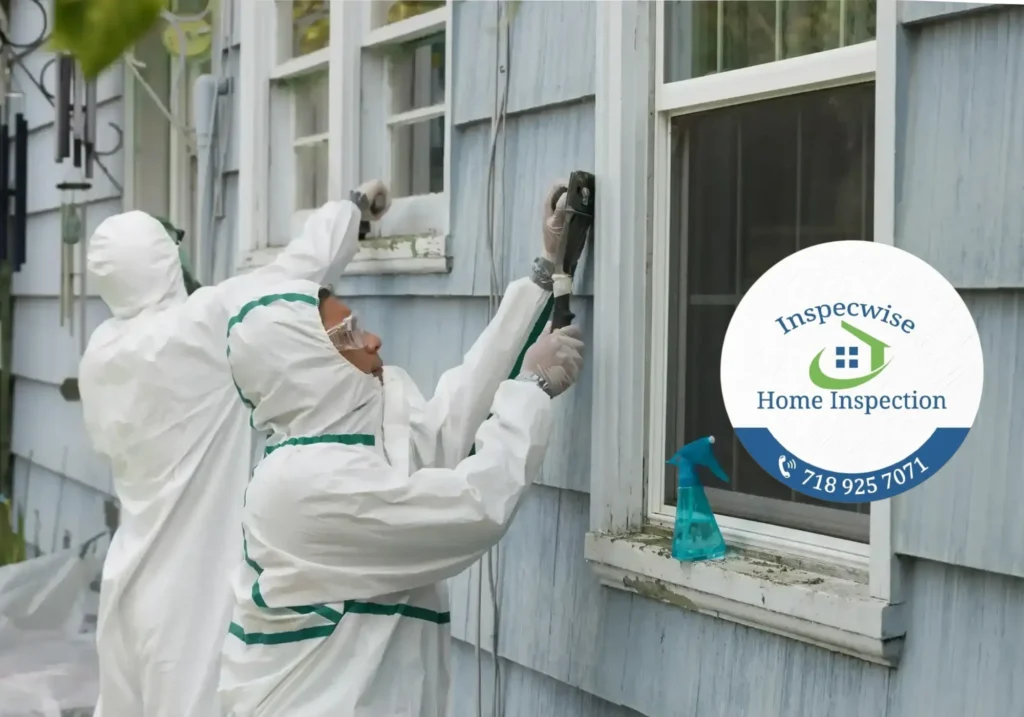
XRF analysis is the standard field method. A handheld X-ray fluorescence analyzer reads the elemental composition of paint layers without cutting into the surface it can see through up to twenty coats of historical paint to identify a lead signature at the base layer. This matters enormously on ornate woodwork, since a homeowner restoring original mahogany pocket doors doesn’t want a technician scraping into them to find out what’s underneath. HPD and EPA regulations require that XRF testing be performed by a licensed risk assessor using a device with a current, federally approved Performance Characteristic Sheet an unlicensed reading, even an accurate one, doesn’t satisfy the legal requirement.
Paint chip sampling comes in when a surface won’t give a clean XRF reading heavily curved millwork, corroded metal, or composite trim are common culprits. The technician cuts a small square down through every paint layer to the substrate (the underlying wood, plaster, brick, or metal), seals it, and sends it to an ELLAP-certified lab for analysis. I’ve had to fall back to chip sampling on ornamental tin ceilings more than once, where the curvature of the stamped metal threw off consistent XRF contact.
Dust wipe testing addresses the hazard most people don’t think about: friction surfaces. A double-hung window that’s structurally sound and fully painted can still be a serious hazard because the sash rubs against the jamb every time it’s opened, grinding old lead paint into invisible dust. Wipes are taken across a standardized area typically 12 by 12 inches on a sill or floor and sent for lab analysis measuring lead in micrograms per square foot. On a Bronx pre-war walk-up I inspected, the painted surfaces looked immaculate, but wipe testing on the original window tracks came back well above the clearance level a reminder that visual condition alone tells you very little.
What Each Borough’s Building Stock Tends to Hide
Lead exposure risk in NYC isn’t uniform it tracks directly to construction era and building type, and those vary block by block across the boroughs.
Manhattan and Brooklyn Brownstones
Brownstones built across Manhattan and Brooklyn in the late 19th and early 20th centuries are dense with lead. The high-end woodwork that owners love to preserve mahogany pocket doors, carved window casings, oak balustrades was typically finished in lead-carbonate pigments prized for durability and color retention. On one Park Slope parlor-floor restoration, XRF readings on the original crown molding came back at levels several times the actionable threshold, even though the surface paint looked freshly refinished from a prior owner’s cosmetic work. Testing through multiple coats without damaging historic detail takes an inspector who knows how to read the surface, not just run the device.
Buyers considering historic brownstones, townhouses, or pre-war residences in Manhattan often benefit from scheduling a comprehensive Home Inspection Manhattan before closing. These properties frequently contain aging structural components, older plumbing systems, original electrical wiring, and hidden moisture issues that require a detailed inspection beyond a standard walkthrough.
Pre-War Multi-Family Buildings (Bronx and Upper Manhattan)
In classic pre-war brick-and-plaster buildings along corridors like the Grand Concourse, lead paint went on public hallways, fire escapes, entry vestibules, and structural plaster. Steam radiators and their piping were almost universally coated in heavy industrial lead paint chosen specifically because it could handle repeated thermal expansion without cracking. Years of latex repainting sit on top of that original layer, and it’s usually fine until a plumbing leak or structural settling causes the top coats to lift and expose what’s underneath. I’ve seen this play out in real time: a slow radiator leak in a Concourse-area building softened the surrounding plaster enough that the newer paint peeled away in sheets, exposing the original lead coat directly in a hallway used daily by tenants.
Queens: Mixed-Use Buildings and Industrial Conversions
Queens presents a different pattern because so much of its inventory is converted rather than original-use. Long Island City’s old manufacturing buildings printing plants, warehouses, factory floors are being turned into residential lofts and commercial office space at a steady clip, and the structural steel columns and corrugated metal ceilings in those buildings were routinely coated in industrial lead primer to prevent corrosion. That primer doesn’t show up where a typical residential inspector would think to look. On a LIC loft conversion, we found heavy lead concentrations on painted structural I-beams that had been left exposed as a design feature a detail the architect loved and the environmental report had to flag before the build-out could proceed.
Flushing’s retail corridors add another layer: many of the mixed-use buildings above ground-floor storefronts date to a similar era as the Bronx pre-war stock, but the ground-floor commercial space often has decades of layered signage, fixtures, and partition walls painted over the original surface, which complicates both XRF access and dust wipe sampling in the retail units themselves.
Staten Island: Waterfront and Industrial Exposure
Staten Island doesn’t get discussed as often in NYC lead paint conversations, but its older housing stock along Richmond Terrace, Travis, and Mariners Harbor carries its own specific risk profile. Many of the homes and small industrial buildings near the waterfront were built or heavily maintained during the borough’s shipping and manufacturing period, and lead paint was standard on exterior trim and structural elements specifically for its resistance to salt air corrosion. That same coastal moisture exposure that made lead paint the material of choice decades ago is now the thing degrading it constant humidity and salt exposure accelerate paint failure on exterior siding and window trim far faster than in inland neighborhoods. On a Mariners Harbor property near the waterfront, exterior clapboard that looked structurally intact from the street had extensive subsurface lead contamination revealed only through paint chip sampling, because the top layer of modern exterior paint was masking chalking and micro-cracking underneath from years of salt air exposure.
Manhattan High-Rises and Co-ops
Commercial high-rises and co-op buildings in Manhattan present a narrower but still real risk. Curtain wall systems and structural steel from mid-century construction sometimes carry lead-based primers beneath later cladding updates, and older co-op buildings with original plaster and millwork can have the same hallway and radiator exposure seen in the Bronx pre-war stock, just with a co-op board layer of compliance paperwork on top of the HPD requirements.
Compliance Requirements for Multi-Family Building Owners
Owning a covered multi-family building in NYC means an ongoing compliance cycle, not a one-time inspection.
- Annual lead paint notices. Between January 1 and January 16 every year, owners must send a formal lead paint notice to every tenant. Tenants must complete and return it, stating whether a child under six lives in or regularly spends time in the unit.
- Follow-up on non-responsive tenants. If a tenant doesn’t return the notice by February 15, the owner or property manager must conduct an in-person follow-up visit between February 16 and March 1 to verify whether a young child is present. If access is denied repeatedly, the owner needs to document the attempts certified letters and written records of each visit.
- Turnover inspections. When a unit in a pre-1960 building becomes vacant, the owner must complete a full lead hazard remediation protocol before a new lease is signed. That means a certified risk assessor inspects the unit, EPA-certified Lead-Safe Renovators handle any friction-surface work and defective window components, and the unit passes a formal dust wipe clearance test before re-occupancy.
- Record retention. Annual notices, inspection reports, XRF results, and dust wipe clearances need to be kept for at least ten years. HPD conducts random audits, and an owner who can’t produce clean records on demand is exposed to steep, non-curable per-unit fines.
Lead Hazards in Commercial Real Estate and Construction
Commercial buildings face a different set of regulators OSHA and the EPA rather than HPD but the exposure risk during construction can be more acute than in an occupied residential unit.
OSHA has no minimum threshold. If a coating contains any detectable lead, an employer disturbing that surface has to implement a full worker protection program: air monitoring, respiratory protection, medical surveillance through blood-lead testing, and on-site decontamination.
Demolition and structural work carry a distinct risk. Cutting, torch-welding, or riveting old structural steel or masonry that’s coated in historical lead primer can vaporize the lead into airborne toxic gas a very different hazard profile than flaking paint. Owners are required to give incoming contractors a full environmental hazard report before demolition starts; skipping that step creates direct liability for worker exposure.
Tenants are asking for documentation up front. Commercial tenants opening childcare centers, medical offices, or fitness studios increasingly require certified lead-free documentation before signing a lease, because discovering lead behind drywall mid-build-out can stall a project for months and add significant containment costs. Getting the testing done before lease execution, not after demolition starts, is the difference between a manageable line item and a stalled build-out.
How Lead Paint Interacts With Other Building Problems
Lead paint that’s fully intact and bonded to a sound surface is relatively low-risk. The danger almost always shows up alongside a separate structural or moisture problem, which is why lead testing shouldn’t be treated as an isolated line item.
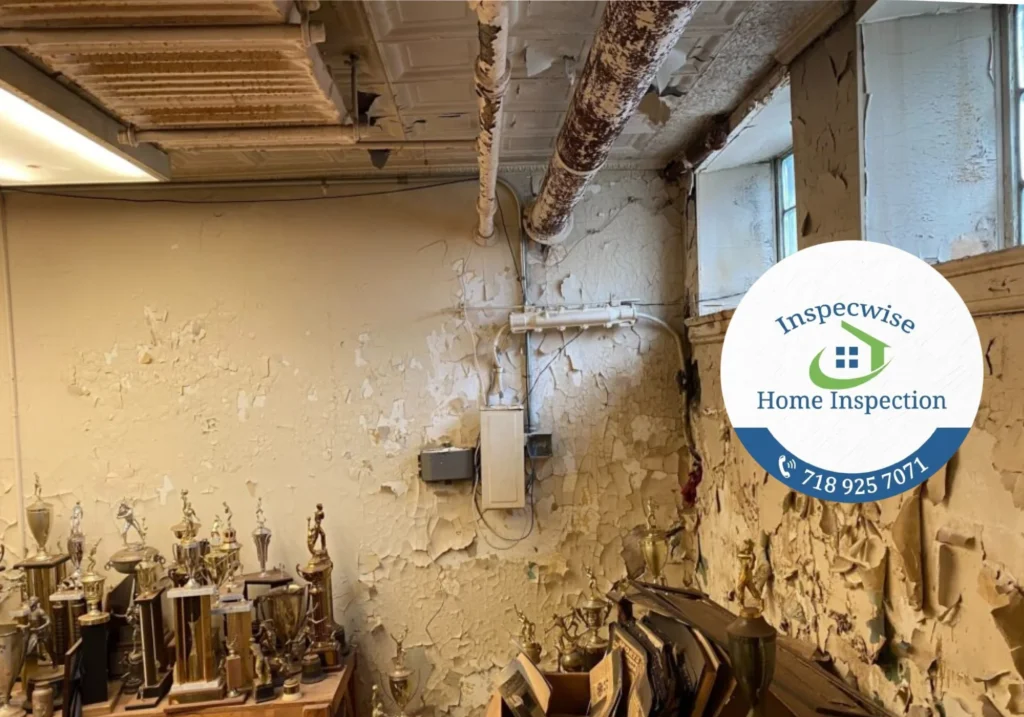
Moisture is the most common trigger. A slow roof leak, cracked exterior masonry, or a failing plumbing line saturates the plaster or wood underneath painted surfaces. As that material absorbs moisture and expands, the old lead paint loses adhesion and starts to blister, crack, and flake which is exactly how intact paint turns into an active dust hazard. This is why an experienced inspector doesn’t look at lead paint in isolation: a building with a moisture problem in one area often has lead risk concentrated in that same area, because the two issues feed each other.
For buyers doing pre-purchase due diligence, this argues for bundling assessments rather than ordering them piecemeal a lead survey alongside a moisture and structural inspection catches problems that either one alone would miss, and it’s typically more efficient to schedule them together than to circle back after a lead violation surfaces during a later inspection.
Property owners planning renovations or purchasing older buildings also benefit from combining lead testing with additional specialty inspections such as Radon Testing NYC, sewer scope inspections, and comprehensive pre-purchase evaluations. Coordinating these services together provides a more complete understanding of the property’s condition before significant financial decisions are made.
Why Choose Inspecwise
We provide lead paint inspections, XRF surveys, dust wipe testing, moisture investigations, pre-purchase home inspections, commercial property inspections, mold inspections, radon testing, sewer scope inspections, and specialty environmental assessments throughout New York City and Long Island. Our reports are detailed, easy to understand, and designed to help buyers, sellers, investors, landlords, and property managers make informed decisions while remaining compliant with current regulations.
Serving All 5 Boroughs and Long Island: Manhattan • Brooklyn • Queens • The Bronx • Staten Island • Nassau County • Suffolk County
Call Inspecwise now: 718-925-7071
Licensed, Certified, and 100% NYC Local