
Oil tank inspection NY is a strict regulatory mandate, a foundational element of structural risk management, and an essential component of due diligence for anyone buying, selling, or managing real estate across the five boroughs and Long Island. Navigating the dense web of municipal ordinances in New York City requires an intimate understanding of environmental safety protocols, structural engineering, and evolving state laws. Whether you manage a sprawling industrial facility in the heart of The Bronx, oversee a high-rise office tower in Manhattan, or own a historic residential multi-family brownstone in Brooklyn, managing an on-site petroleum storage system demands unwavering technical precision. Neglecting these systems can lead to catastrophic oil spills, structural degradation, punitive fines from enforcement agencies, and severe soil contamination that can decimate a property’s market value overnight.
Understanding the mechanics of a professional petroleum bulk storage (PBS) assessment is critical for protecting your real estate investment. New York State and municipal regulations dictate exactly how, when, and by whom these storage systems must be evaluated. From checking the structural integrity of underground storage tanks (USTs) via advanced acoustic testing to executing meticulous visual assessments on aboveground storage tanks (ASTs), every single component of the fuel distribution network requires expert oversight.
Investors navigating the complex local market must also balance these assessments with broader environmental safety protocols. For example, commercial buyers often coordinate these fuel system evaluations alongside comprehensive commercial radon testing to ensure a building’s sub-slab environment is completely safe before finalizing a purchase. By understanding your statutory obligations, the physical risks of fuel containment, and the specific diagnostic tools used by licensed professionals, you can transform a complex compliance burden into a streamlined asset protection strategy.
The Legal Framework Governing Fuel Storage in New York
The regulatory environment for fuel storage in New York is among the most stringent in the United States, governed by a multi-layered matrix of state and municipal oversight. At the state level, the New York State Department of Environmental Conservation (NYSDEC) administers the PBS program under 6 NYCRR Parts 612, 613, and 614. This comprehensive legal code mandates that any facility with a combined storage capacity of over 1,100 gallons must be officially registered and subjected to periodic, rigorous structural integrity testing. For property owners, failing to maintain an updated registration or missing a mandatory testing window can result in immediate notices of violation, compounding daily financial penalties, and the potential revocation of the building’s certificate of occupancy.
Within the boundaries of New York City, the regulatory landscape becomes even more demanding due to local municipal codes. The New York City Department of Buildings (DOB) and the Fire Department of New York (FDNY) enforce localized rules that run parallel to NYSDEC mandates.
- FDNY Rule 3 RCNY §21-01 dictates explicit specifications for fuel oil piping, tank construction, and emergency shut-off systems, requiring detailed operating permits that must be renewed annually after a physical inspection.
- The NYC Environmental Control Board (ECB) regularly issues heavy fines for undocumented, abandoned, or improperly sealed fuel infrastructure, making it imperative for building managers to maintain impeccable, verifiable inspection logs.
- Local building codes mandate that any tank out of service for more than one year must be formally decommissioned, a process that requires soil sampling, end-point documentation, and official administrative filings.
Underground Storage Tanks (UST) vs. Aboveground Storage Tanks (AST)
Underground Storage Tanks (UST)
Underground storage tanks present the highest risk profile for property owners due to their complete invisibility. Hidden beneath concrete floor slabs, asphalt parking lots, or structural vaults, these systems can harbor silent defects for years before a catastrophic failure occurs. The primary threat to older steel USTs is galvanic corrosion, an electrochemical process where the metal tank reacts with surrounding soil moisture and stray electrical currents, gradually thinning the tank walls until a breach occurs. Because these systems are buried, a slow pinhole leak can release thousands of gallons of heating oil into the sub-slab environment completely undetected, leading to massive environmental remediation costs.
Evaluating a UST requires specialized, non-destructive testing (NDT) methodologies to precisely measure structural soundness without disturbing the surrounding ground. Inspectors utilize high-frequency ultrasonic thickness testing and precision acoustic monitoring to detect micro-fissures or pressure drops within the vessel. Additionally, the soil matrix immediately surrounding the tank must be monitored using specialized geo-probes and vapor sensors to verify that no historical subsurface migration of petroleum hydrocarbons has occurred.
Aboveground Storage Tanks (AST)
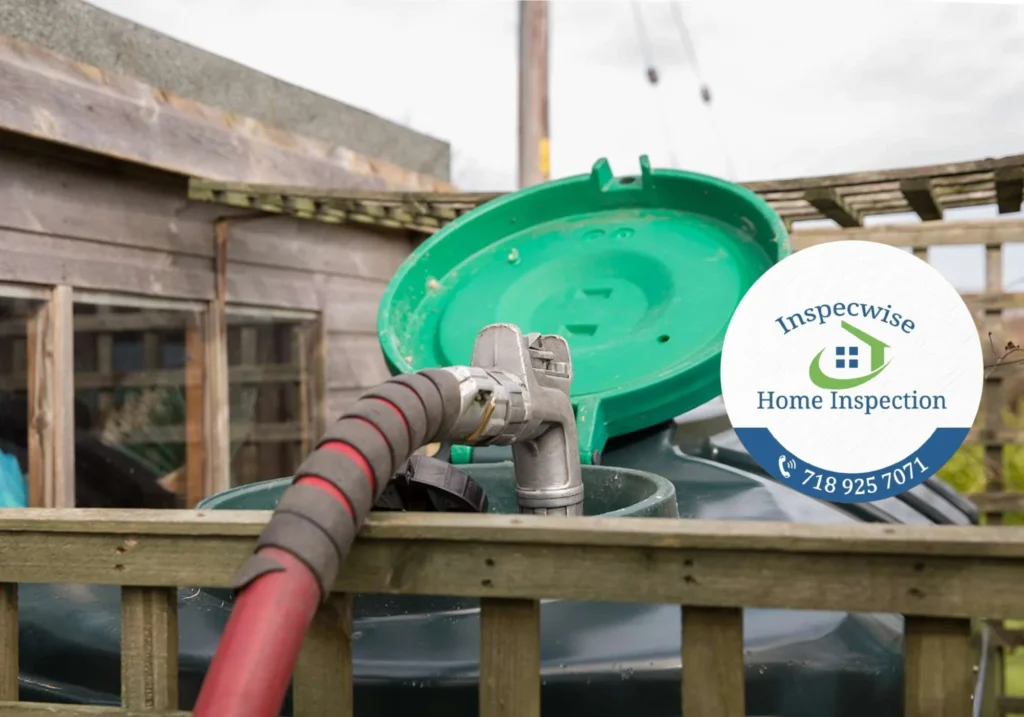
Aboveground storage tanks, while vastly easier to access, present their own distinct set of structural vulnerabilities that require consistent professional tracking. Typically situated in basement utility rooms, dedicated mechanical vaults, or outdoor rear yards, ASTs are constantly exposed to ambient environmental conditions. Outdoor units face relentless wet-dry cycles, winter freeze-thaw expansions, and UV degradation, which can accelerate the breakdown of protective exterior coatings and lead to localized pitting corrosion along the tank seams. Basement tanks, conversely, are frequently prone to severe internal condensation, where moisture settles at the bottom of the fuel column, creating a highly corrosive environment that eats through the steel from the inside out.
A comprehensive AST evaluation focuses on structural stability, support mechanisms, and secondary containment structures. The inspector will carefully check the integrity of the concrete deadmen, saddle supports, and anchor bolts to ensure the tank cannot shift or tip during a seismic event or localized flooding. Furthermore, local codes demand the presence of a verified secondary containment dike or an approved double-walled configuration capable of holding at least 110% of the tank’s total volumetric capacity, ensuring that any primary structural breach is entirely contained within an impermeable barrier.
Comprehensive Structural and Mechanical Inspection Protocols
A professional evaluation of a petroleum storage system follows a rigid, highly technical diagnostic protocol that examines every mechanical, structural, and electronic component of the system. The process begins with a meticulous assessment of the tank’s primary shell and extends through the entire distribution network, ensuring that no single point of failure is overlooked.
- Ultrasonic Seam Analysis: Technicians use calibrated ultrasonic transducers to send high-frequency sound waves through the tank walls, calculating the exact remaining steel thickness to within thousands of an inch and identifying internal erosion patterns that are invisible to the naked eye.
- Overfill Prevention and Venting Verification: The inspector physically tests the automatic shut-off valves, high-level alarms, and vent whistles to confirm the delivery truck operator will receive an immediate, unambiguous mechanical signal before an overfill condition occurs.
- Structural Support and Anchor Assessment: A comprehensive review of the load-bearing masonry piers, steel saddles, and seismic tie-down straps is conducted to ensure the tank remains perfectly stable under maximum volumetric weight loads.
- Leak Detection System Calibration: Electronic interstitial sensors in double-walled systems and continuous monitoring consoles are systematically tested to guarantee they will instantly trigger an audible alarm if liquid is detected between the primary and secondary containment barriers.
- Containment Dike Permeability Testing: Concrete containment basins and concrete coatings are scrutinized for micro-cracks, hydrostatic fractures, or failed joint seals that could allow spilled petroleum to seep into surrounding soils or local sewer connections.
Environmental and Structural Red Flags You Cannot Afford to Ignore
Recognizing the early warning signs of a failing oil storage system is crucial for avoiding catastrophic environmental cleanup liabilities and structural damage. Property managers and facility engineers must remain hyper-vigilant against subtle physical and operational shifts that point to an active mechanical breakdown. The most immediate red flag is any unexplained fluctuation in fuel consumption patterns; if a building’s heating system suddenly requires significantly more fuel without a corresponding drop in outdoor temperatures, a subterranean or sub-slab pipe breach must be suspected immediately.
Environmental indicators often manifest throughout the lower levels of a structure before a tank failure is officially confirmed via pressure testing. Persistent petroleum odors wafting through elevator shafts, basement storage lockers, or utility chases indicate that volatile organic compounds (VOCs) are actively degassing from a localized spill or slow weep.
Furthermore, during routine property maintenance, completing a termite inspection new york can sometimes uncover hidden moisture traps where subterranean pests thrive right alongside leaking fuel lines, highlighting how structural hazards often intersect behind basement walls. Whenever an inspector uncovers heavy water accumulation at the base of a tank during a routine stick test using water-finding paste, it indicates that the tank’s structural integrity has already been compromised, allowing groundwater infiltration and setting the stage for rapid internal corrosion.
Advanced Diagnostic Technologies in Modern Asset Assessments
The property inspection industry has evolved far beyond basic visual assessments, adopting sophisticated space-age diagnostics to evaluate fuel containment infrastructure without causing structural disruption. Modern field technicians utilize acoustic emission testing (AET) to detect the distinct micro-acoustic frequencies generated by escaping liquids or gases under pressure. By placing highly sensitive piezoelectric sensors at strategic locations across the tank shell, inspectors can pinpoint the precise coordinates of a structural flaw or stress fracture without draining the fuel or excavating the surrounding foundation.
For larger commercial installations, magnetic flux leakage (MFL) floor scanners are deployed to analyze the bottom plates of massive bulk storage vessels. This technology uses powerful permanent magnets to temporarily saturate the steel tank floor with a localized magnetic field; any internal pitting, gouging, or wall thinning disrupts the magnetic field, which is instantly captured by digital sensors and mapped via specialized software.
Additionally, video borescope technology allows inspectors to insert flexible, articulating fiber-optic cameras directly through small fill ports or gauge openings. This grants a crystal-clear, high-definition view of internal baffling, suction lines, and the condition of interior protective liners, providing undeniable visual evidence of system health.
Localized Challenges Across New York City Boroughs
Navigating fuel system compliance in New York requires a deep understanding of the unique architectural, geological, and historical quirks that define each distinct borough. Real estate assets in Manhattan, for instance, are primarily high-density, multi-story commercial high-rises and historic pre-war residential towers. Space is at an absolute premium, meaning that heating systems are often buried multiple levels down in sub-basements, or tightly integrated into bedrock vaults beneath busy sidewalks. Inspecting these systems requires specialized logistics, including navigating confined-space entry protocols, managing complex building access permits, and dealing with intense vibrations from nearby subway lines that can accelerate structural fatigue in aging fuel lines.
Moving into Brooklyn and Queens, the challenges shift from vertical density to historical industrial footprints and highly variable coastal geologies. Brooklyn’s neighborhood landscapes are dominated by historic masonry brownstones and converted industrial warehouses, many of which still harbor undocumented, legacy oil containment systems dating back to the early 20th century. These older properties frequently feature outdated single-walled steel tanks situated directly above highly corrosive, tidal groundwater tables, which can rapidly accelerate external rust.

In Queens, the massive expansion of commercial logistics hubs and mixed-use light industrial parks introduces unique challenges with sandy, highly permeable soils. In these porous ground conditions, any undetected sub-slab fuel leak can migrate horizontally at an alarming rate, traveling across property lines and triggering multi-million-dollar third-party environmental liabilities before the property owner even realizes a breach has occurred.
Decommissioning and Abandonment: The Legal Path to Risk Mitigation
When an oil storage tank reaches the end of its operational lifespan or a property transitions to modern natural gas or high-efficiency heat pump systems, proper decommissioning is legally required to eliminate future liability. In New York, this is not as simple as turning off a valve; it is a highly regulated structural process that must be executed in strict accordance with NYSDEC DER-10 Technical Guidance for Site Investigation and Remediation. Property owners must choose between two primary paths: complete structural removal via excavation or formal environmental closure-in-place.
The closure-in-place option is typically selected when removing the tank entirely would compromise the structural stability of adjacent building foundations, retaining walls, or active public sidewalks.
- Product Evacuation and Hazardous Sludge Removal: All remaining liquid fuel oil and heavy hydrocarbon bottom sludge are completely pumped out using specialized vacuum tankers and hauled to a licensed hazardous waste disposal facility.
- Internal Cleaning and Degreasing: The interior tank surfaces are thoroughly scraped, power-washed, and triple-rinsed with industrial degreasers to remove any lingering petroleum residues.
- Subsurface Environmental Soil Boring: Certified technicians drill localized soil borings directly beneath and surrounding the tank shell, collection samples that are submitted to a state-certified laboratory for independent analysis to verify that no historical leakage occurred.
- Solid Material Matrix Stabilization: Once environmental clearance is granted, the empty steel shell is completely filled with an inert, incompressible solid material, such as a specialized hydrophobic polymer foam, liquid concrete slurry, or clean washed sand, to prevent any future structural collapse.
- Administrative Filing and Registry Updating: Comprehensive closing documentation, including clean soil certificates, waste manifests, and disposal receipts, are systematically compiled and submitted to the NYSDEC and NYC DOB to formally remove the vessel from active regulatory databases.
The True Financial Impact of Neglecting Fuel Infrastructure
The financial consequences of ignoring regular tank assessments can be absolutely devastating for a commercial property owner or real estate investor. A single pinhole leak in an underground fuel system can lead to extensive environmental contamination, with cleanup costs regularly escalating into six-figure sums. When a leak occurs, the property owner is legally categorized as a strictly liable party under New York State Navigation Law, meaning they are fully responsible for every single dollar of cleanup costs, regardless of whether they knew the leak was actively occurring. This liability covers the structural excavation of contaminated soils, the installation of long-term groundwater monitoring wells, and the expensive deployment of sub-slab soil vapor mitigation systems designed to keep toxic petroleum fumes from penetrating habitable tenant spaces.
Beyond direct cleanup costs, a contaminated or uncertified fuel system can completely paralyze a commercial real estate transaction. Traditional commercial lenders and institutional mortgage companies will completely refuse to finance or refinance any property that exhibits an unresolved environmental issue or a flagged PBS registry record. Furthermore, traditional commercial property insurance policies explicitly exclude coverage for gradual, long-term pollution events, meaning that the entire financial burden of remediation must be paid out-of-pocket by the property owner, frequently forcing distressed assets into foreclosure or bankruptcy.
Why Choose Inspecwise
Inspecwise stands as the premier authority for high-end residential and commercial property inspections in New York City and Long Island, offering unmatched technical accuracy, deep local expertise, and elite digital reporting. Our team of certified inspection specialists possesses an intimate, working knowledge of complex NYSDEC regulations, FDNY mandates, and NYC DOB building codes, ensuring that your real estate assets remain fully compliant and structurally sound. We utilize state-of-the-art non-destructive testing technologies including ultrasonic thickness meters, acoustic emission sensors, and advanced thermal imaging to deliver highly detailed assessments that protect you from hidden structural liabilities and costly environmental cleanup risks. When you partner with Inspecwise, you receive a comprehensive, investor-grade analysis tailored to the unique architectural landscape of the New York market, giving you the clarity and confidence needed to safeguard your capital investments and streamline your property management operations.
Serving All 5 Boroughs and Long Island: Manhattan • Brooklyn • Queens • The Bronx • Staten Island • Nassau County • Suffolk County
Call Inspecwise now: 718-925-7071
Licensed, Certified, and 100% NYC Local