Pre-drywall inspection protocols represent the most critical quality control phase in the timeline of any New York City real estate development. This specialized evaluation occurs during a brief, high-stakes window of time after the structural framing is erected and the mechanical, electrical, and plumbing rough-ins are fully routed, but before the sheetrock is hung. Once the drywall panels are screwed into place, the skeletal anatomy of the building is permanently sealed from view. For property buyers, institutional investors, and asset managers across Manhattan, Brooklyn, and Queens, this phase is the final opportunity to verify that the building’s hidden infrastructure is safe, structurally sound, and fully compliant with the stringent mandates of the New York City Building Code.
A common misconception among premium property buyers in the five boroughs is that municipal sign-offs render independent private reviews unnecessary. In reality, a municipal Department of Buildings inspector is tasked strictly with verifying minimum life-safety code thresholds, often spending only a few minutes surveying a massive space due to overwhelming caseloads. A private, premium physical assessment provides an exhaustive, multi-hour diagnostic audit of every stud, wire, pipe, and duct. Skipping this process means relying blindly on the subcontracted laborers who executed the work under tight developer deadlines, which frequently leads to operational failures or hidden defects that only surface years down the road.
Understanding the deep complexities of urban construction requires acknowledging how environmental elements affect raw structures before they are closed up. In the dense coastal environment of the tri-state area, buildings under construction are frequently exposed to heavy rain, snow, and humidity prior to the installation of the exterior building envelope. If a developer rushes to hang drywall over damp framing members, they run a massive risk of trapping moisture within the wall cavities, creating a perfect breeding ground for biological growth. To safeguard an investment from these hidden environmental hazards, it is wise to couple your physical structural assessment with specialized testing like a comprehensive Black Mold Inspection before the interior finishes are authorized.
The Structural Skeletal Framework Audit
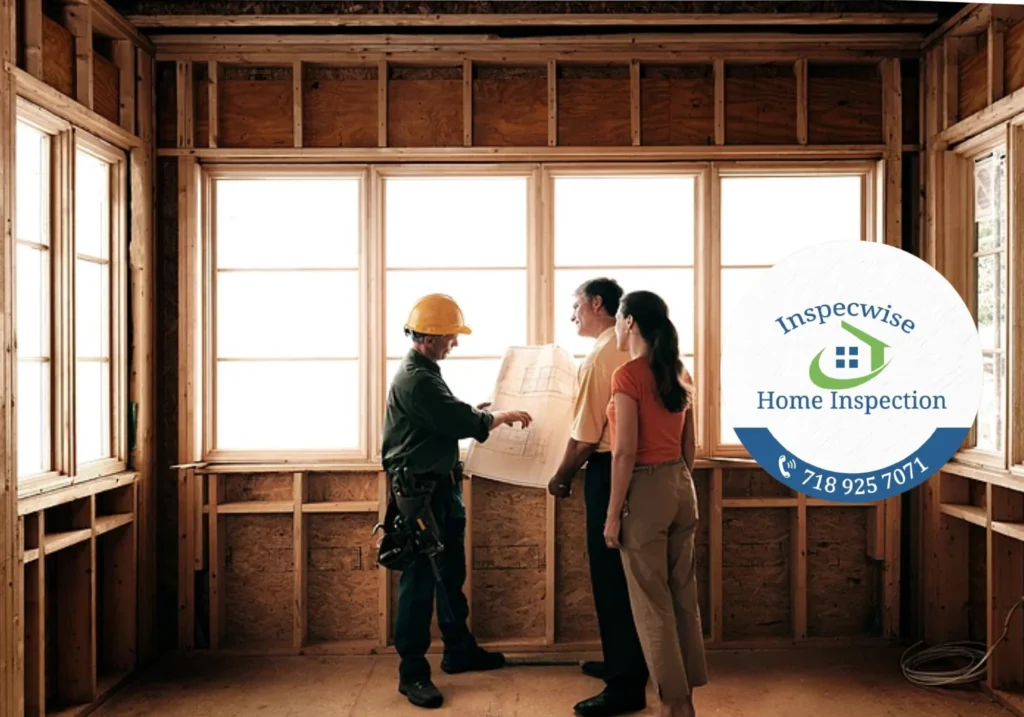
The structural integrity of any New York City property relies entirely on the precise execution of its framing, which must withstand immense vertical loads and lateral wind forces. During this visual and physical assessment, every framing member is scrutinized to confirm it aligns with the engineered structural blueprints filed with the municipality. Inspectors carefully verify the load paths from the roof rafters down through the intermediate floors to the foundation, checking that weight transfers cleanly through solid wood or steel pathways without architectural bottlenecks.
- Stud Alignment, Plumbness, and Crown Verification: Every vertical stud within the framing must be checked with precision levels to guarantee walls are plumb, square, and structurally straight. Wood studs naturally possess a slight curve, known as a crown, and code dictates that all crowns must face the same direction along a wall plane to prevent waves, ripples, or bowing in the finished drywall.
- Load-Bearing Header Spans and Jack Stud Support: Windows, doors, and structural openings disrupt the natural grid of a framing system, requiring engineered headers to reroute upper floor weights around the opening. The audit verifies that these headers are sized accurately according to the span tables in NYC Building Code Chapter 23 and are resting securely on the appropriate number of vertical jack studs.
- Floor Joist Integrity, Notching, and Boring Restrictions: Subcontractors frequently compromise structural wood joists or cold-formed steel framing by cutting massive holes or notches to run pipes and conduits. Inspectors strictly enforce structural engineering limits, ensuring that notches are never placed in the middle third of a joist span and do not exceed one-sixth of the depth of the member.
- Truss Engineering, Hurricane Ties, and Lateral Bracing: In top-floor units and modern multi-family low-rises, pre-engineered roof trusses must be inspected for proper plate attachment and lateral cross-bracing. Structural metal connectors, such as hurricane ties and engineered anchor bolts, must be present at every critical intersection to anchor the roof system against severe coastal wind shear.
- Sill Plate Anchoring and Foundation Fastener Spacing: The bottom pressure-treated wood member of a wall frame, the sill plate, must be securely bolted to the concrete foundation or slab. Inspectors verify that heavy-duty anchor bolts are spaced no more than six feet apart and sit within twelve inches of the end of each separate plate section to prevent shifting.
Mechanical HVAC Infrastructure and Ductwork Diagnostics
The indoor air quality and thermal comfort of a modern luxury condo or commercial office space depend entirely on the precision of the Heating, Ventilation, and Air Conditioning rough-ins. Because modern energy codes are exceptionally strict regarding air leakage and thermal efficiency, inspecting the mechanical systems before they are hidden is vital. Poorly routed ducts or loose connections force mechanical equipment to work twice as hard, driving up utility expenses and causing early system failures.
- Ductwork Sealing, Mastic Application, and Mechanical Fastening: All metal and flexible duct connections must be mechanically fastened with sheet metal screws or approved tension straps, then completely sealed with paint-on duct mastic or foil tape. Air distribution systems are checked to ensure they do not leak conditioned air into unconditioned wall cavities, which ruins HVAC efficiency.
- Bending Radii and Support Intervals for Flexible Ducts: Flexible ductwork is highly susceptible to kinks, sharp bends, and sagging, all of which restrict airflow and choke mechanical air handlers. The inspection confirms that flexible runs are supported by wide straps every four feet and that no bend radius is tighter than the diameter of the duct itself.
- Outdoor Fresh Air Intake and Exhaust Vent Routing: Dedicated exhaust lines from kitchens, bathrooms, and laundry units must vent directly to the exterior of the building using rigid, smooth-walled aluminum or galvanized ducting. Inspectors trace these runs to ensure they do not discharge into attics, floor joists, or drop ceilings, which would pump moisture and odors straight into the building’s core structure.
- Plenum Box Connections and Balanced Air Returns: Central air systems require balanced air pressure to function correctly, meaning the supply air entering a room must equal the return air leaving it. Technicians audit the connections at the main plenum boxes to verify that return air pathways are unblocked, properly sized, and fully sealed against raw construction dust.
- Condensate Drain Lines and Secondary Overflow Protection: High-efficiency cooling units generate massive volumes of water via condensation, which must be drained safely away from the building interior. Inspectors check that condensate lines maintain a steady downward slope of at least one-quarter inch per foot and include secondary overflow pans fitted with automatic float shut-off switches.
Evaluating a building’s mechanical footprint also requires looking closely at the safety and purity of its core utilities, which run right alongside these air ducts. If you are investing in a property that utilizes localized infrastructure, checking the safety of the incoming water supply is just as important as inspecting the layout of the physical piping. To ensure your entire property is safe from environmental contaminants, it is highly recommended to schedule a comprehensive Well Water Testing Inspection before finalizing your real estate transaction.
Electrical Rough-In and Life-Safety Code Compliance
The electrical rough-in phase is arguably the most critical component of life-safety inspections because hidden electrical errors are a leading cause of residential structure fires. A comprehensive pre-drywall review ensures that all electrical cables, junction boxes, and service panels are installed safely and in strict accordance with the National Electrical Code and local amendments. Inspectors look past the basic layout to examine the physical routing and protection of every circuit.
- Nail Plate Installation on Structural Stud Penetrations: When electrical wires are routed through holes bored in wood framing studs, they are highly vulnerable to being punctured by long drywall screws. Heavy-duty steel nail plates must be installed on the face of any wood stud where the outer edge of the bored hole sits less than one and a quarter inches from the edge.
- Cable Stapling Intervals and Structural Box Securing: Electrical wiring cannot simply hang loosely inside wall cavities; it must be securely anchored to structural framing members. The code requires non-metallic sheathed cables to be stapled within twelve inches of every electrical junction box and at continuous intervals of no more than four and a half feet along the run.
- Junction Box Depth Realignment for Finished Drywall Thickness: Electrical switch and outlet boxes must be mounted to framing studs so that their front edges sit perfectly flush with the planned thickness of the future drywall. If a box sits too deep within the wall cavity, it creates an open gap where arcing sparks can easily reach combustible wood or paper insulation.
- Circuit Separation, Grounding Pathways, and Arc-Fault Preparation: High-draw appliances require independent, dedicated circuits to prevent overloaded breakers and dangerous wire overheating. The inspector reviews the layout to confirm these dedicated lines are isolated, that solid grounding wires connect to every box, and that the layout is ready for required Arc-Fault Circuit Interrupter breakers.
- Low-Voltage Cable Separation and Signal Interference Prevention: High-speed data cables, coaxial television lines, and smart-home automation wires must be kept physically separate from high-voltage electrical lines. Running data cables too close to standard power lines causes electromagnetic interference, degrading signal performance and creating a potential fire hazard if lines cross.
Plumbing Systems, Drainage Slopes, and Hydrostatic Testing
Hidden plumbing leaks can slowly rot a building from the inside out, often causing thousands of dollars in structural damage before anyone notices a stain on the sheetrock. During the pre-drywall phase, the entire plumbing network is fully visible, allowing inspectors to examine every joint, connection, and pipe support. Inspectors look for physical defects, material mix-ups, and improper slopes that could disrupt water pressure or waste flow.
- Supply Line Pressure Testing and Material Certification: Water supply pipes must undergo rigorous pressure testing before they are closed up, using either compressed air or water held at high pressure for at least twenty-four hours. Inspectors read the test gauges to confirm there are no micro-leaks at any solder joints, crimp connections, or manifolds.
- Drainage Pipe Slope and Waste Line Pitch Accuracy: Waste lines rely entirely on gravity to move sewage and wastewater out to the municipal sewer mains. Horizontal drainage pipes under three inches in diameter must maintain a steady downward slope of one-quarter inch per foot, as too flat a slope causes clogs, while too steep a slope allows liquids to outrun solids.
- Drain-Waste-Vent Stack Isolation and Roof Vent Clearances: Every plumbing fixture requires a matching vent pipe to regulate air pressure within the drainage system and let sewer gases escape safely out the roof. The inspection confirms that these vent stacks are clear, properly joined, and terminate at the correct height above the roofline.
- PEX Loop Bending Radii and Copper Pipe Soldering Integrity: Modern cross-linked polyethylene piping must be installed with wide, flowing curves to prevent kinking and maintain steady water pressure. For properties using traditional copper lines, every soldered joint is inspected for complete solder coverage and the removal of corrosive flux.
- Pipe Isolation Shims and Expansion/Contraction Protection: Hot water lines expand and contract as temperatures shift, which can cause pipes to rub against wood framing studs and wear thin over time. Plastic suspension clamps and protective silencer rings must be installed where pipes pass through framing holes to prevent friction wear and noisy water hammer.
Building Envelope Waterproofing, Flashing, and Air Barriers
A building’s interior systems are only as dry as its exterior shell, making the inspection of the weatherproofing envelope essential. Even the most advanced interior finishes will fail if wind-driven rain penetrates the outer walls or windows. Checking these exterior barriers during the pre-drywall phase ensures the home is tightly sealed against drafty air leaks and destructive water intrusion.
- Window and Door Sill Pan Flashing Integration: Window and door openings are the most common entry points for water leaks in modern buildings. Inspectors check that flexible pan flashing is installed along the bottom sill before the window frame goes in, creating a waterproof bucket that directs any stray water out to the exterior.
- Weather-Resistive Barrier Overlaps and Shingle-Lap Sequencing: The exterior house wrap or weather barrier must be installed using a shingle-lap method, where upper layers overlap lower layers by at least six inches. This layout ensures that any water slipping past the exterior siding flows smoothly down the outside of the wrap rather than soaking into the plywood sheathing.
- Exterior Penetration Boot Sealing and Expandable Foam Insulation: Every pipe, wire, and duct that punches through an exterior wall creates a potential pathway for drafts and pests. These penetrations must be sealed on the outside with heavy-duty rubber flashing boots and filled on the inside with non-expanding, closed-cell polyurethane foam.
- Z-Flashing Installation Above Horizontal Trim Boards: Horizontal exterior trim boards, decorative brick ledges, and window headers require metal or vinyl Z-flashing along their top edges. This flashing must tuck up underneath the weather wrap, creating a metal shield that sheds water away from vulnerable horizontal joints.
- Sill Gasket Air Sealing Underneath Exterior Wall Framing: To stop cold air and moisture from seeping under the walls, a foam sill gasket must be compressed tightly between the foundation and the bottom framing plate. Inspectors check the entire perimeter to confirm this gasket is fully compressed and free of gaps.
Comprehensive Structural Compartmentalization and Passive Fire-Stopping
In high-density communities like New York City, fire containment is a foundational requirement of urban building design. Passive fire-stopping systems are designed to seal the hidden pathways inside walls, preventing smoke, toxic gases, and open flames from jumping from room to room or floor to floor. Because these fire barriers are completely hidden once drywall is installed, checking them during the pre-drywall phase is a vital life-safety step.
- Vertical Chase Fire Blocking and Inter-Floor Structural Sealing: Large vertical openings built for HVAC ducts or plumbing stacks act like chimneys during a structure fire, drawing flames rapidly upward through the building. Contractors must seal these openings at every floor line using fire-rated sheetrock, mineral wool batts, or certified composite sheet metal barriers.
- Fire-Rated Intumescent Caulk for Electrical Wire Clusters: When bundles of electrical wires pass through top or bottom framing plates, the surrounding holes must be packed with fire-rated intumescent caulk. This specialized sealant expands exponentially when exposed to high heat, creating a tight charcoal shield that blocks smoke and fire.
- Draft-Stopping Installation in Large Horizontal Floor Cavities: Large open-web floor trusses create massive horizontal spaces where fire can spread unchecked across an entire building. The code requires draft-stopping barriers, made from half-inch drywall or plywood, to be installed within these floor cavities to limit any single hidden airspace to a maximum of one thousand square feet.
- Double-Top Plate Fire Sealing and Partition Wall Junctions: The intersections where interior walls meet exterior walls or ceilings are vulnerable spots for fire migration. Inspectors check that all top plates match up flush and that any remaining gaps are filled with red or orange fire-stopping foam to prevent fire from slipping into the ceiling joists.
- Double-Stud Party Wall Separation and Sound-Dampening Gaps: In multi-family townhomes and condominiums, shared party walls require two independent stud walls separated by a small air gap to block sound and fire. This gap must be kept clear of stray construction debris, clean electrical wires, and bridging pipes to preserve the fire and acoustic rating of the wall.
Insulation Depth, Vapor Barriers, and Thermal Efficiency
High-performance insulation does more than cut monthly energy costs; it regulates surface temperatures inside the walls to prevent hidden condensation from rotting the framing. During this visual assessment, the type, thickness, and installation quality of all insulation materials are cross-checked against local energy codes. Poorly installed insulation with gaps or squished batts can lose over half of its rated thermal protection.
- Fiberglass Batt Friction Fit and Void-Free Installation: Fiberglass insulation batts must be cut precisely to fill the framing cavity without leaving empty gaps at the top, bottom, or sides. The batts should fit snugly against the framing studs without being packed too tightly, as compressing fiberglass flattens the tiny air pockets that actually trap heat.
- Splitting Batts Around Electrical Cables and Plumbing Pipes: Rushing installers often push insulation batts right over the top of electrical wires and pipes, leaving large uninsulated air pockets directly behind them. Correct installation requires splitting the thickness of the fiberglass batt down the middle so it wraps neatly around both sides of the utility line.
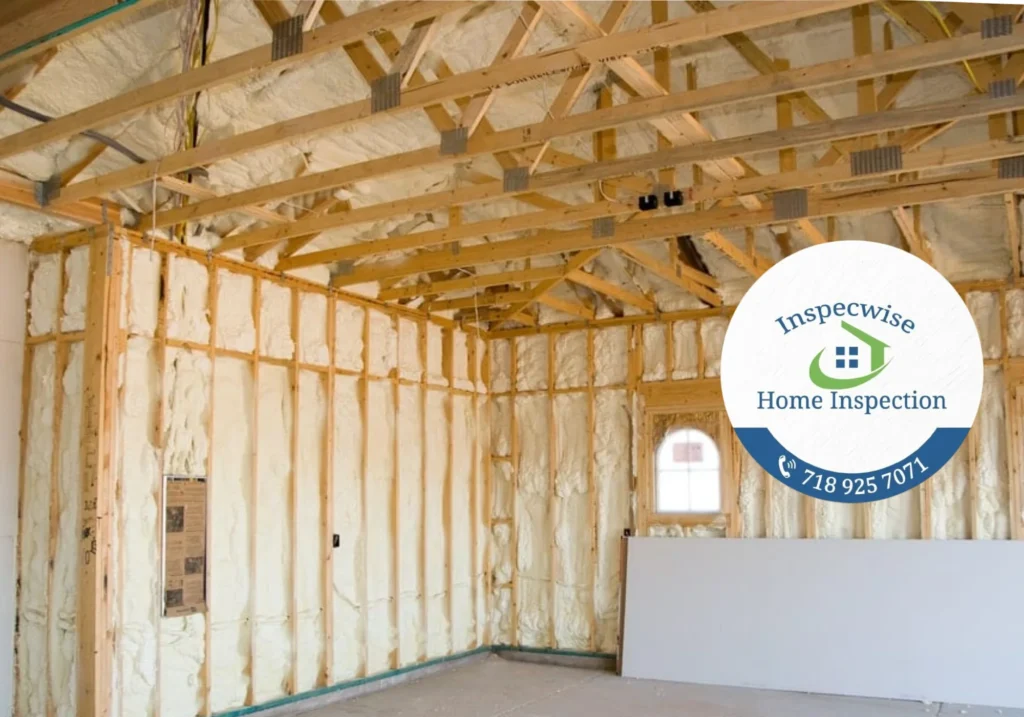
- Closed-Cell Spray Foam Depth and Density Verification: For projects utilizing high-performance spray foam insulation, inspectors use depth gauges to confirm the foam meets the specified thickness across every single stud cavity. The foam must be checked to ensure it adhered properly to the wood or steel without shrinking away or leaving empty air bubbles.
- Vapor Retarder Placement and Continuous Sealing: In the northeast climate zone, a vapor retarder must be installed on the warm-in-winter side of the insulation framing, facing the interior living space. This plastic or paper barrier must be installed smoothly, with all seams overlapping and sealed tight with vapor tape to stop humid room air from seeping into cold exterior walls.
- Baffle Installation at Roof Eaves for Attic Ventilation: In buildings with pitched roofs, plastic or cardboard insulation baffles must be installed at the eaves where the roof meets the walls. These baffles keep loose or batt insulation from sliding down and blocking the soffit vents, ensuring fresh air flows smoothly from the eaves up to the ridge vents.
Navigating Local NYC Regulatory Mandates and Building Codes
Building a new property or executing a major renovation in New York City requires navigating some of the most complex building codes and municipal regulations in the world. Private inspectors must evaluate the property through the lens of these local rules, which are specifically designed for high-density urban living. Catching layout issues or non-compliant materials before the walls are sheetrocked saves owners from failed city inspections and expensive reconstruction work down the road.
- Fire-Retardant Treated Wood Requirements in High-Density Zones: Under the city building code, specific commercial spaces and multi-family structures must use fire-retardant treated wood for interior framing partitions. Inspectors check for the official factory stamps on the lumber to verify the wood was chemically treated to resist flames before the framing is covered.
- Acoustic Insulation and Sound Transmission Class Ratings: Multi-family buildings must maintain a minimum Sound Transmission Class rating of 50 between separate living units to block airborne noise. Inspectors verify that acoustic insulation batts, resilient sound isolation clips, and specialized caulking are installed correctly according to the approved architectural plans.
- ADA Framing Compliance and Accessibility Clearance Adjustments: Commercial properties and accessible residential units must follow strict Americans with Disabilities outfitting laws. The framing inspection checks the rough openings for doors, hallways, and bathrooms to guarantee there is enough clear turning space for wheelchairs before any drywall finishes restrict the layout.
- Local Law 97 Thermal Envelope and Carbon Reduction Alignment: With the city tightening carbon emission rules under Local Law 97, a building’s thermal envelope must be incredibly tight. Inspectors check the framing layout for thermal bridging issues where steel studs conduct heat straight out of the building and confirm that continuous exterior insulation breaks are installed correctly.
Advanced Digital Pre-Drywall Documentation and Reality Capture
The pre-drywall phase is an excellent time to create a permanent digital record of the building’s internal systems. Using advanced imaging technology, inspectors can map out every wire, pipe, and duct inside the open walls, creating a visual guide that remains useful long after the sheetrock is painted. This permanent record takes the guesswork out of future building maintenance, renovations, or troubleshooting.
- Three-Dimensional Reality Capture and Laser Scanning Models: High-end inspection teams use specialized 360-degree cameras and laser scanners to build an interactive, 3D digital twin of the property’s exposed framing. This cloud-hosted model lets owners virtually look inside their walls years later to pinpoint the exact location of any hidden utility line.
- Thermal Imaging and Infrared Scanning for Air Leak Previews: Handheld infrared cameras can spot hidden construction defects even before the building is hooked up to power or heating. By checking the building shell with a thermal camera, inspectors can quickly locate missing insulation patches, hidden damp spots, or air gaps along the exterior walls.
- Digital Construction Blueprint Reconciliation Audits: Using tablet-based inspection software, inspectors can cross-check the real-world framing and utilities against the approved digital blueprints in real-time. Any changes made by subcontractors on-site are flagged instantly, ensuring that all modifications are officially approved and recorded on the final files.
- High-Resolution Structural Grid Photographic Mapping Protocols: Every wall section is methodically photographed alongside a physical tape measure, using the building’s structural columns and grids as reference points. These clear photos are organized by room and floor, giving future repair technicians an accurate map that prevents them from accidentally drilling into high-voltage lines or water pipes.
Hazardous Material Identification and Risk Mitigation
When adding onto an older urban property or finishing a conversion project, new framing often connects directly to existing historic building materials. It is vital to confirm that these older structural sections do not harbor hidden environmental health hazards that could leach into the new spaces. Testing for these hidden dangers before hanging new drywall protects the health of the construction crew and the safety of the future occupants.
- Lead Paint Matrix Assessment on Intersecting Historic Framing: When new walls attach to historic brickwork or old timber joists, those older surfaces must be checked for toxic lead-based paints or primers. Finding and addressing these lead coatings early prevents dangerous lead dust from being disturbed when the new drywall framing is anchored into place.
- Old Pipe Insulation and Structural Adhesive Fiber Checks: In older commercial buildings, old pipe runs, structural adhesives, and soundproofing layers often contain hazardous industrial fibers. If these older sections are exposed during construction, they must be tested before new walls seal them in. For properties with historic roots, scheduling a professional Asbestos Inspection New York ensures these materials are handled safely.
- Sub-Slab Soil Gas Remediation and Radon Pipe Ventilation: Toxic soil gases and radon can seep up through concrete basement floors and accumulate inside tight wall cavities. Inspectors check the layout of sub-slab vapor barriers and radon vent pipes to ensure these gases are safely collected and vented out through the roof.
- Construction Dust Control and Cross-Contamination Barriers: Active construction sites generate massive amounts of silica dust from concrete and sawdust from framing lumber. Heavy plastic isolation barriers and negative air pressure fans must be used to keep this dangerous dust from drifting out of the work zone and into clean, finished areas of the building.
Why Choose Inspecwise
Inspecwise is the premier property inspection authority in New York City, providing elite engineering walkthroughs and unmatched technical expertise for the region’s most demanding real estate investors. Our veteran team understands the unique challenges of local urban architecture, from the complex load paths of historic cast-iron buildings to the strict energy requirements of modern glass high-rises. We look past basic compliance checklists to deliver comprehensive, highly detailed digital reports complete with high-resolution photos, thermal imaging, and clear, actionable analysis. When you partner with Inspecwise, you gain an independent, expert ally committed to protecting your capital, reducing your liability, and ensuring your project is built to last.
Serving All 5 Boroughs and Long Island: Manhattan • Brooklyn • Queens • The Bronx • Staten Island • Nassau County • Suffolk County
Call Inspecwise now: 718-925-7071
Licensed, Certified, and 100% NYC Local