Pre listing inspection the Bronx sellers rely on has become one of the most effective ways to prepare for one of the most demanding real estate markets in the country, where buyers arrive with sharp expectations and their own inspectors in tow. It lets a seller see the property the way a buyer’s inspector will see it, before the listing goes live, before an offer is on the table, and while there is still time to act. Instead of reacting to a surprise defect list in the middle of a negotiation, the seller controls the timeline: what gets repaired, what gets disclosed, and how the property is priced.
The Bronx presents a genuinely wide range of building stock. Art Deco apartment houses line the Grand Concourse, brick row houses fill Mott Haven and the South Bronx, mid-century detached homes sit in Riverdale, and commercial corridors run through Fordham Road, Third Avenue, and White Plains Road. Each of these building types ages differently, and a pre-listing inspection needs to reflect that rather than treat every property the same way. Reviewing a general home inspection the bronx resource is a useful starting point for understanding how local inspectors approach these buildings before narrowing in on the pre-listing process itself.
What Is a Pre Listing Inspection in the Bronx?
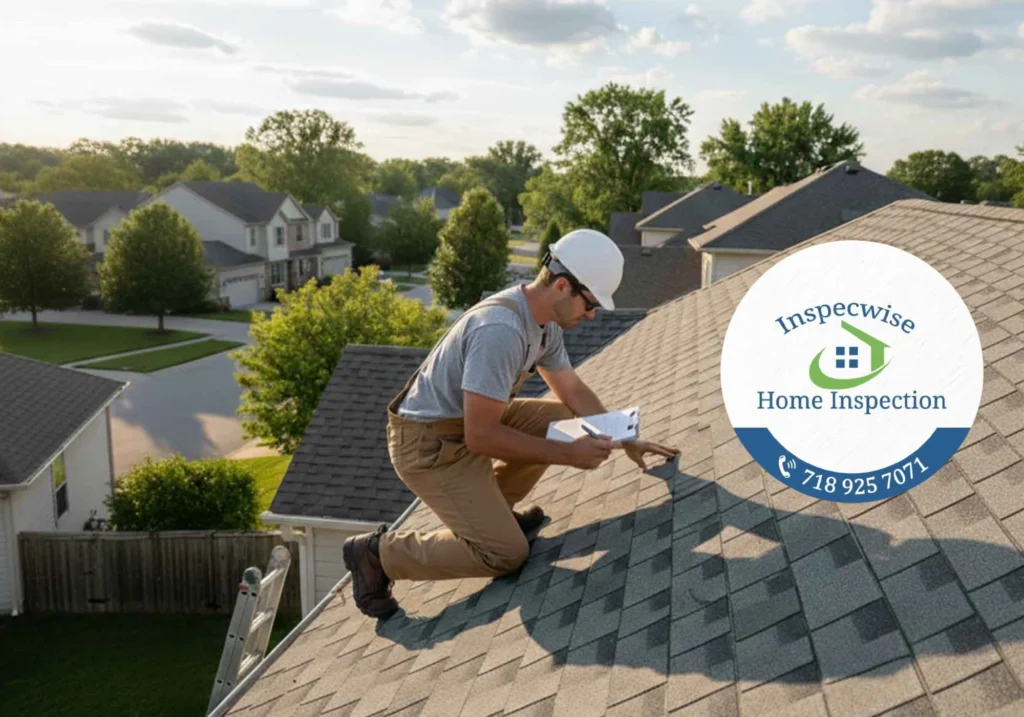
A pre listing inspection is a full property evaluation ordered by the seller, conducted before the home or building goes on the market. It follows the same general process as a buyer’s inspection, a visual, non-invasive review of structural, mechanical, and safety-related components, but the findings go to the seller first, not to a buyer’s attorney during a due-diligence deadline.
That difference matters. A seller who already knows about a roof leak, an aging boiler, or a section of deteriorating masonry can decide how to handle it on their own schedule: repair it, price around it, or disclose it clearly. A seller who finds out about the same issue from a buyer’s inspection report is usually negotiating from a weaker position, often under time pressure, and sometimes after the buyer’s confidence in the deal has already been shaken.
A pre-listing inspection does not guarantee a faster sale, a higher price, or a smoother closing. No inspection can promise an outcome that depends on market conditions, buyer financing, and negotiation. What it does provide is information, delivered early enough to be useful.
Why Choose InspecWise for Your Property Inspection?
Sellers who commission a pre-listing inspection are relying on the findings to guide real decisions about repairs, pricing, and disclosure, so the quality and credibility of the inspection matters as much as the decision to get one at all.
Licensed New York Inspector. InspecWise inspections are performed by a licensed New York State home inspector. Licensing requires meeting state education and testing standards, which gives sellers and their agents a baseline assurance that the inspection follows a structured, defensible process rather than an informal walk-through.
InterNACHI Certified. InspecWise inspectors hold InterNACHI certification, a recognized industry training credential that reflects ongoing education in inspection standards and practices. It is a signal of professional development, not a guarantee of any particular outcome.
Fast Report Turnaround. Real estate transactions move on tight timelines, and a report that sits unread for a week loses much of its value. InspecWise prioritizes fast turnaround so sellers can review findings and make repair or pricing decisions while the listing process is still active.
Same-Day Scheduling. Pre-listing timelines are often compressed, especially when a seller has already committed to a listing date. Same-day scheduling helps sellers fit an inspection into a tight window instead of delaying the listing.
Commercial Specialists. Beyond single-family and multi-family residential properties, InspecWise also works with owners of mixed-use, retail, office, and industrial buildings, where systems are larger, more complex, and subject to additional code requirements.
Detailed Digital Reports. A useful inspection report does more than list problems: it documents them clearly, with descriptions and photographs of what was actually observed, so a seller, agent, or attorney can understand the finding without needing to be on-site.
Serving NYC & Long Island. InspecWise inspects properties across New York City and Long Island, which means the same team that handles a Bronx multi-family building also has experience with comparable housing stock elsewhere in the region.
Competitive Pricing. Inspection cost varies by property size, age, and complexity, but InspecWise prices its services competitively within the local market rather than positioning itself as a premium outlier.
Thousands of Inspections Completed. InspecWise has completed thousands of inspections across residential and commercial properties, building a depth of field experience that informs how each new inspection is approached.
Why Bronx Sellers Should Consider a Pre-Listing Inspection
The core value of a pre-listing inspection is that it moves the discovery of problems earlier in the process, when the seller still has options.
Without a pre-listing inspection, the typical sequence looks like this: the property is listed, a buyer makes an offer, the buyer’s inspector finds issues, and the seller is now negotiating repairs or a price reduction under a contractual deadline. With a pre-listing inspection, the sequence changes. The seller finds out about the roof, the electrical panel, or the foundation before a buyer is involved, and has room to decide what to do about it without a clock running.
This earlier knowledge supports several practical outcomes:
- Identifying problems that might otherwise go unnoticed until a buyer’s inspector finds them
- Prioritizing which repairs are worth making before listing and which can be disclosed instead
- Reducing the likelihood of last-minute renegotiation once a buyer is under contract
- Preparing clear, accurate answers for buyer questions during showings and due diligence
- Understanding the property’s actual condition, not just its market presentation
- Setting a listing price that reflects the property’s real condition
- Presenting the property to buyers and agents with documented confidence
None of this changes the fact that selling a Bronx property still depends on market timing, buyer demand, and financing conditions. A pre-listing inspection improves the seller’s information and preparation. It does not control the outcome of the sale. The same logic applies across the wider region: a seller comparing notes with a home inspection nyc resource will find the same underlying principle, just applied to different housing stock outside the borough.
For buyers, the motivation is different, and it is worth being direct about that difference rather than pretending both sides want the same thing from an inspection. A seller orders a pre-listing inspection to manage risk before going to market. A buyer orders, or relies on, an inspection to protect their own decision to purchase. A buyer wants to understand the property’s condition, anticipate what maintenance and repairs will cost after closing, and know which findings might justify a negotiation or a request for further evaluation by a specialist. A seller’s pre-listing inspection does not replace a buyer’s own inspection, and buyers generally still have the right to commission one.
What Does a Pre-Listing Inspection Cover?
A pre-listing inspection examines the same core systems a buyer’s inspector will look at, evaluated through a visual, non-invasive review of accessible areas.
Structural Components
The inspector reviews foundation walls, floor framing, load-bearing masonry, and any visible signs of settlement, cracking, or movement. In much of the Bronx’s older housing stock, particularly brick row houses and pre-war walk-ups in neighborhoods like Mott Haven and the South Bronx, exterior masonry walls often support the floor joists directly, so the condition of joist pockets and mortar joints is part of the structural review.
Roof and Exterior
This covers roofing material condition, flashing at chimneys and wall intersections, gutters and drainage, and the exterior envelope generally, including siding, trim, and window and door openings. On flat-roofed buildings common along commercial strips like Fordham Road, the inspector also checks membrane seams and drainage points for ponding risk.
Electrical Systems
The inspector examines the main panel, visible wiring, and general safety of the electrical distribution system, noting any outdated configurations, obvious code concerns, or signs of overloading. Older multi-family conversions in the South Bronx sometimes carry panel modifications made without proper Department of Buildings permits, which a visual review can flag for further evaluation.
Plumbing
Supply lines, drain lines, visible leaks, and fixture function are reviewed, along with water pressure and general drainage performance. Pre-war buildings with cast-iron or galvanized piping are checked for signs of corrosion or restricted flow.
Heating and Cooling
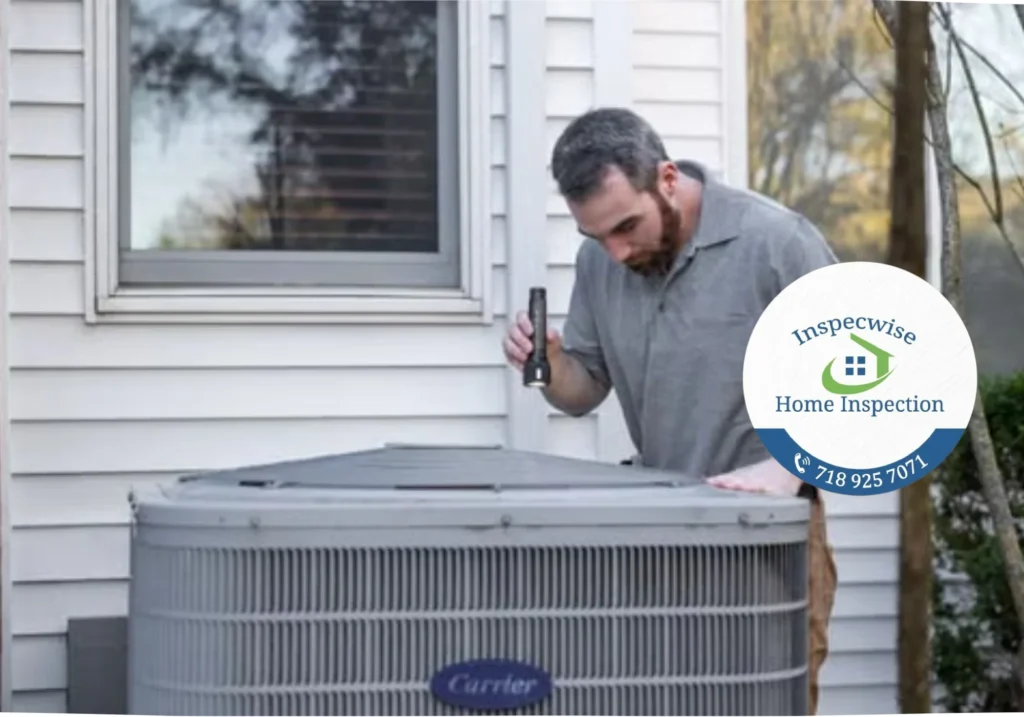
Furnaces, boilers, and cooling systems are operated under normal conditions where accessible, and the inspector notes visible signs of wear, corrosion, or safety concerns such as heat exchanger issues in older units.
Basements, Attics and Moisture
Basements and crawlspaces are checked for moisture intrusion, efflorescence, and drainage issues, which are a recurring concern in parts of the borough with clay soils or higher water tables near Throggs Neck and City Island. Attics are reviewed for ventilation, insulation condition, and any evidence of past roof leaks.
Common Problems Found in Bronx Properties Before a Sale
Certain issues show up repeatedly across the borough’s older housing stock, and knowing what they are helps sellers understand what a pre-listing inspection is actually looking for.
Masonry and Foundation Problems
Foundation settlement is common in older structures, but not all settlement is equally significant: distinguishing cosmetic cracking from an active structural concern generally requires professional judgment. Inspectors look for stair-step cracking in mortar joints, displacement in basement walls, and, in hillside neighborhoods like Kingsbridge and University Heights, the condition of retaining walls that define many property lines. A retaining wall showing tilting, bulging, or blocked weep holes is a finding that typically warrants further evaluation before listing, since these issues can become things that fail a home inspection when a buyer’s inspector reviews the same property later.
Aging Electrical Systems
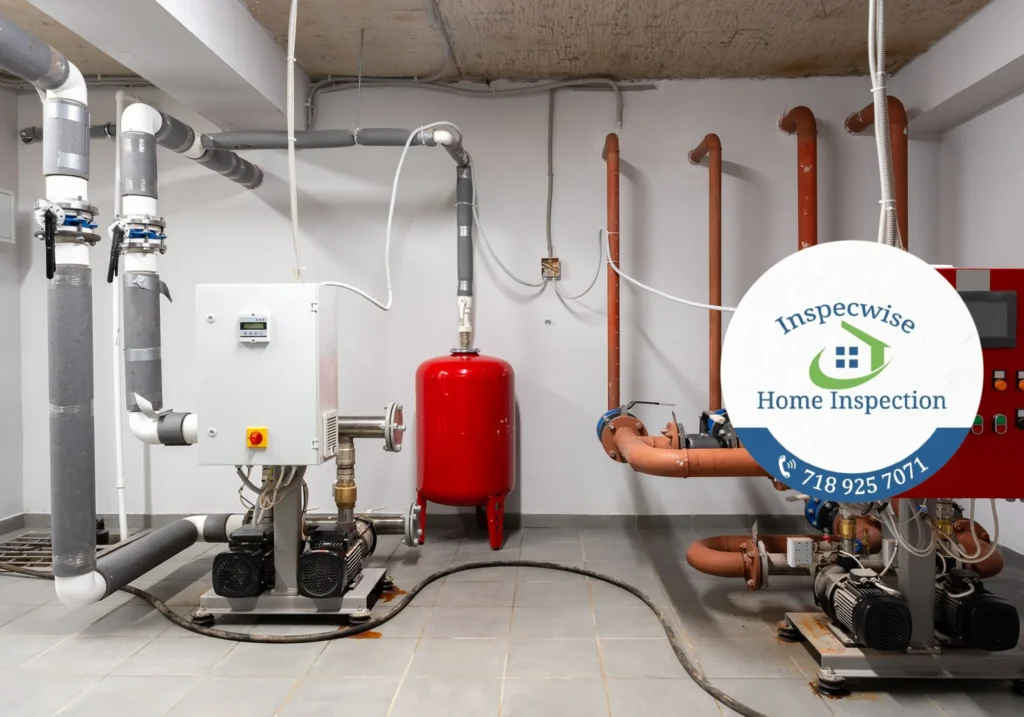
Panels with double-tapped breakers, obsolete fuse configurations, or aluminum branch wiring are frequent findings in older multi-family conversions. These are safety-relevant issues that buyers’ inspectors flag consistently, which makes them a priority for pre-listing review rather than something to leave for the buyer’s due-diligence period.
Water Intrusion and Basement Moisture
Basement moisture is one of the most common findings in older Bronx properties, and it can originate from grading, gutters, foundation cracks, or groundwater. Left unaddressed, it creates conditions for wood rot and mold growth, which is why a home mold inspection is sometimes recommended as a follow-up when a pre-listing inspection turns up visible moisture staining or musty odors in enclosed spaces.
Plumbing and Drainage Problems
Corroded cast-iron drain lines and reduced water pressure from aging galvanized supply piping show up often in pre-war apartment buildings. These issues rarely cause an immediate emergency, but they influence how a buyer estimates near-term repair costs, and unaddressed drainage problems can affect negotiations.
Roof and Facade Deterioration
Roof leaks, deteriorating flashing, and masonry facade issues are especially relevant for buildings over six stories, which fall under New York City’s Facade Inspection Safety Program requirements. A pre-listing inspection can identify visible facade deterioration before it becomes a compliance issue discovered during a buyer’s due diligence.
Pre-Listing Inspection for Different Bronx Property Types
Not every Bronx property needs the same inspection emphasis, and the right approach depends on the building type.
Single-Family Homes
Detached and semi-detached homes in neighborhoods like Riverdale and Pelham Bay are inspected much like residential properties anywhere: structure, roof, electrical, plumbing, HVAC, and moisture, with attention to the age of major systems and any deferred maintenance.
Multi-Family Properties
Row houses and small apartment buildings common throughout the South Bronx and West Bronx add complexity: shared systems, multiple units, and a higher likelihood of past renovations that may not have been permitted. Inspectors pay closer attention to how individual units interact with shared structural and mechanical systems.
Co-ops and Condos
For co-op and condo sales, the pre-listing inspection typically focuses on the interior unit rather than building-wide systems, which are usually the responsibility of the co-op board or condo association. Sellers should understand this distinction, since a pre-listing inspection of a unit will not substitute for building-wide maintenance records.
Mixed-Use Properties
Buildings that combine ground-floor retail with residential units above, common along Third Avenue and White Plains Road, require attention to both the commercial and residential systems, since defects in one can affect the other, particularly around plumbing stacks and shared electrical service.
Commercial Properties
Owners of standalone commercial buildings benefit from a commercial building inspection the bronx approach that accounts for larger mechanical systems, fire and life-safety equipment, and code requirements that don’t apply to residential properties. Commercial pre-listing inspections generally involve more systems and more specialized review than a residential inspection of comparable size.
Pre-Listing Inspection vs. Buyer Inspection
Sellers sometimes ask whether a pre-listing inspection makes a buyer’s own inspection unnecessary. It does not. The two serve different purposes and are typically ordered by different parties.
| Factor | Pre-Listing Inspection | Buyer Inspection |
|---|---|---|
| Usually ordered by | Seller | Buyer |
| Main purpose | Identify issues before listing | Evaluate property before purchase |
| Timing | Before or around listing | During buyer due diligence |
| Main benefit | Gives seller time to address or understand issues | Helps buyer make an informed purchase decision |
| Negotiation impact | Can reduce the number of surprises during negotiation | Findings may directly influence negotiation |
| Does it replace the other inspection? | No | No |
Buyers retain the right to commission their own inspection even when a seller has already provided a pre-listing report, and most buyers’ attorneys will recommend they do so. The pre-listing report is best understood as preparation, not a substitute.
What Happens During a Pre-Listing Inspection?
The process follows a consistent sequence, regardless of property type.
Property and Record Review
The inspector begins with the property’s basic records where available, including any open Department of Buildings violations, which can affect both the inspection findings and the transaction itself.
Visual Walkthrough
A full visual review of accessible areas follows: roof, exterior, structure, basement or crawlspace, and interior systems, using standard tools such as moisture meters and, where appropriate, thermal imaging to identify issues not visible to the naked eye.
System Evaluation
Electrical, plumbing, heating, and cooling systems are operated under normal conditions to confirm they function as expected, rather than relying solely on visual condition.
Documentation and Reporting
Findings are compiled into a written report with photographs, so the seller has a clear, specific record rather than a verbal summary.
Repair Prioritization
The seller reviews the report, often with their agent, and decides which findings warrant repair before listing and which are better addressed through disclosure or pricing.
How long this takes depends on several factors: property size, age, number of units, accessibility, and whether the scope is residential or commercial. A small single-family home is generally faster to inspect than a multi-family building with several units, and commercial properties with larger mechanical systems typically take longer still. Sellers weighing their timeline can review a general guide on how long a home inspection take to understand what affects scheduling before booking.
What Should Sellers Repair Before Listing?
Not every finding on a pre-listing inspection report needs to be fixed before the property goes on the market. Some issues are safety-relevant and worth addressing directly; others are more appropriately handled through pricing or disclosure.
| Common Finding | Why It Matters Before Sale | Possible Next Step |
|---|---|---|
| Masonry deterioration | May raise safety or structural concerns | Further evaluation or repair by a qualified contractor |
| Roof leakage | Can cause hidden moisture damage over time | Roofing evaluation and repair |
| Electrical defects | May create safety concerns for occupants | Evaluation by a licensed electrician |
| Plumbing deterioration | Can lead to leaks or drainage problems | Evaluation by a licensed plumber |
| Basement moisture | May indicate drainage or water-intrusion issues | Determine the source and address moisture before listing |
| HVAC problems | Can affect comfort and future operating costs | HVAC system evaluation |
An inspector’s observation is a starting point, not a final diagnosis. When a finding involves structural movement, active water intrusion, or a major system defect, the appropriate next step is usually evaluation by the relevant specialist, such as a structural engineer, electrician, plumber, or HVAC technician, rather than treating the inspection report itself as a repair estimate.
What Does a Pre-Listing Inspection Cost in the Bronx?
Inspection pricing depends on several variables rather than a single flat rate: the size of the property, its age, the number of units, accessibility, and whether the scope is residential or commercial. A single-family home in Riverdale and a multi-family building in the South Bronx will not cost the same to inspect, and a commercial property with additional mechanical and life-safety systems typically costs more than either. Sellers should expect to receive a quote based on their specific property rather than a generic published price, and should treat any inspector quoting a fee without knowing the property’s basic details with some caution.
Environmental and Moisture Concerns
Environmental issues can stall a transaction as effectively as a structural defect, and they are worth identifying before a buyer’s attorney raises them during due diligence.
Mold
Mold typically follows moisture, and hidden leaks behind basement walls or around pipe chases can create conditions for growth well before it becomes visible. When a pre-listing inspection identifies signs of past or active moisture, a follow-up mold assessment can determine whether growth is present and to what extent. For mixed-use or commercial buildings with shared mechanical spaces, a commercial mold inspection serves the same purpose on a larger scale, since moisture in one unit or system can affect several tenants at once.
Radon
Radon is less commonly discussed in dense urban housing, but ground-contact basements in certain parts of the borough can occasionally show elevated readings. A pre-listing radon screening gives sellers time to address it, if needed, before a buyer’s test raises the issue later.
Lead-Based Paint
Properties built before 1978 may contain lead-based paint, which is a disclosure consideration under federal law regardless of the paint’s current condition. A visual assessment can note where paint is deteriorating and more likely to require attention.
Asbestos
Older buildings sometimes have asbestos-containing materials around pipe insulation or flooring. When present and undisturbed, these materials may not require immediate action, but their presence is relevant information for both seller and buyer.
Underground Storage Tanks
Older properties, particularly those that once used oil heat, may have abandoned underground storage tanks. These carry environmental liability if they leak, and identifying them early allows time for proper testing and decommissioning before a buyer’s attorney flags the issue at contract.
None of these environmental findings should be treated as a definitive diagnosis from a general property inspection. A visual review can identify indicators that warrant testing or evaluation by an environmental specialist, but it is not itself a remediation assessment.
Commercial and Industrial Pre-Listing Considerations
Owners of commercial, mixed-use, or industrial Bronx properties face a version of the same pre-listing logic, applied to a larger and more complex set of systems. Regulatory requirements are also heavier: fire and life-safety equipment, ADA accessibility features, elevator maintenance, and mechanical ventilation are all reviewed against city code in a way that residential systems generally are not, and a broader commercial building inspection nyc perspective is useful for owners comparing their property against city-wide standards rather than only local Bronx competitors. Sellers of these property types benefit from involving a specialist early, since commercial due diligence periods are frequently shorter and less forgiving than residential ones, and buyers in this segment tend to scrutinize operating costs as closely as physical condition.
For light industrial and warehouse properties concentrated near Hunts Point, a pre-listing review through an industrial warehouse inspection framework looks at floor slab condition and load tolerance, electrical service capacity for heavy equipment, and fire suppression infrastructure such as sprinkler coverage for high-piled storage. Buyers of these properties often evaluate them as much on operational capacity as on physical condition, so documenting slab integrity and utility capacity ahead of listing can prevent a lengthy renegotiation once a buyer’s engineer gets involved.
Owners of standalone commercial buildings elsewhere in the borough face a comparable review under an office building inspection approach, which typically covers elevator condition and maintenance records, centralized boiler or HVAC plant performance, and the general condition of the building envelope. Multi-tenant office buildings also tend to accumulate electrical and mechanical modifications from successive build-outs, which a pre-listing review can flag before they surface during a buyer’s walkthrough.
Buildings that combine ground-floor commercial space with upper-floor residential or office use present a mixed set of priorities, since a defect in one part of the building, such as a plumbing stack, a shared electrical service, or a roof leak, can affect tenants above and below at the same time. Reviewing shared systems separately from unit-specific ones helps a seller understand which repairs benefit the whole building and which are isolated to a single space.
Ground-floor retail space along corridors like Fordham Road and Third Avenue calls for a more storefront-specific retail space inspection, concentrating on glazing and framing condition, zoned HVAC performance, and the electrical modifications that often accumulate through repeated tenant build-outs. Retail tenants change more frequently than office or residential tenants, and each build-out leaves its own layer of modifications behind, which makes a pre-listing review particularly useful before a sale to a new operator or investor.
How a Pre-Listing Inspection Can Help Buyers and Sellers
A pre-listing inspection changes the sequence of decisions for a seller, and it changes what a buyer needs to evaluate once the property is on the market. The two paths run in parallel rather than in the same direction.
For sellers, the practical sequence looks like this: find the issue, understand what it means, decide whether it needs repair or disclosure, act on that decision, then list with confidence in what the report shows. For buyers, the sequence is different: review the inspection findings, understand what they mean for ongoing costs, estimate the financial implications, ask follow-up questions, and use that information to make a purchase decision.
| Finding | Seller Action | Buyer Consideration |
|---|---|---|
| Minor cosmetic issue | Usually low priority | Usually limited concern |
| Active water intrusion | Investigate and address the source | Determine cause and potential existing damage |
| Major electrical safety issue | Obtain a qualified evaluation and repair | Understand safety implications and repair costs |
| Structural concern | Seek evaluation from an appropriate specialist | Request documentation or a second evaluation |
| Aging HVAC system | Assess condition and remaining useful life | Factor future maintenance or replacement into ownership costs |
Not every finding calls for a universal response. The right action, on either side, generally depends on the specific circumstances and, where structural or safety issues are involved, on evaluation by a qualified specialist rather than a one-size-fits-all repair instruction.
Questions to Ask Before Hiring a Home Inspector
Not all inspections are equal, and the value of a pre-listing inspection depends heavily on who performs it. Sellers evaluating inspectors should confirm licensing status, ask how findings are documented, and understand what the report will and will not cover. A helpful starting point is a general list of questions to ask home inspector candidates, covering credentials, experience with comparable property types, report turnaround, and what tools they use during the inspection itself. Asking these questions before booking, rather than after receiving a disappointing report, is the more useful order of operations.
Frequently Asked Questions
What is a pre-listing inspection? It is a full property inspection ordered by the seller before the property is listed, intended to identify issues while there is still time to address them.
Should I get a home inspection before selling? Many sellers find it useful, particularly for older properties or buildings with unclear maintenance history, since it reduces the chance of a surprise finding derailing negotiations later. It is not a legal requirement.
How long does a pre-listing inspection take? It varies with property size, age, number of units, and complexity. A small single-family home is typically faster than a multi-family or commercial building.
How much does a pre-listing inspection cost? Cost depends on the same factors that affect timing: size, age, unit count, and whether the property is residential or commercial. There is no single standard price.
What does a pre-listing inspection include? A visual review of structural, roofing, electrical, plumbing, heating and cooling, and moisture-related conditions, documented in a written report with photographs.
Should I repair everything found during an inspection? Not necessarily. Some findings are worth repairing before listing; others are more appropriately handled through pricing or disclosure. Prioritizing safety and structural issues first is a reasonable general approach.
Can a pre-listing inspection prevent buyer negotiations? It can reduce the likelihood of major surprises driving a renegotiation, but it cannot guarantee that a buyer’s own inspection will raise no questions at all.
Does the seller have to disclose inspection findings? Disclosure obligations depend on New York real estate law and the specifics of the transaction. Sellers with questions about what must be disclosed should consult a qualified New York real estate attorney rather than relying on general guidance.
Is a pre-listing inspection the same as a buyer’s inspection? No. They cover similar ground but serve different parties and different purposes, as outlined in the comparison table above.
Can buyers still conduct their own inspection? Yes. A seller’s pre-listing inspection does not replace a buyer’s right to commission an independent inspection, and most buyers do so regardless.
What happens if the inspection finds a major defect? The seller decides how to respond: repair it, price around it, or disclose it clearly, ideally after consulting the relevant specialist and, where legal questions arise, an attorney.
Schedule a Pre-Listing Inspection With InspecWise
A pre-listing inspection works best when it happens early enough to actually change how a sale unfolds. InspecWise brings a licensed New York inspector, InterNACHI certification, and experience across thousands of residential and commercial inspections to Bronx property owners preparing to sell. With same-day scheduling, fast report turnaround, and detailed digital reports covering everything from single-family homes to commercial and mixed-use buildings, InspecWise serves sellers throughout NYC and Long Island at competitive pricing.
GET IN TOUCH
Schedule a Visit
Serving All 5 Boroughs and Long Island: Manhattan • Brooklyn • Queens • The Bronx • Staten Island • Nassau County • Suffolk County
Call Inspecwise now: 718-925-7071
Licensed, Certified, and 100% NYC Local