Commercial Building Inspection Bronx is not the same job as a citywide walkthrough. Any buyer who treats it that way usually finds that out at the worst possible time after closing, when a capital expense nobody budgeted for lands on their desk. A pre-war masonry warehouse in Melrose, an auto body shop under the elevated tracks in Hunts Point, a mixed-use storefront on Fordham Road passed down through three generations of the same family: none of these buildings were built to a modern spec, and none of them read the way a generic inspection checklist expects. That’s why a Bronx commercial building inspection requires inspectors who already know where this borough hides its problems, not a citywide template applied to a building stock that never followed citywide rules in the first place.
This page exists because our Commercial Building Inspection NYC service covers the fundamentals every commercial buyer needs across the five boroughs but the Bronx has its own violation history, its own aging utility grid, and its own enforcement patterns that deserve a dedicated resource.
Why a Bronx Commercial Building Inspection Requires Different Due Diligence
Most commercial buyers start with a physical walkthrough. In the Bronx, the smarter starting point is the municipal record. Before we ever set foot in a property, we pull the Department of Buildings violation history, any open OATH/ECB (Environmental Control Board) judgments, and for mixed-use buildings with a residential component the HPD violation history. A clean-looking storefront can be carrying five figures in unresolved ECB penalties that transfer with the deed, and a building with an open DOB vacate order isn’t financeable until that order is cleared, regardless of how solid the structure looks.
This matters because the Bronx has a wider mix of commercial building types than most buyers expect walking in. On a given week our inspectors are in restaurants, medical office buildings, office buildings, post-war mixed-use properties, converted loft buildings, churches, schools, retail space storefronts, and automotive facilities each with its own occupancy history and its own set of shortcuts a previous owner may have taken to keep the doors open without triggering a change-of-use filing.
The paper trail and the physical building often tell two different stories in this borough. Our job is to reconcile them before you’re the one holding the liability.
The Most Expensive Problems We Find During Bronx Commercial Inspections
After years of running commercial inspections across the borough, a handful of physical defects surface again and again on-site separate from anything a violation search will show you. These are the findings that actually move a closing negotiation.
Cast-Iron Plumbing Failures
Multi-family and apartment buildings across the Bronx’s older commercial corridors are notorious for owners who invest in cosmetic lobby and unit upgrades while the 1930s-era cast iron underneath goes untouched for decades. Replacing a main line is expensive and mostly invisible until it fails, so it’s the easiest system for an owner to defer. A failing lateral rarely announces itself gradually it backs up, usually during the first hard rain after closing. Our inspectors focus on “scabbing” (patch repairs), abandoned piping left in place along exposed basement runs, and the slow drains that signal a main-line replacement is closer than anyone selling the building wants to admit.
Roof Ponding on Flat Commercial Roofs
Flat roofs throughout Hunts Point and Port Morris carry a specific kind of risk: many have been reroofed two or three times without ever correcting the underlying drainage slope, so each new membrane layer just adds weight and traps water differently than the last. Add in decades of rooftop HVAC units bolted on wherever there was structural capacity, and you get a roof surface with more penetrations, more low spots, and more failure points than the original design ever accounted for. Standing water accelerates deterioration along the membrane seams and eventually finds its way through flashing details into the ceiling below often over inventory, tenant space, or mechanical equipment that’s expensive to replace. Our inspectors look at membrane condition, deteriorated sealants around rooftop equipment, parapet wall integrity, and every penetration, not just the surface.
Aging Steam Heating Systems
Older Bronx commercial districts are full of buildings still running original or near-original boiler plants, sized decades ago for a different tenant mix and a different climate expectation. These systems keep running long past their realistic service life because steam equipment is durable and rarely fails outright it just gets less efficient every year, and owners keep patching rather than replacing. That inefficiency becomes a direct capital-planning problem once Local Law 97 penalties are layered on top, since an aging boiler plant is often the single largest driver of a building’s carbon intensity score. Our inspectors evaluate remaining service life, not just whether the system currently produces heat, so you can budget the replacement instead of inheriting it as a surprise.
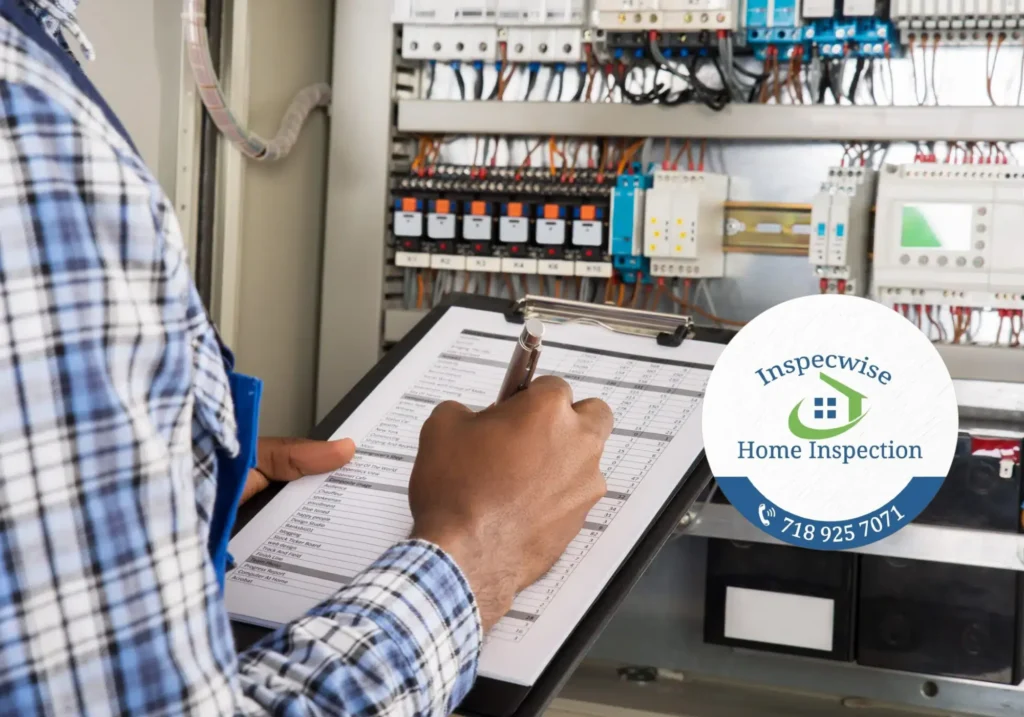
Electrical Systems Hidden Behind Renovations
Older electrical systems are one of the most common findings in any Bronx commercial building inspection, particularly along the Grand Concourse and in older sections of Castle Hill and Pelham Bay. Part of the problem is Con Edison service capacity itself: many older Bronx commercial buildings were fed at amperage levels that made sense for a 1960s tenant mix and simply weren’t built for the electrical load of modern kitchen equipment, server rooms, or EV charging that today’s tenants expect. Layer renovations on top of that limited capacity a new drop ceiling or a fresh coat of paint frequently covers panels and wiring runs without ever bringing the underlying system up to code and you get knob-and-tube wiring, overloaded branch circuits, and switchgear operating well beyond safe capacity, all hidden behind finishes that look perfectly fine. Our inspectors trace circuits and inspect panels directly rather than relying on what’s visible at a glance.
Masonry and Facade Deterioration
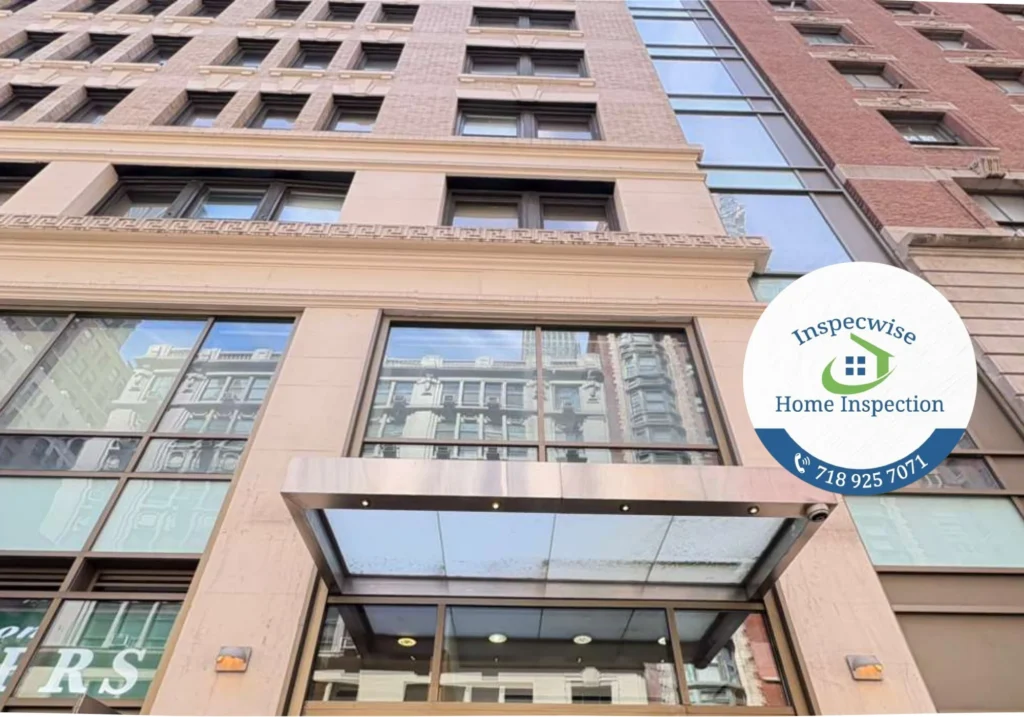
Decades of heavy truck traffic and elevated subway vibration have taken a measurable toll on brick and mortar throughout the borough, particularly along the Grand Concourse and other pre-war commercial corridors. For any Bronx commercial building six stories or taller, this isn’t just a cosmetic concern it’s a Local Law 11/FISP (Facade Inspection Safety Program) compliance issue, and an owner with an open or overdue FISP filing is carrying real liability along with the cosmetic damage. The deterioration itself is gradual: vibration loosens mortar joints long before any visible movement appears, and by the time it’s visible the signs are usually spalling, efflorescence, corroded steel lintels, and patched masonry early indicators of moisture intrusion that only gets more expensive to correct with time. Our inspectors distinguish normal thermal movement from genuine differential settlement, beam deflection, or moisture staining that warrants a structural engineer’s review before it becomes a FISP violation.
Common Building Code Issues in Older Bronx Commercial Buildings
Unauthorized alterations don’t just create physical risk they create documented liability that follows the property. A converted basement used as storage or office space without proper egress can trigger an ECB violation the moment an inspector notices it, and that penalty attaches to the building, not the tenant who created the condition. A subdivided commercial unit that was never updated to reflect its new occupancy classification puts the current Certificate of Occupancy at odds with actual use, which becomes a real problem the moment you need a permit for anything else. Fire separation walls compromised the moment someone cut a hole for a new duct run and never patched it correctly are one of the more dangerous versions of this pattern, since they undermine life-safety systems without any visible sign from a casual walkthrough.
Add to that the number of Bronx buildings still carrying legacy Certificates of Occupancy that no longer match how the space is actually being used, and you start to see why commercial inspection services in this borough need to go well beyond a cosmetic walkthrough. Our Commercial Inspection Checklist is built around catching exactly these mismatches between what a building is permitted to be and what it’s actually being used for because in the Bronx, that gap is often where the real risk, and the real negotiating leverage, lives.
Local Law 97 and What It Means for Bronx Owners
For any Bronx building over 25,000 square feet, Local Law 97 isn’t a future concern. It’s already being enforced, with penalties running roughly $268 per ton of carbon over a building’s emissions limit. What makes this especially costly across the borough is the sheer number of buildings still running original mechanical systems from the 1960s and 70s, paired with drafty single-pane windows that leak conditioned air all winter a combination that pushes older Bronx properties toward the top of the penalty curve rather than the bottom.
This has become a lender issue as much as a compliance issue. Banks and commercial lenders increasingly want to see a Local Law 97 compliance plan, or at least a realistic retrofit budget, before they’ll finance an acquisition of an older Bronx commercial asset. A Bronx property condition assessment from our team doesn’t just note that a boiler or rooftop unit runs we evaluate where that system sits relative to its realistic remaining lifespan and flag the point at which a “working” system becomes a compliance liability, giving you the documentation a lender or an investor is going to ask for anyway.
How Bronx Infrastructure Impacts Long-Term Ownership Costs
Owning commercial property in this borough means owning a relationship with public infrastructure that predates most of the buildings sitting on top of it. DEP sewer mains under industrial corridors in Hunts Point and Port Morris were sized for a manufacturing-era flow profile, not the mixed commercial and multi-family density many of these buildings carry today. Properties near the Bronx River corridor carry an additional layer of risk: elevated groundwater and periodic flooding have driven persistent basement moisture in older buildings throughout that stretch, independent of anything happening inside the structure itself.
Former manufacturing use is its own category of concern. A warehouse or industrial building in Hunts Point or Port Morris that operated as a machine shop, dry cleaner, or fuel distributor decades ago may carry brownfield considerations that show up in a Phase I environmental review, and that history doesn’t disappear just because the building has since been repainted and re-tenanted. Buyers evaluating former manufacturing properties in these corridors should expect environmental due diligence to run in parallel with the physical inspection, not as an afterthought.
This is where a Commercial Sewer Scope Inspection earns its cost many times over. A camera run through the lateral line of an older multi-family or mixed-use building can reveal root intrusion, belly sections, or century-old clay pipe that’s one hard rain away from backing up into the basement none of which is visible from a fixture-level plumbing check alone, and none of which a DEP sewer main upgrade on the street will fix if the problem is on the private side of the connection.
Questions Every Bronx Commercial Buyer Should Ask Before Closing
Before you sign, get straight answers on the items that actually move a deal. What year was the electrical service last upgraded, and does it match Con Edison’s current capacity records for the block? Has the Certificate of Occupancy been updated to match the building’s current use, or is it running on a decades-old classification that could stall your own permits later? What’s the realistic remaining life on the boiler or rooftop units, and how does that intersect with Local Law 97 exposure and any retrofit reserve the seller has or hasn’t set aside? Are there open DOB violations, ECB judgments, or HPD history attached to the property, and who’s responsible for clearing them before or after closing?
Ask your lender directly what documentation they’ll require for underwriting, since Local Law 97 exposure and deferred maintenance findings increasingly factor into loan terms on older Bronx assets. Ask your insurance broker how unresolved code violations or open FISP filings affect underwriting and premiums. And if you’re inheriting tenants, ask what capital expenditures or tenant improvements were promised in existing leases that you’ll now be on the hook to deliver. Sellers rarely volunteer these answers. A thorough Bronx commercial building inspection forces them into the open before you’re the one holding the bill.
What We Actually Check During a Bronx Commercial Inspection
Every category on our checklist gets read through a lens shaped by what actually fails in this borough’s building stock, not a generic national standard.
The Bones (Structure): In a market where subway vibration and heavy truck routes run through commercial corridors daily, we’re not just separating “scary” cracks from normal settling we’re evaluating whether decades of vibration have accelerated movement beyond what the building’s age alone would explain. For pre-war masonry buildings especially, this assessment feeds directly into any FISP obligation the new owner will inherit.
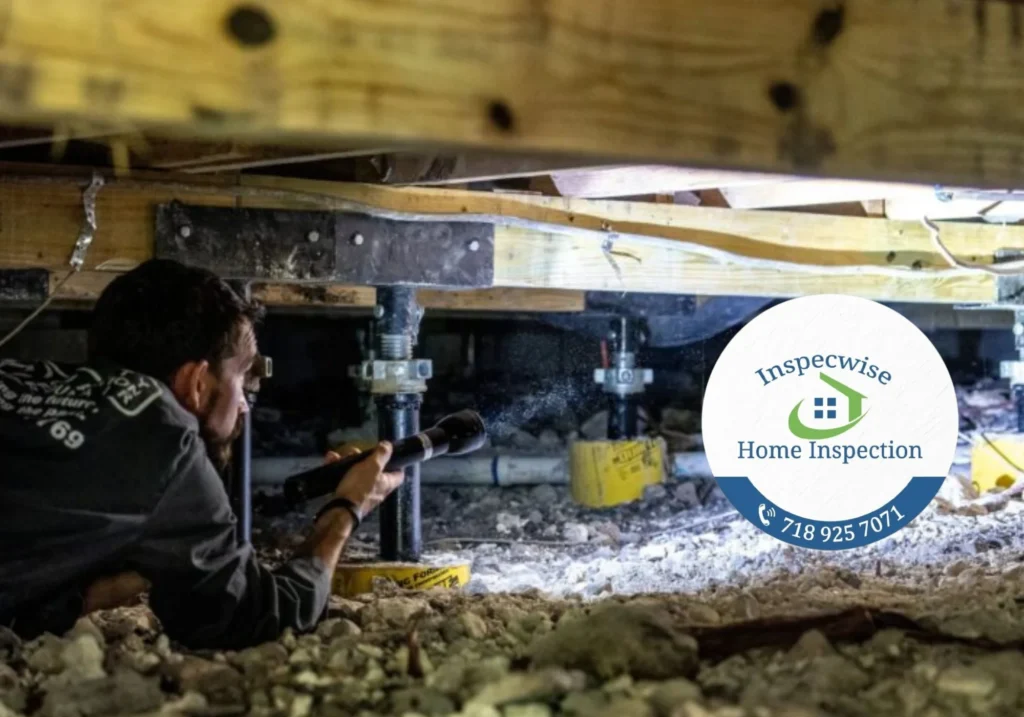
The Gut (Plumbing): Underground infrastructure age is the reason this system gets extra scrutiny here. Bronx multi-family and mixed-use buildings routinely hide 1930s-era cast iron behind a fully renovated ground floor, and a main-line failure post-closing is one of the fastest ways an acquisition’s projected cap rate turns negative in year one.
The Heart: Because so many Bronx properties are still running original boiler plants, a Commercial HVAC Inspection is usually the single largest capital expenditure a new owner will face. We quantify remaining runway specifically so it can be built into your reserve study rather than discovered mid-lease-term.
The Brain (Electrical): Con Edison service limitations mean many older Bronx buildings simply don’t have the capacity modern tenants expect, which becomes a leasing problem long before it becomes a safety problem. We trace circuits and inspect panels directly so you know whether the building can support the tenant mix you’re planning for.
The Lid: With flat roofs across Hunts Point and Port Morris carrying multiple reroofing layers and decades of added rooftop equipment, our Commercial Roof Inspection checks seams, flashing, parapet walls, and every penetration because a roof failure here tends to hit tenant space and inventory, not just the structure.
The Access (ADA Compliance): Any Bronx commercial space open to the public needs entrances and bathrooms that meet ADA standards. We give you a clear compliance baseline so an accessibility lawsuit isn’t the first surprise of your ownership.
The Safety (Fire & Life): Given how common unauthorized alterations are in buildings that have been subdivided or repurposed over decades without permitting, we pay particular attention to fire separation and egress the systems most likely to have been quietly compromised by someone else’s shortcut.
Negotiation: Your Report Is Your Best Friend
A Bronx commercial inspection report isn’t a formality it’s a negotiating instrument built on documented deficiencies, delivered within 24 hours with an itemized breakdown of every issue we find and its estimated cost to correct. If we identify $30,000 in roof membrane replacement or an electrical panel that requires immediate upgrading, that documentation supports a repair credit or a purchase price adjustment before you close, and it’s exactly the kind of line-item detail a lender’s underwriter or an insurance broker will ask to see anyway.
Just as importantly, the report becomes the foundation of your capital expenditure planning going forward, giving you a realistic sequence for future reserve contributions instead of a surprise every time something fails mid-lease. Buyers negotiating with tenants over improvement allowances, or structuring lease terms around who absorbs future mechanical replacements, are working from real numbers instead of guesswork. Buyers who go into a Bronx acquisition with this kind of documentation are simply negotiating from a stronger position than buyers who don’t.
Beyond the Boardroom: Full-Spectrum Bronx Expertise
Because the Bronx is a mix of industrial corridors and deeply established residential neighborhoods, the same rigor behind a Bronx commercial building inspection carries over into our Home Inspection Bronx services. Whether you’re closing on an industrial complex in Hunts Point or a single-family brick home in Pelham Bay, you get the same 24-hour reporting, the same local insight, and the same commitment to catching what a century of Bronx construction history has left hidden behind the walls.
Why Choose Inspecwise?
When you call 718-925-7071, you speak directly with a team of commercial building inspectors in the Bronx who know this borough’s building stock, its violation history, and its infrastructure firsthand not a call center reading from a script. Based right in South Ozone Park, we’ve spent years navigating this borough’s unique conditions, from industrial warehouses in Hunts Point to multi-family units in Riverdale, and we bring that same depth of knowledge whether you’re a buyer, a landlord, a lender, or a tenant trying to understand what you’re walking into. Don’t wait until after closing to find out what a Bronx commercial inspector would have caught in advance and don’t let your contingency window close without the documentation you’ll need if repairs, price adjustments, or financing terms become part of the conversation.
Schedule Your Bronx Commercial Building Inspection Before Your Contingency Period Expires
Contingency periods move fast, and the findings from your inspection do more than protect you from a bad deal they shape your financing, your insurance premiums, your capital reserve planning, and your negotiating position all at once. Whether you’re a first-time investor evaluating a warehouse in Hunts Point, a landlord refinancing a mixed-use property near the Grand Concourse, or a lender underwriting a retail plaza acquisition anywhere across the borough, a documented inspection report is what turns an assumption into a decision you can defend. Once your contingency period expires, that leverage disappears so scheduling early isn’t just due diligence, it’s the difference between negotiating from evidence and negotiating from hope.
Call Inspecwise today at 718-925-7071 to schedule your Medical Office Inspection NYC.
Serving All 5 Boroughs and Long Island: Manhattan • Brooklyn • Queens • The Bronx • Staten Island • Nassau County • Suffolk County
Call Inspecwise now: 718-925-7071
Licensed, Certified, and 100% NYC Local