Phase inspection new build NY services represent the ultimate safeguard for developers, equity partners, and future property owners navigating the hyper-regulated, structurally complex world of New York City construction. Buying or building a brand-new commercial tower or residential development in New York is an monumental financial undertaking. While many investors mistakenly assume that modern municipal oversight or a Certificate of Occupancy issued by the NYC Department of Buildings (DOB) guarantees flawless craftsmanship, seasoned stakeholders know the reality on the ground. High-velocity construction timelines, complex supply chains, and localized contractor shortcutting often bury catastrophic structural defects, systemic mechanical failures, and chronic building envelope breaches directly beneath pristine finishes and fresh drywall. Engaging an independent, elite-level inspector to execute an exhaustive, multi-stage assessment ensures that your multi-million-dollar asset is built to survive the tests of time, local weather, and strict regulatory codes.
To protect equity from the earliest stages of development, implementing a systematic oversight strategy is paramount. Relying entirely on a standard pre-closing walkthrough is an operational gamble; by the time the flooring is installed and the walls are painted, the most critical structural, plumbing, and electrical assemblies are permanently hidden from view. A comprehensive basement inspection provides a clear baseline for understanding sub-grade moisture management, foundation integrity, and structural load pathways, making it a natural prerequisite for deep oversight before above-ground components are assembled. By breaking down the construction process into distinct, high-definition inspection windows, developers can enforce accountability, mitigate future capital expenditure, and prevent the immediate operational deficits that plague unvetted New York completions.
The Critical Need for Private Oversight in NYC Construction
The New York real estate market operates under a pressure cooker of aggressive deadlines, surging material costs, and intense labor demands across all boroughs. In this environment, even the most reputable general contractors are forced to manage shifting crews and tight delivery windows, which frequently results in localized oversights. Municipal inspectors work under profound logistical constraints; they log onto a job site simply to verify minimum baseline compliance with the NYC Building Code and quickly sign off on specific permits. They do not analyze structural longevity, architectural performance, or refined material quality. A private, elite-level phase inspection acts exclusively as a fiduciary shield for the buyer, examining every square inch of the asset against a standard of true engineering excellence rather than absolute minimum legal tolerance.
Furthermore, New York City properties face unique geographic and structural vulnerabilities. From the shifting alluvial soils of coastal Brooklyn and Queens to the dense, rock-anchored foundations of Manhattan, every ground-up build requires customized engineering configurations. When managing a new acquisition or overseeing a complex ground-up development, implementing a comprehensive home inspection nyc strategy allows buyers to systematically document construction benchmarks, hold general contractors accountable before final payments are released, and establish an unassailable paper trail of institutional-grade quality control.
Phase 1: Pre-Pour and Foundation Inspection
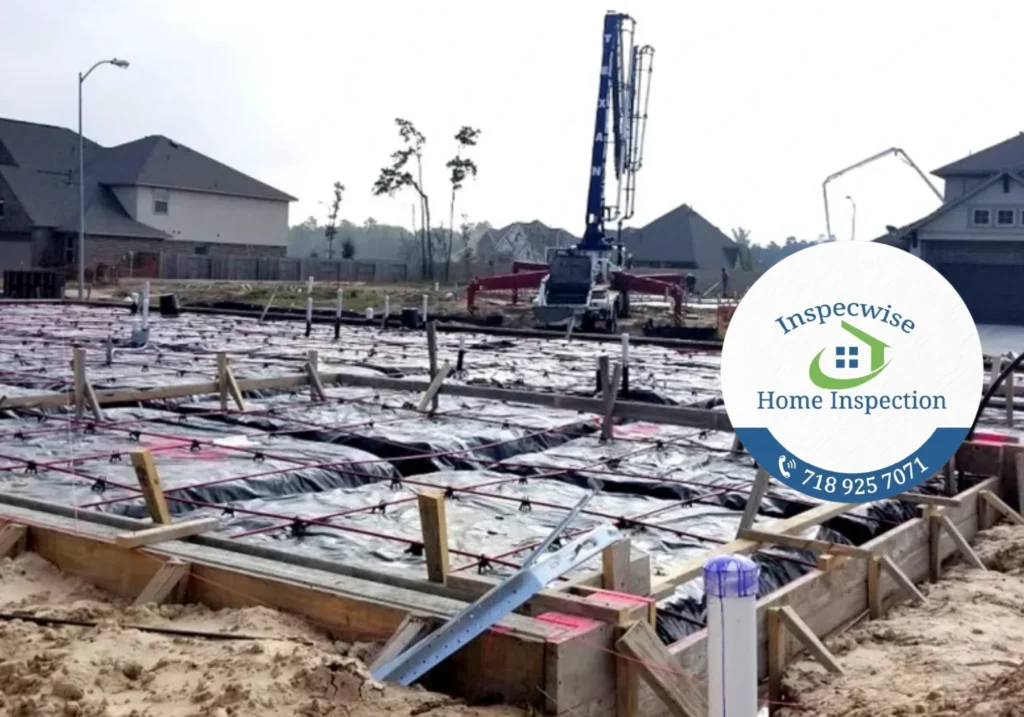
The initial phase occurs when excavation is complete, formwork is established, reinforcing structural steel is bound, and the site stands prepared for the concrete pour. This brief window provides the only opportunity to examine the literal bedrock of your investment. Once thousands of pounds of high-strength concrete fill the forms, any hidden flaw becomes a permanent, structural liability that could take years and hundreds of thousands of dollars to remedy.
- Subgrade Verification and Soil Compaction: The sub-base must be perfectly leveled and machine-compacted to prevent localized soil shifting. In areas with high water tables, poor compaction creates sub-slab voids over time, leading to major structural settling cracks and un-level floor slabs across the ground level.
- Vapor Barrier Thickness and Seam Sealing: Inspectors verify the installation of a high-performance, puncture-resistant polyethylene vapor retarder. In NYC, this barrier must be thoroughly taped at all seams and sealed tightly around pipe penetrations to block subterranean moisture and hazardous soil gasses from seeping upward into the property.
- Rebar Grade, Sizing, and Spatial Elevation: Structural steel rebar must match the specific structural engineering schematics precisely. Inspectors use specialized tools to verify rebar sizing, tie spacing, and clean clearance from the dirt. If rebar rests directly on the ground rather than being elevated on concrete chairs, it loses its tensile reinforcement capacity and becomes highly vulnerable to sub-surface corrosion.
- Sleeves, Trenching, and Utility Conduits: All cast-in-place plumbing lines, electrical conduits, and main utility sleeves must be correctly positioned within the formwork. Misalignments discovered after the pour require destructive core drilling, which can permanently compromise the structural strength of a reinforced concrete foundation.
Phase 2: Pre-Drywall and Structural Framing Assessment
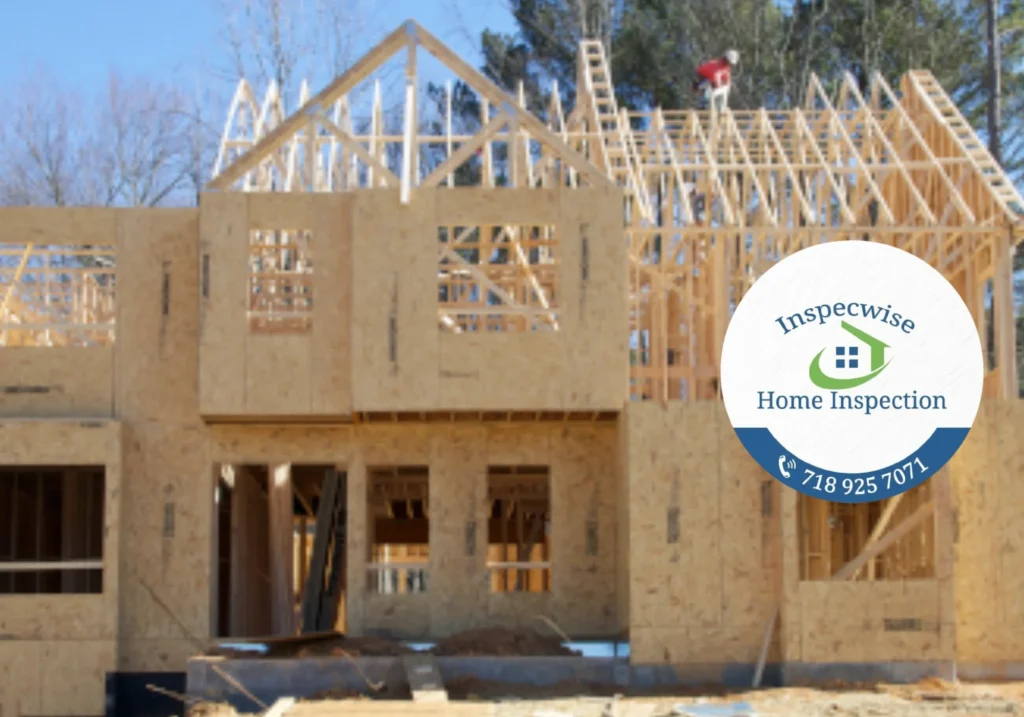
The pre-drywall phase takes place once the building is fully framed and enclosed, and all mechanical, electrical, plumbing, and HVAC systems are roughly installed, but before any insulation or sheetrock closes up the walls. This is arguably the most critical inspection window for a phase inspection new build NY project, as it uncovers the complex skeletal and mechanical systems of the property.
For large-scale investments or mixed-use assets, skipping this stage is an extraordinary operational risk. Transitioning seamlessly from a residential frame review to a broader commercial inspection nyc framework allows our team to analyze heavy-gauge steel tracking, commercial fire-rated assemblies, high-capacity electrical conduits, and institutional HVAC dampening systems before they are hidden behind drywall.
Structural Framing and Connectors
Inspectors examine every load-bearing wall, header, joist, and roof truss for structural soundness. In wood-framed buildings, we verify that studs are perfectly plumb, headers are sized correctly for their spans, and engineered wood joists have not been improperly cut, notched, or drilled by sub-contractors running lines. We check for the presence of all required structural hardware, including hurricane ties, joist hangers, and tension bolts, ensuring every connection is secured with the correct fasteners rather than common framing nails.
Mechanical, Electrical, and Plumbing (MEP) Rough-Ins
This step involves auditing the routing, support, and integrity of all internal building systems. Electrical wires must be cleanly routed through the centers of studs, utilizing protective nail plates wherever a wire passes close to the edge to prevent future drywall screws from piercing the copper lines. Plumbing lines must be evaluated for proper slope, secure strapping, and pressure testing readiness. HVAC ductwork is checked for tight mastic sealing, secure physical connections, and straight routing to prevent air balancing issues and energy loss.
Fire-Stopping and Penetration Management
Per strict NYC building codes, all horizontal and vertical penetrations through fire-rated assemblies must be sealed with approved intumescent fire-stop materials. Inspectors review all chases, floor plates, and wall breaches to ensure proper fire-blocking is installed, which is essential for containing smoke and flame in the event of an emergency.
Building Envelope and Window Flashing
Before insulation hides the interior face of the exterior walls, we inspect the integration of the weather-resistive barrier with window and door flashing systems. Improperly installed pan flashing or un-taped window seams are the leading causes of hidden wind-driven rain intrusion, which triggers structural rot and indoor mold behind the walls of new constructions.
Phase 3: Final Pre-Closing Inspection and Systems Integration
The final phase occurs when the project is entirely complete, all finishes are applied, fixtures are installed, and utilities are fully active. This is the classic “blue-tape” walkthrough elevated to an elite, engineering-grade standard. It focuses on testing the operational performance of the entire asset under real-world load conditions.
As developments extend outside the five boroughs into surrounding suburban markets, property profiles change dramatically. Expanding the final quality assurance strategy to include a dedicated home inspection long island approach ensures that sprawling suburban developments receive the same meticulous scrutiny, focusing on extended rooflines, complex private septic connections, individual well water systems, and expansive grading layouts that are less common in the dense city center.
Deep Dive into Technical NYC Building Code Challenges
Executing a premier phase inspection new build NY requires a deep understanding of local building codes. New York City maintains some of the most complex, strict, and localized construction regulations in the world, managed across a web of city agencies.
Failing to catch non-compliant structural or mechanical details during construction will lead directly to failed municipal inspections, delayed occupancy permits, and future code violations that carry steep financial penalties. A master-level phase inspector reviews the physical work against these specific local frameworks, ensuring that when the building is turned over, it sails through the official municipal close-out process without costly, unexpected retrofits.
Common Discoveries in New Construction Inspections
Even under the direction of high-end construction firms, serious errors occur with surprising frequency due to multi-layered sub-contracting practices. Our field operations regularly document critical issues that could compromise the long-term viability of a new building if left uncorrected:
- Improperly Cut Structural Joists: Plumbers and electricians often cut large notches or core holes through the middle thirds of structural wood or light-gauge steel joists to route utilities, severely degrading the structural capacity of the floor system.
- Missing Core Insulation and Air Barriers: In many new buildings, insulation is omitted around window frames, corners, and tight wall cavities. This creates significant thermal bridging, resulting in high energy costs and chronic condensation that damages interior drywall.
- Reverse-Sloped Waste Lines: Due to framing obstructions or hurried installations, drain lines can be installed with inadequate or reversed pitch, leading to persistent sewer backups and chronic drainage failures.
- Unanchored Structural Sill Plates: Builders occasionally omit foundation anchor bolts or fail to tighten the structural nuts down to the sill plate, leaving the entire superstructure improperly secured to the concrete foundation against wind loads.
Why Choose Inspecwise
Inspecwise stands as the premier independent inspection authority in New York, delivering unparalleled technical precision, deep local expertise, and elite reporting for high-stakes real estate assets. Our elite team of inspectors treats every project with a meticulous eye for detail, understanding the complex architectural demands and rigorous regulatory requirements unique to the NYC market. We do not just look at a property; we audit it from the subgrade steel to the rooftop flashing, translating complex field observations into clear, actionable, institutional-grade data. Whether you are safeguarding an urban commercial high-rise, an iconic multi-family development, or a luxury residence, Inspecwise provides the comprehensive oversight needed to protect your capital, minimize long-term liabilities, and ensure your building is constructed to an exceptional standard.
Serving All 5 Boroughs and Long Island: Manhattan • Brooklyn • Queens • The Bronx • Staten Island • Nassau County • Suffolk County
Call Inspecwise now: 718-925-7071
Licensed, Certified, and 100% NYC Local