What is a safe radon level remains one of the most critical questions property owners across the five boroughs must address, yet the answer often surprises experienced real estate investors and homeowners alike. According to the United States Environmental Protection Agency (EPA) and the Centers for Disease Control and Prevention (CDC), there is technically no entirely safe level of radon exposure. This colorless, odorless, and invisible radioactive gas is a naturally occurring byproduct of the radioactive decay of uranium in rock, soil, and water, and it represents the leading cause of lung cancer among non-smokers in the United States. While the outdoor ambient air across New York City typically features a negligible concentration of approximately 0.4 picocuries per liter of air (pCi/L), indoor environments can trap and concentrate this toxic gas to dangerous levels. The EPA has established an official action level at 4.0 pCi/L, declaring that any property testing at or above this threshold requires immediate professional radon mitigation to safeguard human health. However, because radon risks are cumulative and scale linearly with exposure duration, even lower concentrations between 2.0 pCi/L and 4.0 pCi/L warrant serious consideration for corrective action, especially when a property undergoes extensive structural changes.
Understanding the unique behavior of subsurface gases within the complex urban geology of New York City is an essential component of comprehensive property due diligence. Many buyers incorrectly assume that the massive concrete foundations of commercial high-rises or the dense bedrock of Manhattan isolates them from soil gas migration. In reality, the intricate network of utility penetrations, subway tunnels, and aging subterranean infrastructure creates highly unpredictable pathways for vapor intrusion. When assessing the long-term safety and compliance of a residential or commercial building, partnering with a licensed professional to perform a meticulous evaluation is paramount. Navigating these environmental concerns effectively begins with understanding the financial scope of diagnostic testing, making it beneficial to evaluate the standard Radon Test Cost NY to establish a baseline budget for professional environmental assessments before finalizing any property acquisition.
Deciphering the Radon Scale and Action Levels
Navigating radon test results requires a clear understanding of scientific measurements and how regulatory agencies interpret risk thresholds across varying indoor environments.
- Below 2.0 pCi/L (Low Exposure): This range is generally considered acceptable by domestic standards, as it closely approaches the average national indoor radon level of 1.3 pCi/L. While it represents the lowest practical target for most mitigation systems, owners should maintain awareness that no level of radiation exposure is entirely risk-free over a multi-decade timeline.
- 2.0 pCi/L to 4.0 pCi/L (The Marginal Zone): The World Health Organization (WHO) sets a more conservative global reference level of 2.7 pCi/L, emphasizing that significant long-term health risks exist well below the domestic regulatory cutoff. The EPA strongly recommends considering mitigation if your long-term testing average falls within this marginal window, particularly if bedrooms or occupied workspaces are located below grade.
- 4.0 pCi/L and Above (The Action Threshold): This is the definitive regulatory line where immediate structural intervention is required. Operating a residential building, daycare, or commercial office with concentrations exceeding 4.0 pCi/L exposes occupants to radiation levels equivalent to receiving hundreds of chest X-rays annually, necessitating the installation of active mitigation systems.
- Above 10.0 pCi/L (High Risk Accumulation): Severe spikes in this tier indicate a major structural failure in the building’s air barrier or a direct connection to a highly active subterranean radon source. Properties exhibiting these metrics require urgent diagnostic testing, continuous monitoring, and heavy mechanical venting to drop concentrations safely back toward ambient baseline levels.
How Radon Penetrates the New York City Built Environment
The structural diversity of New York City real estate, ranging from historic pre-war brick multi-family complexes to contemporary glass-and-steel commercial towers, dictates how soil gases infiltrate indoor air. Radon moves through the ground via advection, driven by minor air pressure differentials between the soil beneath a building and the lower indoor living spaces. This pressure gradient acts like a vacuum, pulling gases through microscopic structural weaknesses.
In historic brownstones across Brooklyn and Manhattan, foundations frequently consist of rubble stone masonry, mortar that has degraded into powder over a century, or direct dirt basements. These porous configurations offer virtually zero resistance to gas migration. Conversely, modern buildings utilizing poured concrete slabs remain vulnerable due to drying shrinkage cracks, cold joints between separate concrete pours, and unsealed perimeter expansion joints.
Furthermore, mechanical systems play a substantial role in pulling radon upward. When powerful commercial exhaust systems or residential kitchen hoods vent air outside without adequate makeup air, they induce a negative pressure zone in the lowest levels of the structure. This structural vacuum actively draws radon out of the surrounding earth through floor drains, open sump pump pits, and unsealed utility penetrations where electrical conduits and water mains pierce the foundation wall.
Local Regulations and Structural Standards
Managing environmental health risks in New York requires a thorough understanding of localized building regulations and legal compliance frameworks that differ substantially from federal guidelines.
New York City Residential Code Integration
For builders and developers operating within the five boroughs, adherence to the specific provisions of the New York City Residential Code is non-negotiable when executing new construction or major structural alterations. While older buildings are frequently grandfathered into past frameworks, new low-rise residential structures are subject to strict radon-resistant construction techniques designed to prevent gas entry from day one. These code mandates require the installation of a continuous sub-slab gas permeable layer, typically consisting of at least four inches of clean gravel, covered by a heavy-duty, puncture-resistant polyethylene vapor barrier. Additionally, contractors must seal all foundational entry points and run a passive vent pipe from the sub-slab space up through the roofline, allowing soil gases to bypass the interior living spaces entirely. Learning how to properly cross-reference these local building mandates with standard evaluation protocols is a vital skill for anyone investing in local real estate, making it highly advantageous to master How To Choose A Home Inspector who possesses verified credentials in local structural standards.
Mechanical Venting and the Gas Infrastructure
Environmental safety protocols are closely intertwined with localized fuel and ventilation laws across commercial properties. Mechanical engineers and property managers must ensure that any structural mitigation design aligns perfectly with the current NYC Fuel Gas Code to prevent dangerous drafting failures. When active mitigation systems utilize powerful inline fans to draw soil gases out from beneath a slab, they can alter the internal pressure dynamics of adjacent mechanical rooms. If a building features atmospheric-venting gas boilers, water heaters, or furnaces, the negative pressure induced by improper ventilation design can cause backdrafting. This dangerous phenomenon pulls deadly carbon monoxide and combustion byproducts back into the living quarters rather than venting them safely up the chimney, turning a radon mitigation effort into an immediate life-safety hazard.
Department of Buildings Compliance and Vendor Rules
The New York State Department of Health (NYSDOH) maintains strict oversight over the professional environmental testing sector, establishing that anyone deploying diagnostic equipment must hold appropriate credentials. While New York State does not issue individual radon licenses, it legally mandates that all professional radon testers be certified through accredited national bodies such as the National Radon Proficiency Program (NRPP) or the National Radon Safety Board (NRSB).
Critical Regulatory Note: While a certified professional may place testing canisters or continuous monitors on a property, anyone analyzing those samples must hold a dedicated certification from the New York State Environmental Laboratory Approval Program (ELAP). Property owners must verify that their chosen inspection firm utilizes an ELAP-certified laboratory to process results; otherwise, the final testing report cannot be utilized for official real estate disclosures or to clear formal DOB violations.
Diagnostic Methodologies for Urban Properties
Accurately determining radon concentrations in a dense urban environment requires specialized equipment and adherence to strict testing protocols to account for atmospheric variations.
- Short-Term Charcoal Adsorption Canisters: These passive devices remain on-site for 48 to 96 hours, absorbing ambient radon onto a bed of activated charcoal. They provide a rapid snapshot of indoor gas concentrations, making them popular for fast-paced real estate transactions, though they are highly sensitive to sudden changes in barometric pressure and humidity.
- Alpha Track Detectors: Utilizing a small sheet of specialized plastic inside a filtered container, these passive long-term devices record the microscopic structural damage caused by alpha particles over a period of 90 days to a full year. This methodology yields a highly accurate calculation of a building’s true annual average exposure, eliminating seasonal anomalies.
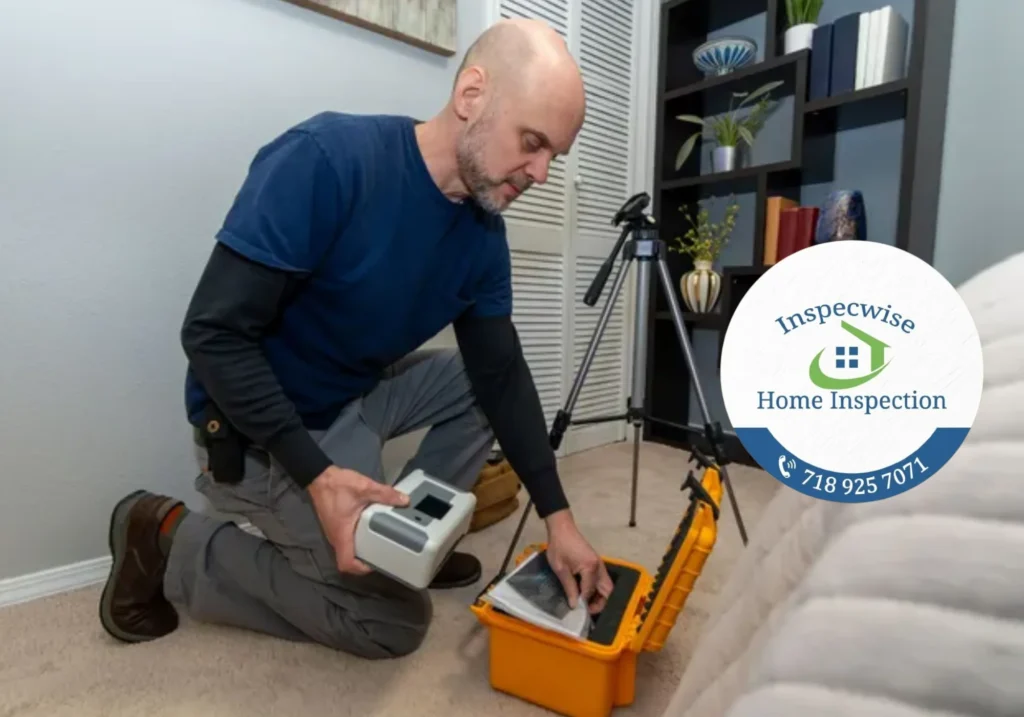
- Continuous Radon Monitors (CRM): Electronic CRM devices utilize state-of-the-art ionization chambers or silicon photodiodes to record real-time radon levels at hourly intervals. These advanced systems are ideal for commercial property evaluations because they document precise fluctuations driven by HVAC operation schedules, allowing inspectors to identify exactly when and why radon levels spike.
- Liquid Scintillation Testing: Frequently deployed when checking for radon gas originating from well water sources rather than sub-slab soil, this laboratory-based methodology dissolves water samples in a special cocktail that emits light flashes when alpha particles decay, providing a highly precise measurement of water-borne radiation.
Implementing Advanced Mitigation Protocols
When an inspection reveals that indoor concentrations have crossed into hazardous territory, structural engineers and environmental contractors must implement targeted mechanical systems to route the gas away from occupied zones.
The most reliable methodology for reducing elevated radon levels in both residential and commercial structures is Active Sub-Slab Depressurization (ASD). This engineering technique works by directly reversing the pressure relationship between the soil and the building interior. Technicians drill a series of suction pits through the concrete foundation slab, removing a small volume of soil to create a localized vacuum zone underneath the building. Heavy-duty, exterior-grade inline fans are then connected to PVC piping networks routed from these suction pits up to an exhaust point located well above the roofline. By maintaining a continuous low-pressure zone beneath the foundation, the system ensures that soil gases are pulled into the extraction network and discharged safely into the atmosphere before they can ever migrate upward into the building’s occupied rooms.
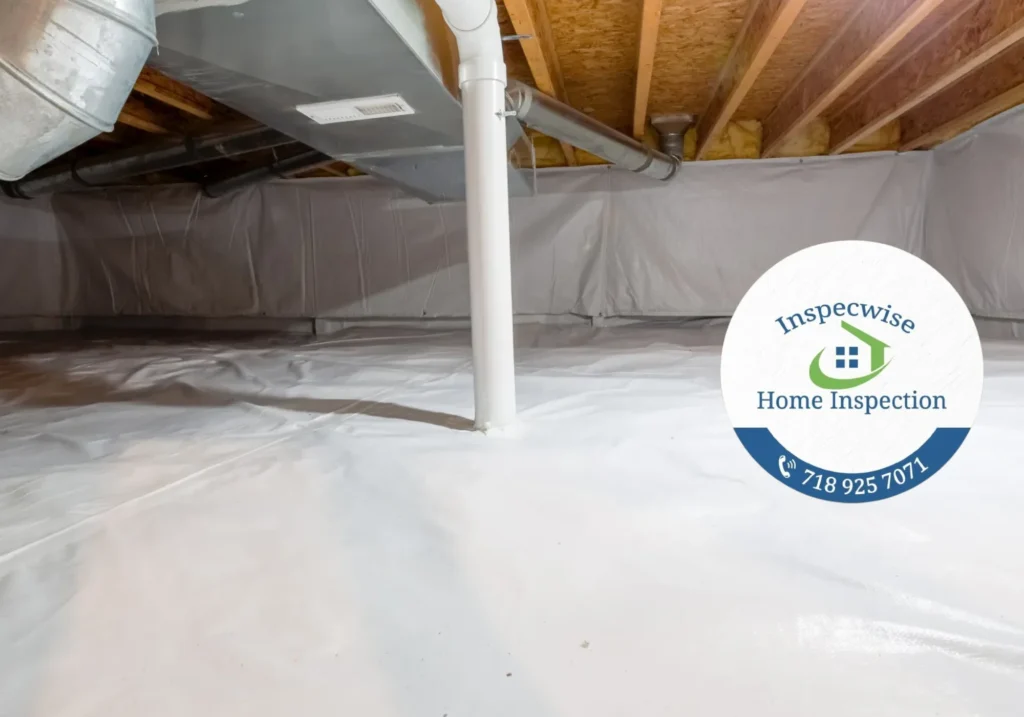
In properties where slab architecture prevents traditional suction pit installation, such as dense urban commercial sites or buildings with low-clearance crawlspaces, alternative containment strategies must be deployed. Contractors can install a high-performance, multi-layered synthetic membrane across the entire exposed earth floor, completely sealing the edges to the foundation walls with heavy elastomeric caulking. This barrier is then coupled with sub-membrane depressurization piping to vent the trapped gases safely outdoors.
Additionally, addressing structural cracks and joints with specialized, non-porous polyurethane sealants is vital to maximize the mechanical efficiency of active venting systems. Property managers must also schedule comprehensive mechanical re-testing every two years following a system installation to verify that changing soil conditions or building settling haven’t compromised the integrity of the extraction network.
Why Choose Inspecwise
Inspecwise represents the pinnacle of professional property diagnostic authority across New York City, delivering unparalleled technical accuracy, localized forensic engineering insights, and elite environmental reporting. Our team of elite inspectors possesses a profound structural understanding of the intricate geology and unique architectural typologies that define the five boroughs, allowing us to pinpoint hidden indoor air hazards that standard inspection firms routinely overlook. Every evaluation we conduct is executed in strict compliance with current local building standards, ensuring that your commercial or residential asset remains thoroughly protected from liabilities and environmental risks. By combining cutting-edge diagnostic technology with deep regulatory expertise, Inspecwise provides the definitive data-driven clarity that sophisticated property owners and institutional investors rely on to make informed, safe, and secure real estate decisions in the competitive New York market.
Serving All 5 Boroughs and Long Island: Manhattan • Brooklyn • Queens • The Bronx • Staten Island • Nassau County • Suffolk County
Call Inspecwise now: 718-925-7071
Licensed, Certified, and 100% NYC Local