
The NYC Fuel Gas Code governs how gas piping, appliances, and detection systems are installed, tested, and maintained in buildings across the five boroughs. It applies to owners of commercial buildings, apartment properties, and mixed-use structures, though one- and two-family homes are exempt from the periodic inspection mandate. Compliance matters because gas system failures cause explosions, carbon monoxide poisoning, and DOB violations that can stall a sale or refinance. This guide covers approved piping materials, pressure testing, Local Law 152 inspection cycles, Local Law 157 detector rules, and what happens when a building falls out of compliance.
Key Takeaways
- The NYC Fuel Gas Code applies to nearly all buildings; only one- and two-family homes are exempt from the Local Law 152 inspection cycle.
- Local Law 152 requires gas piping inspections every four years on a rotating schedule tied to community district.
- Local Law 157 requires natural gas detectors in residential units that contain gas-fired appliances.
- Approved piping materials include Schedule 40 black steel; copper tubing and unapproved CSST are restricted or prohibited.
- Missing a Local Law 152 deadline triggers a $5,000 civil penalty and an open DOB violation.
- Systems operating above 5 PSI require welded joints, non-destructive testing, and over-pressure protection devices.
- A Licensed Master Plumber must file the GPS2 inspection certification within 60 days of the physical walkthrough.
- Combustion air and venting calculations exist to prevent carbon monoxide buildup from gas-fired appliances.
What Is the NYC Fuel Gas Code?
The NYC Fuel Gas Code is the set of regulations enforced by the NYC Department of Buildings (DOB) that governs the design, installation, testing, and maintenance of gas piping and gas-fired appliances citywide. It works alongside Local Law 152 and Local Law 157 to reduce gas leaks, explosions, and carbon monoxide incidents in occupied buildings.
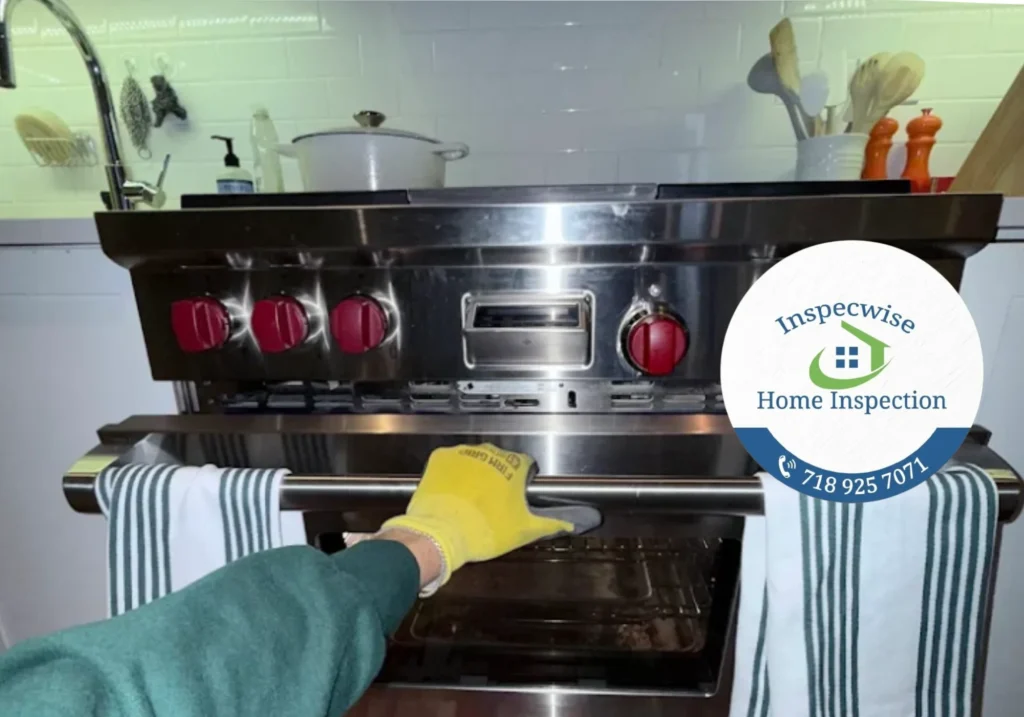
The code was tightened significantly after a series of gas explosions tied to illegal piping modifications and undetected leaks in older buildings. Those incidents pushed the City Council to pass Local Law 152 for periodic piping inspections and Local Law 157 for mandatory gas detection, both of which now sit on top of the base fuel gas code requirements.
Who Must Comply
Compliance obligations differ depending on building type and use. The table below breaks down where Local Law 152’s periodic inspection requirement applies.
| Building Type | LL152 Periodic Inspection | Notes |
|---|---|---|
| One- and two-family homes | Not required | Exempt from the periodic cycle, but any new or altered piping must still meet code |
| Multi-family residential (3+ units) | Required | Inspected on a rotating four-year cycle |
| Commercial buildings | Required | Includes office, retail, and industrial space |
| Mixed-use buildings | Required | Ground-floor retail, restaurants, and laundromats must be accessible during inspection |
[Insert comparison table graphic]
New Construction vs. Existing Buildings
Developers and residential builders often ask, do new construction homes need inspection for their gas and mechanical systems? The answer is yes. New materials don’t eliminate the risk of installation errors, unapproved substitutions, or damage sustained during construction. New builds still require full verification of the gas system, from the utility tie-in through the final manifold, before walls are closed up.
For residential buyers evaluating an existing property, the question of should I get a home inspection in NY comes up constantly, and gas system condition is a major reason why. Hidden piping modifications, deteriorated supply lines, or faulty venting can turn into five-figure remediation costs after closing.
Approved Piping Materials
The city restricts several piping materials that are permitted elsewhere, largely due to corrosion and settling stress common in NYC’s older building stock.
| Material | Typical Use | Restrictions |
|---|---|---|
| Schedule 40 black steel | Primary standard for residential and commercial distribution | Preferred for most internal gas lines |
| Malleable iron fittings | Threaded joints | Limited to under 5 PSI and pipe diameters of 2 inches or smaller |
| Welded joints | High-pressure or large-diameter lines | Required above 5 PSI or over 2 inches, must be performed by a certified welder |
| Corrugated stainless steel tubing (CSST) | Flexible piping in renovations | Requires manufacturer certification, grounding, and DOB approval |
| Copper tubing | Not permitted for gas distribution | Prohibited due to internal flaking from sulfur content in local gas supply |
[Insert piping materials illustration]
All threaded joints must be sealed with a pipe joint compound or thread tape rated for natural gas and LPG. Piping run through corrosive environments, such as unventilated vaults or under-slab pathways, needs a factory-applied coating, protective wrap, or a vented conduit.
Exposed gas piping must carry yellow “GAS” labeling stating the operating pressure, placed at intervals no greater than 5 feet and at every turn or wall penetration.
High-Pressure System Requirements
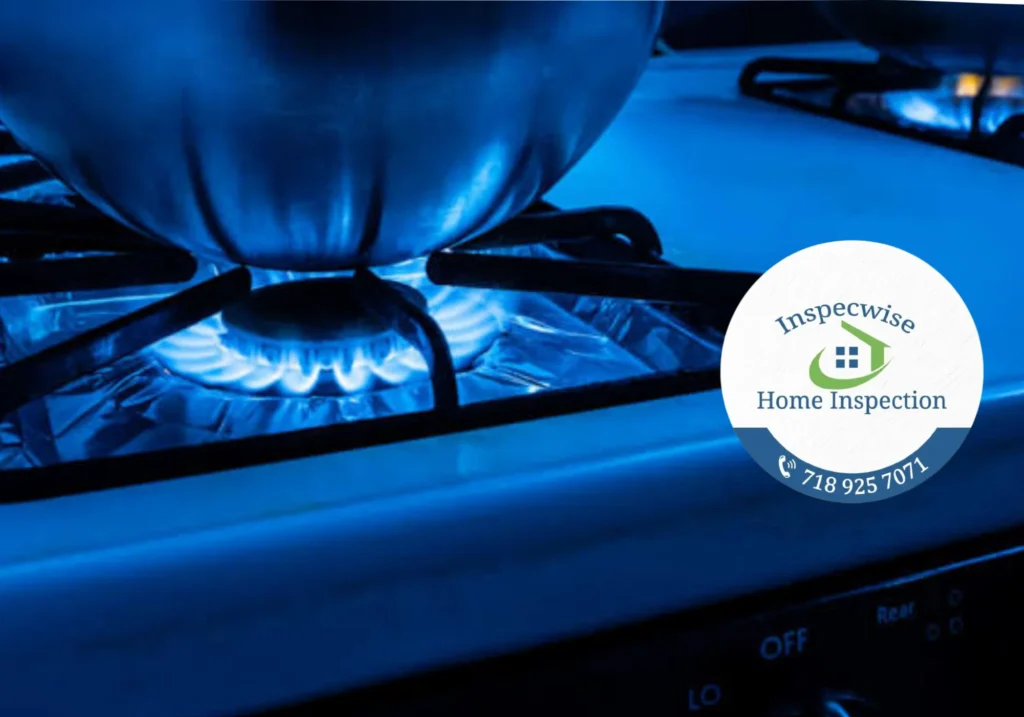
The code classifies any system above 0.5 PSI as elevated pressure, with additional requirements kicking in once pressure exceeds 5 PSI. These systems typically appear in commercial laundromats, high-rise mechanical rooms, and large multi-family boiler plants.
Over-pressure protection. If gas is delivered at elevated pressure, the code requires redundant safety devices in case the primary regulator fails. Acceptable options include a monitoring regulator installed in series with the primary unit, a full-capacity relief valve vented to the exterior, or an automatic shutoff valve that isolates supply when pressure spikes.
Enclosures and ventilation. High-pressure lines can’t run through public hallways or occupied tenant space unless enclosed in a fire-rated shaft with a minimum 2-hour rating and continuous exterior ventilation.
Weld testing. Every welded joint on a line above 5 PSI must pass non-destructive testing, typically radiographic or ultrasonic examination, performed by an independent certified agency before the system can be approved for service.
Gas Appliance Rules and Combustion Air
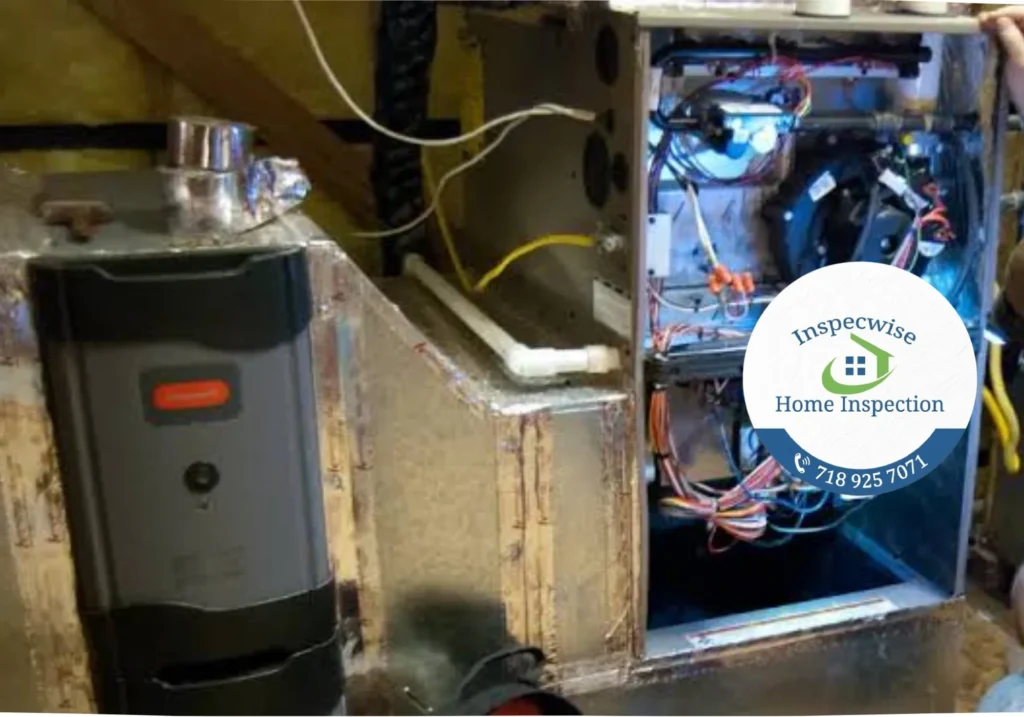
Gas-fired appliances such as boilers, water heaters, and cooking ranges depend on a precise balance of fuel, combustion air, and exhaust to operate safely. Poorly configured appliances produce incomplete combustion, which generates carbon monoxide inside occupied space. Inspectors evaluate this balance alongside the structural guidance found in the New York Residential Code.
Combustion air volume. The code requires 50 cubic feet of room volume per 1,000 Btu/hr of aggregate appliance input. Rooms that fall below this threshold are classified as “confined” and require dedicated combustion air openings to the exterior or an adjacent unconfined space.
Clearances to combustibles. Unlisted appliances typically require 18 inches of clearance from combustible materials. That distance can be reduced using an approved heat shield made of sheet metal or ceramic fiber board, installed with a 1-inch ventilated air gap.
Venting Requirements
Exhaust from gas appliances must be fully evacuated through code-compliant venting. Atmospheric appliances relying on natural draft need a chimney or Type B vent with an intact liner. In pre-war buildings, old clay tile liners frequently crack, allowing flue gases to leak through masonry walls into occupied units. Inspectors verify liners are stainless steel or aluminum and correctly sized using vent capacity tables.
Pressure Testing
Before a new, altered, or repaired system can be placed into service, it must pass a multi-stage pressure test.
- Testing uses clean, oil-free compressed air or nitrogen. Oxygen is never permitted, since it can react explosively with residual cutting oils inside the pipe.
- Test pressure is measured with a calibrated digital or spring-loaded gauge, sized so the dial’s maximum reading is roughly double the test pressure.
- Once a system passes, residual air or inert gas must be purged before appliances are ignited. On larger lines, gas is routed through temporary hoses to the roof and discharged away from windows or air intakes, with technicians monitoring the area using gas detection equipment throughout.
Metering, Service Entries, and Utility Coordination
The point where a utility’s distribution main transitions into a building’s private gas system is called the point of delivery, and it’s one of the most closely scrutinized areas during any inspection. Getting this interface right requires coordination with both the fuel gas code and the technical specifications of the local utility, whether that’s Con Edison or National Grid.
Foundation penetrations. Where the service line passes through the foundation wall, the code requires a protective steel sleeve cast into the concrete. The gap between the pipe and sleeve must be packed with a gas-tight, non-hardening sealant or a mechanical modular seal, preventing groundwater or stray subsurface gas from migrating into the basement.
Meter room requirements. Gas meters must sit in a dedicated, locked meter room with fire-rated partitions and independent ventilation to the exterior. Meters can’t be installed in boiler rooms, electrical switchgear spaces, elevator shafts, or anywhere near an ignition source.
Master shutoff valves. An accessible master gas shutoff valve is required immediately inside the building wall at the service entry, fitted with a permanent handle or T-wrench so emergency personnel can isolate the supply quickly. High-occupancy buildings, schools, and high-rises often also need an exterior curb-line valve or an automatic seismic shutoff that activates during significant ground movement.
Local Law 152: Periodic Gas Piping Inspections
Local Law 152 requires a rotating four-year inspection cycle for gas piping systems in all buildings except one- and two-family homes. The compliance deadline depends on the building’s community district, so property managers need to confirm their specific filing window through DOB NOW rather than assuming a citywide date.
[Insert Local Law 152 schedule graphic]
What the walkthrough covers. Inspectors perform a visual assessment of exposed gas lines in public spaces, common corridors, mechanical rooms, boiler rooms, basements, and cellars. Individual residential apartments are typically not entered unless there’s a suspected cross-connection. Commercial tenant spaces, including ground-floor retail, restaurants, and laundromats, must be accessible and included in the inspection.
Filing timeline.
| Step | Timeframe | Responsible Party |
|---|---|---|
| Physical walkthrough and CGI leak testing | Scheduled inspection date | Licensed inspector |
| GPS2 certification filing | Within 60 days of inspection | Licensed Master Plumber |
| Correction of non-hazardous conditions | Within 120 days | Building owner |
| Response to hazardous conditions | Immediate | Owner and gas utility |
Missing the December 31 filing deadline for your assigned cycle results in a $5,000 civil penalty and an open DOB violation, which can complicate refinancing, sales, or leasing.
Before Inspection Checklist
- Confirm your building’s community district and assigned filing year with DOB NOW.
- Ensure mechanical rooms, boiler rooms, and basements are accessible.
- Notify commercial tenants that their spaces must be accessible during the walkthrough.
- Clear obstructions from exposed gas piping and shutoff valves.
- Have prior inspection records and certifications on hand for the inspector.
Local Law 157: Natural Gas Detectors
Local Law 157 requires natural gas detection devices in residential units with gas-fired appliances. Since natural gas is lighter than air, detectors must be placed on the ceiling or on a wall within 12 inches of the ceiling, positioned no less than 3 feet and no more than 24 feet from the appliance.
[Insert detector placement diagram]
| Requirement | Detail |
|---|---|
| Mounting location | Ceiling or upper wall, within 12 inches of ceiling |
| Distance from appliance | 3 to 24 feet |
| Power source | Hardwired with battery backup, or sealed 10-year battery |
| Installation responsibility | Property owner or landlord |
| Testing and battery upkeep | Tenant, unless the unit is hardwired |
In larger residential and commercial buildings, detectors are increasingly interconnected with the building’s fire alarm control panel, triggering building-wide notification or emergency exhaust when a leak is confirmed.
Landlord vs. tenant responsibilities. Landlords must procure and install code-compliant detectors and keep documentation of the installation date. Tenants are responsible for routine testing using the built-in test button and for replacing batteries in non-sealed units. If a detector fails from normal wear, the tenant should notify the landlord in writing, and the landlord must repair or replace it within the required window.
Inspection Process
A typical fuel gas compliance inspection includes a combustible gas indicator (CGI) sweep of exposed joints, valves, and regulator connections, a visual review of piping materials and labeling, and a check of appliance clearances, venting, and combustion air. If an active leak or illegal connection is found, the inspector notifies the building owner and the gas utility immediately, which can result in a localized or building-wide gas shutoff.
Common Violations
- Unapproved CSST installed without DOB certification or proper grounding
- Missing or faded “GAS” pressure labeling on exposed piping
- Corroded or unprotected piping in vaults and under-slab pathways
- Missing or improperly placed Local Law 157 gas detectors
- Unmetered or illegal connections in commercial tenant spaces
- Deteriorated chimney liners allowing flue gas leakage
Penalties
| Violation | Consequence |
|---|---|
| Missed Local Law 152 filing deadline | $5,000 civil penalty plus open DOB violation |
| Missing Local Law 157 detectors | Civil penalty and violation, tracked through HPD/DOB |
| Illegal or unmetered gas connection | Immediate shutoff and DOB violation |
| Uncorrected hazardous condition | Escalated enforcement and possible vacate order |
Maintenance Best Practices
Annual Maintenance Checklist
- Test all gas detectors using the built-in test button.
- Visually inspect exposed piping for corrosion, damage, or faded labeling.
- Confirm master shutoff valves are accessible and unobstructed.
- Check appliance clearances haven’t been compromised by storage or renovations.
- Review your building’s Local Law 152 filing status in DOB NOW.
- Replace non-sealed detector batteries on a fixed annual schedule.
Gas Safety Checklist
- Every gas-fired appliance has adequate combustion air, either from room volume or dedicated openings.
- Clearances to combustible materials are intact and haven’t been blocked by storage or renovation work.
- Master shutoff valves are labeled, accessible, and free of obstructions.
- Chimney liners and Type B vents show no visible cracking, gaps, or corrosion.
- All exposed piping carries current, legible “GAS” pressure labeling.
Commercial Property Compliance Checklist
- Confirm which of your commercial tenant spaces (retail, restaurant, laundromat) must be accessible for Local Law 152 inspection.
- Verify meter rooms are locked, ventilated, and free of unrelated storage.
- Confirm high-pressure lines above 5 PSI have documented non-destructive weld testing on file.
- Keep GPS2 certifications and prior inspection reports organized for lenders, buyers, and insurers.
- Review Local Law 157 detector coverage across all residential units in mixed-use buildings.
Frequently Asked Questions
What is the NYC Fuel Gas Code? It’s the DOB-enforced set of rules governing gas piping design, installation, testing, and maintenance in New York City buildings.
Who enforces the NYC Fuel Gas Code? The NYC Department of Buildings enforces the code, along with Local Law 152 and Local Law 157 requirements.
Who needs to comply with Local Law 152? All buildings except one- and two-family homes must complete periodic gas piping inspections on a rotating four-year cycle.
What happens if I miss my inspection deadline? You’ll face a $5,000 civil penalty and an open DOB violation that can affect financing, sales, and leasing.
How often are Local Law 152 inspections required? Every four years, on a schedule tied to your building’s community district.
Can homeowners inspect their own gas piping? No. Inspections and certifications must be performed by a Licensed Master Plumber or an equivalently qualified professional.
What piping materials are prohibited for gas lines? Copper tubing is prohibited due to internal flaking, and unapproved CSST cannot be used without DOB certification and grounding.
When are gas detectors required under Local Law 157? In residential units containing gas-fired appliances, with mounting location and distance from the appliance both specified by code.
What is Local Law 157? It’s the law requiring natural gas detection devices in residential buildings to catch leaks before they reach a dangerous concentration.
How much are the penalties for non-compliance? Missed Local Law 152 deadlines carry a $5,000 penalty; other violations vary based on severity and whether a hazardous condition was found.
Do commercial tenant spaces need to be inspected? Yes. Ground-floor retail, restaurants, and laundromats must be accessible during the periodic inspection.
What is the GPS2 form? It’s the Gas Piping System Periodic Inspection Certification filed by a Licensed Master Plumber within 60 days of the inspection.
Does a new building still need a gas system inspection? Yes. New construction requires full verification of the gas system before it’s placed into service, regardless of how new the materials are.
Who pays for gas detector installation, landlord or tenant? The property owner is responsible for procurement and installation; tenants handle routine testing and battery replacement.
What triggers an immediate gas shutoff? An active leak or an illegal, unmetered connection discovered during inspection results in immediate notification to the utility and a shutoff.
Why Choose Inspecwise
Inspecwise provides licensed inspectors with local NYC experience across commercial and residential properties in all five boroughs, Long Island, Westchester, and the Hudson Valley. Our reports are built for clarity, so owners and property managers can act on findings without needing to decode technical jargon. We handle fast scheduling around Local Law 152 filing windows, provide documentation that holds up during sales and refinancing, and take the time to walk clients through what a report actually means for their property.
Schedule Your Fuel Gas Inspection
If your building is approaching a Local Law 152 deadline, or you’re not sure whether your gas detectors meet Local Law 157 requirements, Inspecwise can walk your property and tell you exactly where you stand. Call 718-925-7071 to schedule an inspection.
Serving All 5 Boroughs and Long Island: Manhattan • Brooklyn • Queens • The Bronx • Staten Island • Nassau County • Suffolk County
Call Inspecwise now: 718-925-7071
Licensed, Certified, and 100% NYC Local