Basement Inspection in New York
A basement can look perfectly finished and usable while still having problems that are difficult to see during a normal home tour. Water intrusion, foundation movement, drainage failures, inadequate ventilation, electrical defects, plumbing problems, deteriorated heating equipment, and other conditions can affect the safety, condition, and future use of the space.
A professional basement inspection provides a systematic evaluation of the accessible and observable components of a basement or below-grade area. The inspection can help homeowners, buyers, sellers, and property owners understand existing conditions before purchasing a property, completing a renovation, finishing a basement, or investing in a basement conversion.
For properties in New York City and surrounding areas, there may also be questions about whether a lower level is considered a basement or cellar, whether its current use is permitted, and whether building records or additional professional evaluations need to be reviewed.
Inspecwise provides basement and home inspection services throughout New York City, Long Island, Nassau County, Suffolk County, and surrounding areas.
Buying a home with a basement? Planning a renovation? Unsure about the condition or classification of a lower level? Schedule a professional inspection before you make a major decision.
Call 718-925-7071
[Schedule a Basement Inspection]
What Is a Basement Inspection?
A basement inspection is an evaluation of the accessible and observable conditions within a basement or below-grade portion of a property.
The purpose is to identify visible defects, deterioration, moisture problems, safety concerns, and other conditions that may require repair, monitoring, maintenance, or further evaluation.
Depending on the property and inspection scope, a basement inspection may evaluate:
Foundation walls
Basement floors
Structural components
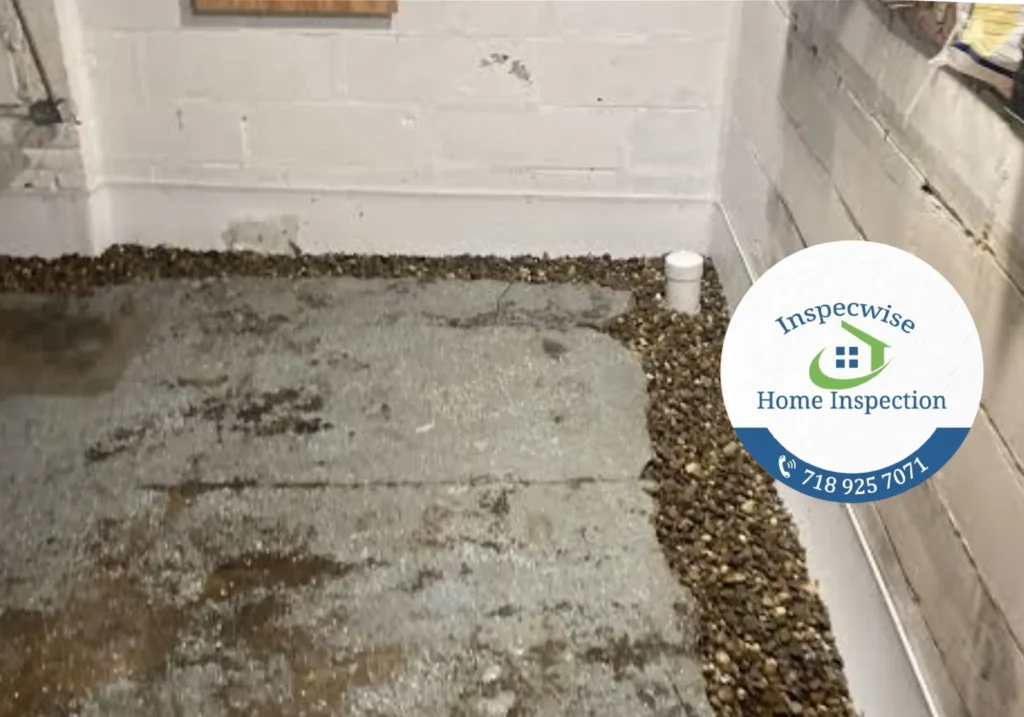
Water intrusion
Moisture conditions
Drainage
Sump pumps
Plumbing
Electrical components
Heating and HVAC equipment
Windows
Doors
Stairs
Railings
Ventilation
Insulation
Visible mold-like growth
Signs of previous water damage
Visible deterioration
Accessible mechanical equipment
The inspection focuses on observable physical conditions.
It does not automatically establish that a basement is legally habitable, legally rentable, code-compliant, or approved for a particular use. Those questions can require review of building records, zoning, the Certificate of Occupancy, applicable regulations, and evaluation by the appropriate design or legal professional.
Why Get a Basement Inspection?
A basement is one of the areas of a house most exposed to moisture, groundwater, drainage problems, foundation conditions, and below-grade environmental stresses.
Problems can remain hidden for years before becoming obvious.
A basement inspection can help identify concerns before they become larger and more expensive problems.
Common reasons to inspect a basement
You may want a basement inspection if you are:
Buying a house
Selling a house
Renovating a basement
Finishing an unfinished basement
Considering a basement bedroom
Considering a basement apartment
Investigating water or moisture
Experiencing recurring flooding
Installing or replacing a sump pump
Planning a basement bathroom
Considering a basement conversion
Concerned about foundation cracks
Investigating mold-like growth
Evaluating an older property
Unsure whether previous basement work was properly completed
A basement inspection is particularly valuable when the space has been recently renovated or appears to have been converted into living space without clear documentation.
What Does a Basement Inspector Look For?
A basement inspector evaluates the conditions that can be observed and accessed during the inspection.
The exact scope depends on the property, accessibility, construction, age, and inspection agreement.
Foundation and Structural Components
The foundation is one of the most important parts of a basement inspection.
The inspector may look for visible signs of:
Foundation cracking
Horizontal or vertical cracks
Stair-step cracking
Displacement
Bowing
Bulging
Deterioration
Water-related damage
Settlement indicators
Damaged masonry
Deteriorated concrete
Structural modifications
Not every foundation crack indicates a serious structural problem.
The significance of a crack depends on factors such as its size, location, pattern, movement, construction type, water conditions, and other evidence.
Where conditions suggest a potential structural concern, additional evaluation by a qualified structural engineer may be appropriate.
Basement Walls and Floors
Basement walls and floors can reveal important information about moisture, drainage, settlement, and previous repairs.
An inspector may examine:
Concrete walls
Masonry walls
Poured concrete foundations
Block foundations
Brick foundation walls
Floor slabs
Wall finishes
Floor finishes
Visible repairs
Cracks
Efflorescence
Staining
Deterioration
Signs of water entry
Finished walls can sometimes conceal the condition of the underlying foundation.
When portions of the structure are concealed by finished materials, the inspector can only evaluate accessible and observable areas.
Basement Water Intrusion and Moisture
Water is one of the most common concerns associated with basements.
A basement can experience moisture from several sources, including:
Groundwater
Surface drainage
Foundation leaks
Plumbing leaks
Roof drainage
Poor grading
Hydrostatic pressure
Condensation
Sump pump failure
Sewer or drain problems
Signs of previous or current moisture can include:
Water stains
Damp walls
Efflorescence
Peeling paint
Swollen materials
Rust
Musty odors
Deteriorated finishes
Mold-like growth
Damaged flooring
Cracked or deteriorated masonry
Finding the source of moisture is important.
Simply covering a wet basement wall with new finishes does not solve the underlying problem.
Basement Drainage and Sump Pump Inspection
Many basements depend on drainage systems and sump pumps to manage groundwater.
During a basement inspection, accessible components may be evaluated for visible conditions such as:
Sump pit condition
Sump pump operation
Discharge piping
Check valve
Backup pump
Battery backup
Drainage connections
Signs of previous overflow
Water around the sump area
A sump pump can provide important protection, but it should not be viewed as a substitute for proper site drainage and foundation waterproofing.
If a property has experienced flooding or repeated water intrusion, additional investigation may be necessary.
Basement Plumbing Inspection
Basement plumbing can include some of the most important water and drainage components in a house.
An inspection may evaluate accessible:
Supply pipes
Drain pipes
Waste lines
Plumbing fixtures
Water heaters
Shutoff valves
Sump-related plumbing
Exposed piping
Floor drains
Look for:
Leaks
Corrosion
Improper repairs
Deterioration
Drainage concerns
Water staining
Damaged insulation
Unsupported piping
Older homes may contain aging plumbing materials that require further evaluation.
Basement Electrical Inspection
Electrical systems in basements should be examined carefully because moisture and electricity can create serious safety concerns.
Accessible electrical components may include:
Electrical panels
Wiring
Receptacles
Switches
Lighting
GFCI protection
Junction boxes
Exposed wiring
Particular attention should be paid to:
Damaged wiring
Open junction boxes
Improperly protected wiring
Missing covers
Unsafe receptacles
Moisture near electrical components
Visible signs of overheating
The inspection does not replace a licensed electrician when detailed electrical analysis or modifications are required.
Basement Heating and HVAC Inspection
Basements frequently contain important mechanical equipment.
Depending on the property, this can include:
Boilers
Furnaces
Heat pumps
Water heaters
Air handlers
Ductwork
Ventilation equipment
Fuel-burning equipment
The inspection may consider:
General condition
Visible deterioration
Operation where appropriate
Combustion-related concerns
Venting
Flue conditions
Leaks
Condensate drainage
Equipment accessibility
Heating and fuel-burning equipment should receive particular attention because combustion problems can create carbon monoxide hazards.
Basement Windows, Doors and Egress
Windows and doors can be especially important in basement spaces.
The inspection may evaluate:
Window condition
Window operation
Window wells
Exterior drainage
Doors
Door hardware
Stairs
Handrails
Guardrails
Accessible emergency exits
Whether a particular window or door qualifies as a legally required means of egress depends on the applicable building and housing requirements, property type, and intended use.
For this reason, an inspection report should distinguish between physical observations and formal code or occupancy determinations.
Basement Ventilation and Indoor Conditions
Basements can have limited natural ventilation.
An inspection may identify visible concerns involving:
Poor ventilation
Condensation
Excessive humidity
Musty odors
Moisture
Mold-like growth
Inadequate air movement
Where indoor air quality is a concern, additional testing may be appropriate.
Depending on the situation, specialized testing can include:
Radon testing
Mold assessment
Air-quality testing
Lead-related testing
Asbestos-related evaluation
These are separate services and should be recommended based on the property’s conditions and intended use.
Basement Insulation and Energy Conditions
Basement walls and ceilings can affect a home’s energy performance and comfort.
An inspection may identify:
Missing insulation
Damaged insulation
Moisture-damaged insulation
Exposed materials
Air leakage
Condensation
Improperly installed finishes
If you are planning a basement renovation, energy performance should be considered together with moisture management.
Adding insulation without addressing an existing moisture problem can create additional problems.
Basement Inspection for Home Buyers
A basement inspection can be especially valuable when purchasing a home.
During a typical property viewing, buyers may concentrate on:
Kitchen
Bathrooms
Bedrooms
Living areas
Exterior appearance
The basement can receive less attention.
However, it can contain expensive systems and reveal important information about the property’s condition.
Buyers should pay attention to:
Foundation condition
Water intrusion
Drainage
Sump pump
Plumbing
Electrical systems
HVAC equipment
Structural modifications
Previous repairs
Signs of flooding
Moisture
Mold-like growth
Finished areas
Basement bedrooms
Unusual construction
If the basement has been converted into living space, additional questions about permits, occupancy, records, and applicable requirements may also be appropriate.
Basement Inspection Before Remodeling
Planning to finish or remodel your basement?
An inspection before construction can help you understand the condition of the existing space.
Before spending money on:
New flooring
Drywall
Bedrooms
Bathrooms
Kitchens
Entertainment rooms
Home offices
Rental units
Additional living areas
consider evaluating the existing basement first.
Why inspect before remodeling?
Renovation work can hide existing problems.
For example, a homeowner may install new drywall only to discover months later that the foundation wall behind it has a moisture problem.
Likewise, new flooring can conceal water-related damage.
A pre-remodel inspection can help identify conditions that should be addressed before the renovation begins.
Basement Remodeling and Conversion Requirements
Finishing a basement is not necessarily the same thing as legally creating a new dwelling unit or habitable apartment.
The requirements depend on the property’s location, building classification, intended use, construction, zoning, applicable code, and required approvals.
In New York City, the Department of Buildings has specific requirements for alterations involving habitable basement or cellar apartments, and certain projects require plans prepared and filed by a Registered Design Professional.
Before remodeling a basement, consider:
Ceiling height
Natural light
Ventilation
Egress
Fire safety
Smoke and carbon monoxide protection
Moisture control
Structural conditions
Plumbing
Electrical systems
Heating and cooling
Insulation
Waterproofing
Drainage
Permits
Certificate of Occupancy
Zoning and allowable use
An inspector can document physical conditions, but an architect, engineer, attorney, or other qualified professional may be needed to determine whether a proposed conversion can legally be approved.
Basement Requirements in New York
Basement requirements vary depending on the property and intended use.
There is an important difference between:
“Is the basement physically in good condition?”
and
“Is this basement legally approved for a particular use?”
A professional inspection primarily addresses the first question.
The second may require building records, zoning information, Certificate of Occupancy review, permit information, and professional interpretation.
Common issues to evaluate before using a basement as living space
Ceiling height
Natural light
Ventilation
Emergency egress
Fire separation
Smoke and carbon monoxide alarms
Moisture control
Sanitation
Plumbing
Heating
Electrical systems
Structural safety
Legal occupancy
Required approvals
For NYC properties, HPD states that basements and cellars have different legal uses and that residential occupancy is subject to requirements for light, air, sanitation, and egress as well as applicable Department of Buildings approval.
Basement vs. Cellar in NYC
The terms basement and cellar are not interchangeable under NYC rules.
NYC HPD describes a basement as a story partly below curb level with at least one-half of its height above curb level. A cellar is an enclosed space with more than one-half of its height below curb level.
This distinction can matter when evaluating:
Occupancy
Rental use
Living space
Building classification
Renovation
Legal conversion
Certificate of Occupancy
Code requirements
Why does the basement/cellar distinction matter?
A space that looks like a finished basement may have a different regulatory classification depending on its relationship to grade or curb level.
That is why a visual inspection alone should not be presented as a final legal determination.
If the classification affects a purchase, rental, renovation, or conversion decision, the property’s records and applicable requirements should also be reviewed.
What Is a Basement Determination?
A basement determination generally involves evaluating the physical characteristics of a below-grade level and determining how those characteristics relate to applicable definitions and property records.
This can be particularly relevant when a homeowner or buyer wants to understand whether a lower level is:
A basement
A cellar
Finished living space
An accessory area
A potential dwelling area
A legally approved occupied space
The physical inspection can document characteristics such as:
Floor elevation
Ceiling height
Windows
Window wells
Exterior grade
Access
Egress
Room configuration
Foundation conditions
However, the final determination of legal occupancy, zoning compliance, or permitted use may require review by the appropriate authority or qualified professional.
Basement Determination in Nassau County, NY
Homeowners and buyers in Nassau County may encounter questions about whether a lower level should be considered a basement, whether it can be used as living space, or whether previous renovations were properly completed.
A basement inspection can document the physical characteristics and observable conditions of the space.
Depending on the property and the question being asked, additional review may include:
Building records
Permits
Property classification
Local requirements
Existing approvals
Zoning
Certificate of Occupancy information where applicable
If your property is in Nassau County and you are considering buying, selling, remodeling, or using a basement as living space, an inspection can provide useful physical documentation before you proceed.
Basement Determination in Franklin Square, NY
Basement questions can be particularly important when a lower level has been finished or remodeled.
A property owner may want to know:
Is this actually a basement?
Is the space suitable for the intended use?
Are there visible structural or moisture concerns?
Was the basement previously renovated?
Are there signs of water intrusion?
Does the layout raise egress concerns?
Should building records be reviewed?
An inspection can document observable conditions and identify issues that may require further investigation.
For questions involving legal occupancy, permits, zoning, or approvals, the appropriate municipal records and qualified professionals should be consulted.
Basement Inspection and NYC DOB Violations
A physical basement inspection and a NYC Department of Buildings records search are two different forms of due diligence.
What a physical inspection can identify
An inspector may identify observable conditions such as:
Unauthorized-looking alterations
Converted rooms
New walls
Modified stairs
Added plumbing
Electrical modifications
Structural changes
Moisture damage
Other visible alterations
However, appearance alone does not prove whether work is permitted.
What DOB records can help determine
Building records may provide information about:
Permits
Complaints
Violations
Alterations
Approved work
Certificate of Occupancy
Building history
NYC DOB and HPD both address illegal basement and cellar occupancy, and HPD advises checking the Certificate of Occupancy when determining whether a basement is legally occupiable.
Important distinction
An inspection report is not a Certificate of Occupancy.
It is also not a zoning determination or legal opinion.
If the legality of a basement conversion is important to your purchase or renovation decision, consider having the appropriate building records and legal requirements reviewed by the relevant professionals.
Basement Remodeling Codes and Requirements
If you are planning a basement remodeling project, inspect the existing conditions before construction begins.
A basement renovation can involve multiple building systems.
Depending on the scope, work may involve:
Structural modifications
Electrical work
Plumbing
HVAC
Windows
Egress
Fire protection
Insulation
Waterproofing
Drainage
Flooring
Walls and ceilings
In NYC, certain basement or cellar alteration projects require a Registered Design Professional to prepare and submit plans for Department of Buildings review before a permit can be obtained.
The specific requirements depend on the project.
Before starting a basement renovation
Consider evaluating:
Existing foundation conditions
Water and moisture
Drainage
Ceiling height
Electrical capacity
Plumbing
HVAC
Windows
Egress
Structural modifications
Existing permits
Certificate of Occupancy
Zoning and intended use
The inspection gives you information about the existing physical condition before renovation work changes the space.
Can a Basement Become a Bedroom?
A basement can sometimes contain a bedroom, but whether a room qualifies as a legal bedroom depends on applicable requirements and the property’s location and classification.
Important considerations can include:
Ceiling height
Natural light
Ventilation
Emergency escape and rescue openings
Egress
Fire safety
Heating
Building classification
Legal occupancy
In NYC, specific requirements apply to habitable basement and cellar apartments, including requirements involving ceiling height, windows, egress, fire separation, alarms, and other safety measures in applicable projects.
Does a basement bedroom count on an appraisal?
Whether a basement bedroom contributes to an appraisal in the same way as an above-grade bedroom depends on the property’s characteristics, legal status, market, and the appraiser’s analysis.
An inspector can document the physical characteristics of the room.
The appraiser determines how the space is treated for appraisal purposes.
Basement Inspection for Finished Basements
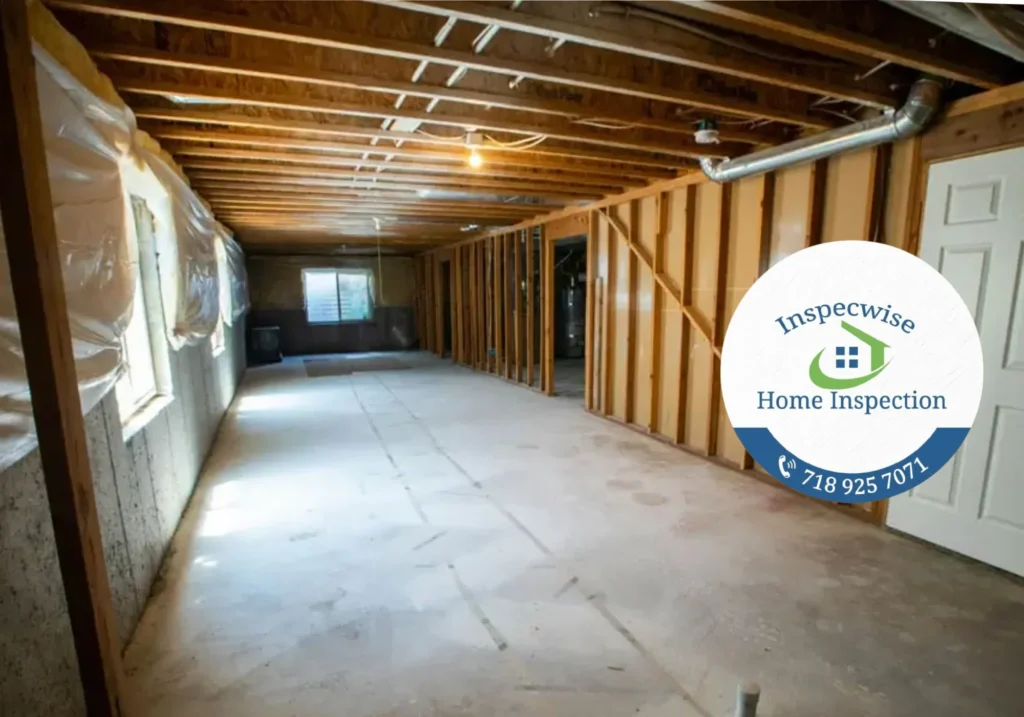
A finished basement can be more difficult to inspect than an unfinished basement because walls, ceilings, floors, and other finishes may conceal portions of the underlying structure.
A finished basement inspection may look for visible evidence of:
Moisture
Water stains
Foundation movement
Poor drainage
Damaged finishes
Improper alterations
Electrical concerns
Plumbing leaks
HVAC issues
Poor ventilation
Mold-like growth
The inspector cannot evaluate conditions that are completely concealed without destructive inspection.
Finished basement warning signs
Pay particular attention to:
Fresh paint over suspicious areas
New drywall in isolated sections
Musty odors
Warped flooring
Discoloration
Efflorescence
Dehumidifiers running continuously
Sump pumps operating frequently
Unusual patches
Cracks
Water stains
These signs do not automatically mean that a serious problem exists, but they may warrant further investigation.
Basement Inspection for Older Homes
Older homes can have basement conditions that differ significantly from modern construction.
Depending on the property’s age, an inspection may encounter:
Older masonry
Stone foundations
Aging plumbing
Older electrical systems
Previous structural modifications
Aging boilers
Deteriorated drainage
Historic waterproofing methods
Previous flooding
Multiple layers of renovation
Older foundation materials require context.
For example, some historic masonry foundations naturally have characteristics that differ from modern poured-concrete foundations.
The inspector should distinguish between normal characteristics of older construction and conditions that warrant concern.
Basement Moisture, Mold and Indoor Air Quality
A damp basement can create conditions favorable to mold-like growth and unpleasant odors.
Common moisture sources include:
Foundation leaks
Plumbing leaks
Poor drainage
Condensation
Roof drainage
Groundwater
Sump pump failure
An inspection can identify visible evidence of moisture and conditions conducive to moisture problems.
If mold is suspected, a visual inspection may not determine the type or extent of microbial growth.
Depending on the circumstances, a qualified environmental professional may be appropriate.
Radon and Basement Inspections
Because basements are in direct contact with the ground, radon can be an important consideration in some properties.
Radon cannot be reliably identified by visual inspection.
If radon exposure is a concern, radon testing should be performed using an appropriate testing method.
This is especially relevant when purchasing a home or planning to occupy a below-grade area for extended periods.
For certain NYC basement/cellar apartment projects under applicable requirements, the Department of Buildings has specific radon-related requirements as part of the approval process.
How a Basement Inspection Works
A typical basement inspection follows a systematic process.
1. Property and inspection scope review
The inspector discusses:
Property address
Property type
Age
Basement configuration
Intended use
Known problems
Renovations
Areas of concern
2. Visual inspection
Accessible basement components are examined for observable conditions.
3. System evaluation
Where appropriate, accessible systems such as plumbing, electrical, HVAC, drainage, and sump equipment are evaluated.
4. Documentation
Important findings are documented with photographs and written observations.
5. Report
The client receives a report describing observed conditions and recommendations for further evaluation where appropriate.
6. Follow-up
Significant findings can be discussed with the client so they understand which issues may require repair, monitoring, or additional specialist evaluation.
How Much Does a Basement Inspection Cost?
The cost of a basement inspection varies depending on:
Property size
Basement size
Property location
Age of the home
Accessibility
Inspection scope
Finished versus unfinished areas
Complexity
Additional testing
A basement inspection may also be part of a broader whole-home inspection rather than a standalone service.
For an accurate quote, provide the property address, approximate size, property type, and what you want evaluated.
[Request a Basement Inspection Quote]
Is a Basement Inspection Free?
Professional inspections generally involve a fee because they require qualified inspection time, travel, documentation, analysis, and reporting.
The cost depends on the property and scope.
If you are comparing inspection services, ask exactly what is included rather than choosing solely on price.
A low-cost inspection that does not address the areas important to your property may not provide the information you need.
What Is a Green Basement Inspection?
The phrase “green basement inspection” can refer to different concerns depending on the property and the person performing the search.
If your goal is to evaluate a basement from an environmental or energy-efficiency perspective, areas that may be considered include:
Moisture management
Insulation
Ventilation
Indoor air quality
Energy efficiency
Heating systems
Water efficiency
Mold-like growth
Radon
Additional environmental or energy assessments may be appropriate depending on your goals.
Basement-to-Roof Home Inspection
A basement should not be considered separately from the rest of the house when buying a property.
A basement-to-roof home inspection evaluates the major accessible and observable components of the entire property, including the basement and foundation as well as the exterior, roof, structure, plumbing, electrical, HVAC, interior, and other systems within the inspection scope.
If you are purchasing a home with a basement, a full home inspection can provide a more complete picture of the property’s condition.
How to Prepare for a Basement Inspection
You can help make the inspection more effective by providing access to all relevant areas.
Before the inspection:
Clear stored items away from important equipment
Make the electrical panel accessible
Provide access to the furnace or boiler
Provide access to the water heater
Clear the sump pump area
Identify previous water problems
Tell the inspector about known leaks
Provide information about previous renovations
Mention planned remodeling
Identify areas you are particularly concerned about
If you are buying a property, ask the seller or agent whether records for previous basement renovations are available.
What a Basement Inspector Can and Cannot Determine
Understanding the inspection’s scope is important.
A basement inspector can typically document:
Visible foundation conditions
Moisture evidence
Drainage conditions
Sump pump condition
Accessible plumbing
Accessible electrical components
HVAC conditions
Visible structural concerns
Windows and doors
Stairs and railings
Visible alterations
General condition of accessible areas
A basement inspector cannot automatically determine:
Whether an apartment is legally approved
Whether zoning permits a particular use
Whether all previous work was permitted
Whether a property has outstanding DOB violations
Whether a Certificate of Occupancy is accurate
Whether a basement qualifies as a legal bedroom
Whether a conversion will receive approval
Whether hidden structural components are sound
Whether concealed mold exists behind finished walls
Those questions may require building-record research, testing, engineering, architectural services, legal advice, or government review.
This distinction protects the client from relying on a general inspection for questions outside its intended scope.
Basement Inspection Service Areas in New York
Inspecwise provides inspection services in New York City, Long Island, and surrounding areas.
Basement Inspection in NYC
Basement inspection services are available for properties throughout NYC, subject to service availability.
Common property types include:
Single-family homes
Two-family homes
Townhouses
Multi-family properties
Attached homes
Detached homes
Basement Inspection in Queens
Queens properties can include older homes, renovated basements, finished lower levels, and properties where buyers have questions about basement use and condition.
Basement Inspection in Brooklyn
Brooklyn basement inspections may be particularly important for older properties and homes with renovated or converted lower levels.
Basement Inspection in Nassau County
Nassau County homeowners and buyers may seek basement inspections for moisture, foundation, drainage, renovation, and below-grade condition concerns.
Basement Inspection in Suffolk County
Suffolk County properties can have different site and drainage conditions, making basement moisture and groundwater management important inspection considerations.
Basement Inspection in Franklin Square
Homeowners and buyers in Franklin Square can use a basement inspection to document the physical condition of the lower level and identify conditions that may require additional investigation.
Basement Inspection in Westchester and Surrounding Areas
Inspection services may also be available in Westchester County and other surrounding New York communities.
Contact Inspecwise to confirm availability for your property.
Basement Inspection vs. Basement Determination
These services address related but different questions.
Basement inspection
Answers:
What physical conditions can be observed in this basement?
Basement determination
May address:
How should this below-grade space be classified based on its physical characteristics and applicable definitions?
Legal occupancy determination
Asks:
Can this space legally be occupied or used for the intended purpose?
That third question can require substantially more than a physical inspection.
For NYC properties, the applicable definitions and requirements come from NYC rules and agencies, including DOB and HPD.
Why Choose Inspecwise for a Basement Inspection?
A basement inspection should provide useful information rather than simply a checklist of defects.
Inspecwise focuses on documenting observable conditions clearly and helping clients understand what findings may deserve attention.
Our inspection approach emphasizes:
Accessible and observable conditions
Photo documentation
Clear reporting
Major building components
Moisture and water-related conditions
Foundation and structural observations
Mechanical systems
Plumbing
Electrical components
Basement-specific concerns
Recommendations for additional evaluation when appropriate
If a condition falls outside the scope of a general inspection, the report can identify when further evaluation by a specialist may be appropriate.
Basement Inspection FAQs
How long does a basement inspection take?
The time required depends on the size, configuration, accessibility, age, and complexity of the basement and whether the inspection is part of a complete home inspection.
What does a basement inspector check?
A basement inspector may evaluate accessible and observable foundation, structural, moisture, drainage, sump pump, plumbing, electrical, HVAC, windows, doors, stairs, ventilation, and other components within the inspection scope.
Should I get a basement inspection when buying a house?
If the property has a basement or significant below-grade area, evaluating that space can help identify conditions that may affect maintenance, repairs, renovation, or future use.
Can a basement inspection determine if my basement is legal?
A general physical inspection does not by itself establish legal occupancy, zoning compliance, or permit status. Building records and the appropriate professionals may need to be consulted.
What is the difference between a basement and a cellar?
NYC defines a basement and cellar based in part on how much of the space is above or below the applicable curb or grade level. The distinction can affect allowable use and applicable requirements.
Can a basement be used as a bedroom?
Potentially, depending on the property’s location, classification, physical characteristics, applicable requirements, and approvals. A physical inspection can document conditions, but it does not by itself approve a bedroom for legal occupancy.
Do I need a permit to finish my basement?
Permit requirements depend on the work and location. In NYC, certain basement or cellar alteration projects require plans and Department of Buildings approval.
Should I check NYC DOB violations before buying a home with a basement?
It can be an important part of due diligence, particularly when the basement appears to have been renovated or converted. A physical inspection and building-record review provide different information.
Can a basement inspection find water problems?
An inspection can identify visible evidence of current or previous moisture and water intrusion. Hidden leaks or concealed moisture may require additional testing or investigation.
Can an inspection determine whether a basement will qualify for a future conversion?
An inspector can identify physical conditions that may affect a proposed conversion, but final approval depends on applicable zoning, building requirements, plans, permits, and the relevant authorities and professionals.
Is a basement inspection the same as a whole-home inspection?
No. A basement inspection focuses on the basement or below-grade areas. A whole-home inspection evaluates the major accessible and observable components of the entire property.
Should I inspect before remodeling my basement?
Yes. Identifying moisture, structural, drainage, electrical, plumbing, HVAC, and other existing conditions before renovation can help you address problems before they become concealed by new construction.
Schedule a Basement Inspection in New York
A basement can be one of the most important areas of a home to understand before buying, renovating, finishing, or converting the property.
Whether you are concerned about water intrusion, foundation cracks, drainage, a sump pump, electrical systems, plumbing, HVAC, moisture, a finished basement, a basement bedroom, or the condition of a lower level, a professional inspection can provide valuable information about the property’s observable physical condition.
If you are also concerned about whether the space is classified as a basement or cellar, whether previous work was permitted, or whether the space can legally be used for a particular purpose, consider combining the physical inspection with appropriate building-record and professional review.
Don’t cover up a basement problem with a renovation. Find out what is there first.
Request Your Basement Inspection
Call Inspecwise: 718-925-7071
[Schedule a Basement Inspection]
When requesting an inspection, provide:
Property address
Property type
Approximate age
Basement size, if known
Whether the basement is finished
Any known water or foundation problems
Planned renovation or conversion
Your preferred inspection date
Inspecwise — Professional basement and home inspection services throughout NYC, Long Island, Nassau County, Suffolk County, and surrounding New York areas.
Why Choose Inspecwise
Inspecwise provides thorough, technically focused property inspections across New York City and Long Island. Our licensed inspectors understand the structural, mechanical, electrical, plumbing, and moisture-related issues common to New York properties.
We combine experienced field inspection with advanced diagnostic tools, including thermal imaging, moisture meters, and sewer scope cameras, to help identify conditions that may not be visible during a standard walkthrough.
Our reports are clear, detailed, and practical—giving buyers, owners, investors, and tenants the information they need to understand property conditions, evaluate risks, and make informed decisions.
With Inspecwise, you get experienced inspection professionals, modern diagnostic technology, and straightforward reporting focused on what matters most: protecting your property investment.
Serving All 5 Boroughs and Long Island: Manhattan • Brooklyn • Queens • The Bronx • Staten Island • Nassau County • Suffolk County
Call Inspecwise now: 718-925-7071
Licensed, Certified, and 100% NYC Local