Managing a high-density commercial asset within the five boroughs demands a sophisticated understanding of underground utilities and municipal infrastructure. A commercial sewer scope inspection is the most definitive, technologically advanced method available for assessing the structural integrity, operational capacity, and regulatory compliance of a facility’s waste disposal pathways. By deploying a high-resolution, self-leveling specialized camera system directly into the building lateral, structural engineers, risk managers, and commercial real estate buyers can visually audit the internal conditions of subsurface piping. This diagnostic procedure uncovers hidden structural liabilities, thick accumulations of grease, fractured joints, and illicit cross-connections before they manifest as catastrophic property failures or trigger punitive municipal enforcement actions.
Failing to prioritize subsurface plumbing diagnostics in a market defined by ancient municipal configurations is a recipe for operational disaster. The subterranean landscape of New York City contains a chaotic blend of historical masonry, fractured bedrock, and heavily stressed utility mains managed by the Department of Environmental Protection (DEP) and monitored by the Department of Buildings (DOB). In this high-stakes environment, a single localized line failure can disrupt operations across an entire corporate headquarters, ruin retail inventory, or render a multi-family residential high-rise completely uninhabitable. Investing in a regular, documented drain line assessment provides commercial stakeholders with the actionable data required to negotiate complex acquisitions, plan capital expenditures, and satisfy the strict underwriting guidelines imposed by premier commercial insurance carriers.
The financial fallout of a subterranean utility failure extends far beyond immediate plumbing repair bills to include extensive business interruption liabilities and third-party property damage claims. If raw sewage floods a ground-floor or basement business, you have to shut your doors completely until professional cleanup crews say it’s safe to reopen. To make matters worse, a leaking underground pipe can wash away the dirt supporting your property. If that causes the sidewalk, street, or your foundation to sink, the city will step in to do emergency repairs and hand you the massive bill. Implementing a routine diagnostic camera protocol ensures that property managers can identify structural weaknesses, offset joints, and micro-fractures early, shifting their operations from an expensive emergency response posture to a controlled, predictive maintenance schedule.
Subsurface Utility Dynamics Across the Five Boroughs
Navigating the underground framework of New York City requires an inspector to possess deep, hyper-local knowledge of the architectural evolution across distinct geographical sectors. A comprehensive Commercial Inspection NYC protocol must account for the reality that a commercial facility in lower Manhattan rests on an entirely different utility foundation than a sprawling industrial distribution hub built on reclaimed marshland in another borough. Each geographical micro-market presents an individual set of environmental stressors, historical installation materials, and architectural anomalies that dictate how subterranean waste systems degrade over decades of continuous operational service.
Navigating the underground framework of New York City requires an inspector to possess deep, hyper-local knowledge of the architectural evolution across distinct geographical sectors. A comprehensive Commercial Inspection NYC protocol must account for the reality that a commercial facility in lower Manhattan rests on an entirely different utility foundation than a sprawling industrial distribution hub built on reclaimed marshland in another borough. Where your building is located changes everything about its plumbing. Local soil conditions, weather, and the specific materials builders used decades ago all determine exactly how and why your underground pipes will wear out over time.
Conducting a thorough Commercial Inspection Manhattan requires an acute awareness of the unique vulnerabilities built into the borough’s pre-war infrastructure and dense subterranean environments. Beneath the concrete pavement of areas like the Financial District, Tribeca, and Midtown lie some of the oldest active waste lines in the nation, including historical brick sewers and early cast-iron collectors. Pipes in busy downtown areas are under intense, everyday pressure from the weight of tall buildings, the constant shaking of subways, and a cramped underground environment. Because of this stress, camera inspections usually reveal crusty mineral buildups, squished pipes, and sunken dips in the line where trash gets permanently trapped, threatening serious sewage clogs.
Moving outward into the outer boroughs changes the nature of the subsurface risks completely. Commercial areas in Queens are booming with massive new developments right next to old industrial shops. All this heavy, everyday use puts a serious stress on the neighborhood’s utility connections. Shifting sandy soils in coastal sections of this borough can stress underground pipe joints, causing them to pull apart and allow soil to wash into the line. Up in The Bronx, inspectors face a totally different challenge: steep hills and pipes anchored straight into rock-hard New York bedrock. Plus, because the borough is home to so many large food factories and heavy manufacturing plants, the plumbing takes a beating. We constantly see severe pipe degradation here, driven by harsh industrial wastewater and massive buildups of fats, oils, and grease (FOG).
Technical Architecture of Modern Sewer Scope Technology
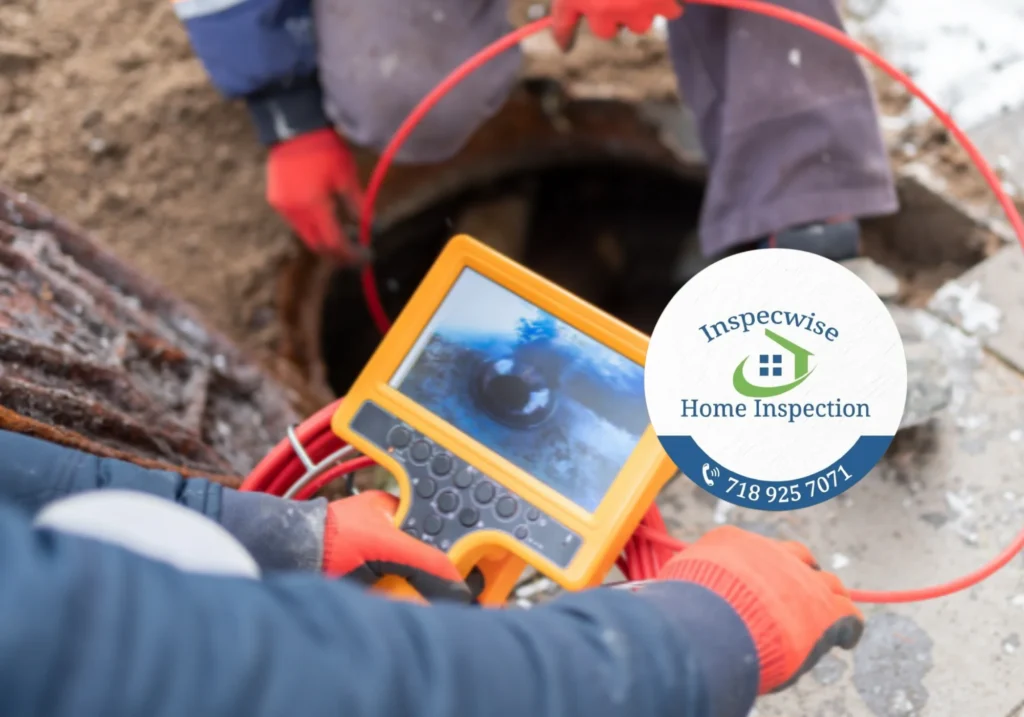
Executing an expert-level internal pipe assessment requires specialized equipment engineered specifically to withstand the hostile conditions found inside active commercial waste systems. Industrial-grade video diagnostic tools consist of an ultra-high-definition camera module mounted on a flexible, fiber-optic reinforced push-rod wrapped in a durable, friction-reducing slick coating. The camera needs to have a tiny built in radio tracker. This tracker is powerful enough to send a signal right through thick concrete, heavy dirt, and metal pipes. While the camera explores underground, we follow its signal from the surface. This lets us perfectly trace where your pipes go and how deep they are buried no guessing required.
The optical core of these high-end diagnostic systems is protected by a scratch-resistant sapphire crystal lens window, surrounded by an adjustable, high-lux surface-mount LED ring that cuts through the pitch-black environment of a buried waste line. We use top-tier cameras that automatically keep the picture right-side-up, no matter how many tight corners they twist through. This prevents upside-down, dizzying video and lets us easily tell the top of the pipe from the bottom. On top of that, the equipment is 100% waterproof to handle deep, high-pressure commercial plumbing without breaking a sweat.
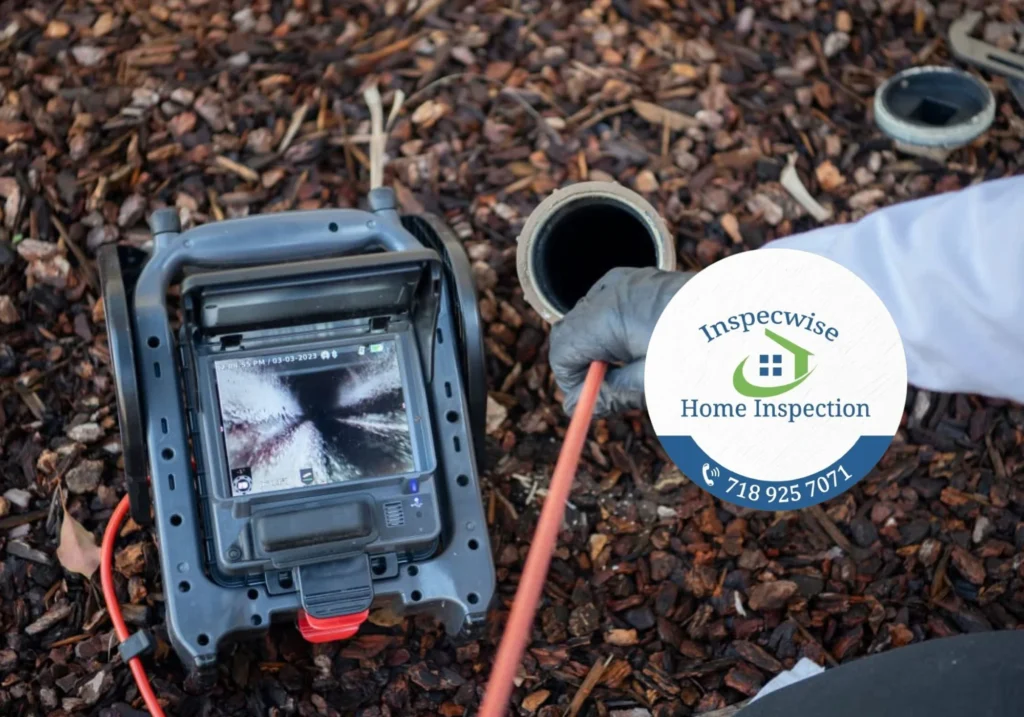
Data collection during a commercial diagnostic pass relies on digital recording consoles equipped with real-time text overlay features and integrated digital distance counters. As the push-rod moves through the cleanout, an internal encoder tracks the exact length of line deployed, displaying the precise distance on the video screen down to the inch. This allows the technician to tie specific structural anomalies like a fractured joint or a sagging section of pipe to a precise physical location on the property. Our field team uses advanced software to build your final report right on the spot. We include high-quality photos and precise location tags, giving you a crystal-clear picture of exactly what and where the plumbing problems are.
Critical Subsurface Vulnerabilities and Failure Modes
During a commercial diagnostic video inspection, a certified inspector carefully monitors the video feed to identify structural, operational, and installation anomalies that could compromise the waste system’s integrity. These anomalies fall into distinct categories, each requiring a different level of maintenance response or structural repair.
1. Structural Breaches and Material Degradation
- Cracking and Breaking: Old pipes are surprisingly fragile. Heavy soil or shifting ground can easily crack them. Once a small crack becomes a big leak, the escaping water washes away the dirt supporting the pipe, and the entire line simply caves in.
- Rust and Crusty Buildup: Older metal pipes tend to rust from the inside out. This creates a rough, jagged crust along the pipe walls that slows down the water, catches passing trash, and slowly eats away at the metal until pinhole leaks pop up.
- Squished and Warped Pipes: Flexible plastic pipes can lose their shape if the dirt around them wasn’t packed correctly when they were installed. Heavy traffic above ground can physically squish a perfectly round pipe into an oval. This restricts the water flow and puts a ton of stress on the pipe connections until they snap.
- Crumbling Concrete: Over time, harsh chemicals and fast-moving water can eat away the smooth inner lining of older concrete pipes. This exposes the rough, rocky gravel underneath. That rough surface acts like sandpaper it snags trash, slows things down, and wears the pipe walls dangerously thin.
2. Joint Anomalies and Connection Failures
- Offset and Misaligned Joints: When the ground shifts or settles unevenly, individual pipe sections can slip out of alignment, creating an interior lip that catches waste material. These offset joints also allow raw sewage to leak out, eroding the surrounding soil and creating structural voids beneath sidewalks and roadways.
- Root Intrusion and Separated Bells: Root systems from street trees can detect moisture leaking from microscopic gaps in aging pipe joints. Once inside, the roots grow rapidly into thick mats that completely block the line, split open pipe connections, and eventually shatter the pipe bells.
- Mastic and Gasket Degradation: Historical pipe networks often used oil-based packing materials, lead joints, or early rubber gaskets to seal connections between sections. Over time, contact with harsh chemical cleaners and industrial wastewater degrades these seals, causing them to rot away and opening the system to water leaks and root penetration.
- Sheared Joints from Differential Settling: When a heavy commercial building settles at a different rate than the adjacent public sidewalk and street, the lateral line is subjected to massive vertical shearing forces. This differential movement can cleanly snap the pipe at the structural boundary wall, creating a complete separation that forces all building wastewater directly into the foundation soil.
3. Hydraulic Restrictions and Flow Path Obstructions
- Pipe Bellies and Sagging Sections: A pipe belly forms when an underground section settles or sinks below the proper downhill grade, usually due to poor soil compaction or erosion. These low spots create standing pools of water and waste, dropping flow velocities to zero and causing heavy solids and grease to collect until the line backs up.
- FOG Accumulation and Scale Buildup: Places with busy kitchens, like restaurants and office cafeterias, are constantly battling plumbing issues caused by a buildup of fats, oils, and grease. If grease enters the waste system hot, it cools as it hits underground lines, solidifying into rock-hard layers along the pipe walls that catch debris and rapidly shrink the pipe’s usable diameter.
- Foreign Object Obstructions and Construction Debris: If you manage a commercial building, you already know the struggle of public restrooms backing up because people flush paper towels and wet wipes. But the everyday foot traffic isn’t the only problem. If you’ve just finished a renovation or moved into a new build, there is a good chance leftover construction waste, like dried concrete or grout, is hiding down there, completely blocking your pipes.
- Mineral Calcification and Surcharging: Minerals from hard water can bake onto the inside of your pipes, forming a rock-hard crust. As this buildup gets thicker, it slowly strangles your water flow. As a result, whenever the building gets busy, the narrowed pipes simply can’t handle the rush and end up completely flooded.
Administrative Compliance and Municipal Infrastructure Requirements
Running a commercial building in NYC means dealing with a massive web of strict city codes and environmental rules. Getting a professional camera inspection of your underground pipes is the easiest way to prove you are up to standard saving you from expensive fines, forced shutdowns, and major legal headaches.
The NYC Plumbing Code sets strict rules for how building waste systems must connect to the municipal sewer mains managed by the Department of Environmental Protection (DEP). Under city rules, you are responsible for the entire pipe that runs from your building all the way out to the city’s main line. This means if an old pipe collapses underneath a public sidewalk or a busy street, you are on the hook for everything the digging, coordinating with utility crews, fixing the pipe, and even repaving the road afterward. Regular video inspections allow property managers to catch joint failures and structural issues early, making it possible to line or repair the pipe before a complete collapse forces an expensive emergency street excavation.
Industrial businesses and commercial food service facilities must also comply with strict wastewater discharge rules monitored by the DEP. These regulations require restaurants, food processing plants, and commercial kitchens to install and maintain large, efficient grease interceptors to keep fats and oils out of the public sewer system. Sending a camera down the line gives you solid proof of whether your grease traps are actually doing their job, or if grease is sneaking past and hardening deeper in your pipes. Catching these issues early helps businesses clean their lines before grease blockages cause a backup, which can trigger heavy daily fines from DEP inspectors or result in a complete shutdown by the Department of Health.
Furthermore, conducting a documented subsurface evaluation is standard practice when planning major renovations under the oversight of the DOB. Before a building permit can be issued for expanding a structure, changing its use, or adding plumbing fixtures, developers must prove that the existing waste infrastructure can handle the increased load. A professional camera inspection provides the verified video evidence and detailed engineering data needed to satisfy DOB reviewers, showing that the current lines are structurally sound and free of blockages. Additionally, when undertaking major deep excavation or foundation work nearby, performing both pre-construction and post-construction camera scopes protects property owners by providing clear proof of any structural damage caused by heavy vibrations or shifting soil from adjacent job sites.
Operational Guide to Executing a Commercial Sewer Scope
Conducting a successful camera evaluation on a commercial property requires a careful, step-by-step approach to ensure thorough data collection, protect sensitive diagnostic tools, and keep field technicians safe.
- Pre-Inspection Planning and Blueprint Review: The inspection begins with a thorough review of the building’s plumbing schematics, utility site plans, and historical maintenance records. Checking the plans first helps the inspector figure out exactly where to insert the camera like through floor drains or cleanouts. It also gives them a clear picture of the pipe routes, sizes, and slopes. Knowing the layout beforehand means the team can grab the exact cameras and equipment they need, preventing surprises and saving time once they get to the job site.
- Site Preparation and Safety Protocols: Safety comes first before any equipment touches the lines. First, we coordinate a temporary water shutdown so rushing wastewater doesn’t blind our cameras or damage the gear. Second, because deep access pits and grease traps can harbor dangerous sewer gases, our teams strictly monitor air quality and use proper ventilation to keep everyone safe on the job.
- Initial Camera Insertion and Line Inspection: With the system prepped, the technician introduces the self-leveling camera into the chosen access point, gently moving it downstream through the line. As the camera travels forward, the inspector carefully watches a high-resolution field monitor, checking the pipe walls for cracks, shifting joints, root penetration, or heavy scale buildup. We don’t rush the inspection. Our technicians feed the camera through the line at a steady pace, stopping to angle the lens at every pipe connection and damaged spot. This careful approach ensures we capture crystal-clear footage of your system’s condition.
- Locating Anomalies and Mapping the System: When we find a major problem, we pinpoint it instantly. If the camera reaches a collapsed or damaged pipe, we activate its built-in tracker. Using a surface locator above ground, we trace the signal to mark the exact spot and depth of the damage. This gives you laser-focused data for repairs, completely avoiding the mess and cost of unnecessary digging.
- Final Data Analysis and Engineering Report: Once the camera run is finished, the recorded video, locator data, and field notes are compiled into a comprehensive inspection report. The final report gives you the full picture. It includes clear photos of any problems we found, exact measurements of where those problems are, details on what kind of pipes you have, and an honest summary of your system’s overall health. Armed with this detailed report, commercial property owners have the clear, actionable insights they need to plan preventative maintenance, budget for future repairs, or negotiate property transactions with confidence.
Why Choose Inspecwise
Inspecwise stands as the premier commercial property inspection authority across New York City, delivering unparalleled technical accuracy, localized engineering expertise, and elite forensic reporting for the most sophisticated real estate stakeholders. Utilizing industrial-grade, self-leveling diagnostic camera systems equipped with multi-frequency radiometric sondes, our certified thermographers and subsurface utility specialists meticulously map, diagnose, and analyze your facility’s infrastructure. Our deep operational mastery of the NYC Plumbing Code, DEP sewer use mandates, and the unique architectural nuances of all five boroughs ensures that every structural breach, hydraulic restriction, and regulatory non-compliance hazard is identified with pinpoint precision. When you retain Inspecwise, you are not merely ordering a standard equipment run; you are investing in an authoritative, high-fidelity engineering assessment that mitigates long-term operational liabilities, protects your capital allocations, and secures your commercial real estate investments.
Serving All 5 Boroughs and Long Island: Manhattan • Brooklyn • Queens • The Bronx • Staten Island • Nassau County • Suffolk County
Call Inspecwise now: 718-925-7071
Licensed, Certified, and 100% NYC Local