Home mold inspection services within the hyper-dense, architecturally complex ecosystem of New York City demand an extraordinary level of forensic precision, building science expertise, and local regulatory fluency. Residential properties across the five boroughs are susceptible to severe microclimatic pressures, high seasonal relative humidity, and structural vulnerabilities that directly facilitate the growth of mycotoxin-producing fungi and opportunistic indoor environmental allergens. Whether dealing with an iconic pre-war co-op, a sprawling brownstone, or a contemporary high-rise luxury condominium, undetected moisture intrusion inevitably leads to microbial proliferation, compromising both the structural integrity of the real estate asset and the health of its occupants. Navigating these subterranean and structural environmental threats requires a deep understanding of structural physics, local plumbing infrastructures, and the precise environmental dynamics that govern New York’s uniquely challenging housing stock.
Property owners frequently underestimate the velocity with which a minor moisture anomaly can transform into a widespread fungal ecology crisis inside a localized space. In the dense urban footprint of New York City, structural water damage does not remain isolated; it migrates dynamically along common pipe chases, structural masonry lines, and floor joists, breaching property lines and triggering complex liability concerns. For comprehensive real estate protection, engaging in a detailed home inspection in Manhattan ensures that high-value assets are thoroughly screened for hidden moisture signatures behind historical plaster, within intricate drop-ceiling assemblies, and around aging steam radiator networks before environmental degradation can diminish the property’s valuation.
Understanding the specific biological requirements of indoor mold is the first step toward effective mitigation and diagnostic modeling. Fungal organisms require an organic carbon food source, an appropriate temperature range, and, most crucially, a consistent source of moisture to activate dormant airborne fungal spores and initiate colonization. In modern and historic homes alike, building materials such as gypsum wallboard, cellulose-rich ceiling tiles, plywood subflooring, and architectural wood trim serve as highly viable nutrient bases. When these materials are exposed to elevated moisture levels defined as a material moisture content exceeding 15% to 20% for a period of 24 to 48 hours, hyphal extension begins, culminating in the rapid development of visible fungal mycelium and the subsequent aerosolization of reproductive spores.
Architectural Vulnerabilities and Microclimates Across the Boroughs
The age and construction typology of a residential building dictate its specific susceptibility to moisture problems and subsequent microbial amplification. New York City boasts one of the most diverse collections of residential architecture in the world, requiring a tailored diagnostic approach for every property type.
- Historic Brownstones and Rowhouses: These classic structures are highly vulnerable to moisture infiltration through their porous brownstone ashlar facades, failing lime mortar joints, and uninsulated brick party walls. Capillary action, often referred to as rising damp, routinely draws groundwater upward from subterranean crawlspaces into the structural timber joists of the garden and parlor levels, creating an ideal habitat for hidden mold growth behind decorative wood paneling and inside floor assemblies.
- Pre-War Co-ops and Apartments: Characterized by thick plaster walls, terracotta structural blocks, and complex cast-iron steam heating networks, these buildings present unique environmental diagnostic challenges. Left-uninsulated steam risers generate localized thermal bridging and intense condensation zones within wall cavities when hot pipes interact with cold exterior masonry, driving hidden wall cavity mold amplification that remains completely invisible until significant odors manifest.
- Post-War and Mid-Century High-Rises: Often utilizing concrete masonry units and early aluminum-framed window window walls, these buildings frequently suffer from systemic exterior envelope failures. Caulking degradation along window perimeters and the absence of continuous vapor barriers allow wind-driven rain to penetrate the building facade, saturating structural concrete slabs and traveling downward into residential ceilings below.
- Modern Luxury Condominiums: Paradoxically, the extreme energy efficiency and air tightness of modern, high-performance building envelopes can exacerbate indoor moisture issues if the energy recovery ventilators or dedicated mechanical HVAC systems are improperly calibrated. When highly sealed units fail to achieve adequate air exchange rates, daily indoor activities like cooking and showering rapidly elevate indoor relative humidity above critical thresholds, inducing widespread surface condensation on cold glass windows and perimeter drywall.
Compounding these structural risks are the distinct microclimates found within the coastal geography of the region. Properties situated near large bodies of water experience prolonged exposure to elevated outdoor ambient relative humidity and salt-laden, wind-driven moisture envelopes. Investing in an exhaustive environmental audit, such as a specialized home inspection in Brooklyn, allows buyers and investors to verify the integrity of sub-grade foundations, cellar mechanical spaces, and roof drainage parapets that bear the brunt of coastal storms and high water tables in low-lying waterfront neighborhoods.
The Scientific Protocols of a Professional Environmental Assessment
An elite environmental evaluation relies on advanced diagnostic technology rather than simple visual observations. Professionals deploy an array of sophisticated non-destructive testing instrumentation to map moisture dynamics and quantify airborne particulate loads within the indoor living space.
Infrared Thermography and Thermal Imaging Analysis
Using high-resolution forward-looking infrared cameras, certified inspectors scan the entire interior thermal envelope to identify anomalies invisible to the naked eye. Because water possesses a high specific heat capacity, moisture-saturated building materials retain thermal mass and undergo evaporative cooling, showing up as distinct, cold anomalies on a thermographic spectrum. This technology enables the non-invasive mapping of active roof leaks, hidden plumbing pipe pinholes, and missing insulation pockets inside closed wall systems without disturbing historical plaster or premium wall finishes.
Advanced Moisture Meter Diagnostics
When a thermal anomaly is identified, its presence is confirmed using specialized digital moisture meters operating in both non-destructive pinless radio-frequency mode and invasive pin-type resistance mode. Inspectors measure the Wood Moisture Equivalent percentage across various substrates, including drywall, plaster, wood flooring, and concrete sub-base layers. Any reading that exceeds 15% in wood or 0.5% in gypsum board indicates a state of active moisture accumulation that requires immediate structural investigation and environmental control intervention.
Volumetric Air Sampling and Particulate Analysis
To quantify the concentration of airborne fungal structures, inspectors utilize calibrated high-volume sampling pumps to draw precise volumes of air through specialized inertial impactors, such as Zefon Air-O-Cell cassettes. Standard protocols require drawing 15 liters of air per minute for a duration of five to ten minutes, impacting airborne particulates directly onto a sticky glass slide coated with a collection medium. These samples are subsequently analyzed under polarized light microscopy by a laboratory accredited by the American Industrial Hygiene Association, yielding precise counts of raw spores per cubic meter ($S/m^3$) categorized by genus, including Aspergillus/Penicillium, Stachybotrys, Chaetomium, and Cladosporium.
Surface Contact Sampling Protocols
When visible discoloration, fuzzy growth, or mysterious staining is encountered, direct physical sampling is performed to confirm microbial speciation and differentiate active growth from cosmetic soot or dust accumulation. Tape-lift sampling utilizes clear, optically pure adhesive strips applied lightly to the affected substrate to preserve the physical structure of the fungal fruiting bodies for laboratory examination. Alternatively, sterile polymeric swabs are deployed on irregular, porous, or deeply recessed surfaces, allowing analysts to culture or directly examine the captured biological material to confirm whether active hyphal fragments and conidiophores are present.
Regulatory Frameworks: NYC Local Laws and Compliance Standards
New York City features some of the strictest indoor environmental regulations in the United States, designed to safeguard tenants and maintain structural safety across its extensive housing market. Anyone managing property or planning a real estate transaction must understand these legal frameworks to avoid significant fines and structural liability.
The primary regulatory pillar governing indoor air quality and moisture management is Local Law 55 of 2018, widely recognized as the Asthma-Free Housing Act. This mandate places an explicit legal obligation on owners of multiple-family dwellings defined as buildings containing three or more residential units to keep tenant spaces entirely free from indoor health hazards, including visible mold, underlying moisture intrusion, and pest infestations. Under this law, landlords must proactively investigate complaints of musty odors, water stains, and chronic dampness, and they are required to remediate identified hazards using safe, dust-free work practices specified by the city.
For larger properties, Local Law 61 of 2018 establishes strict minimum work standards for any project involving more than 10 square feet of affected structural material in buildings with 10 or more apartments, or on zoning lots with 25,000 square feet or more of non-residential space. This law requires that all environmental assessments, mold abatement designs, and physical remediation activities be executed exclusively by independent professionals licensed under Article 32 of the New York State Labor Law. This legal framework enforces a strict separation of roles to prevent conflicts of interest: the specific environmental firm that performs the diagnostic assessment and writes the cleanup scope is legally barred from executing the physical remediation work on that same property.
The operational steps required under Local Law 61 are highly structured and subject to random audits by municipal authorities. Once an independent inspector designs the formal Mold Remediation Work Plan, the licensed remediation contractor must file a comprehensive notification form with the New York City Department of Environmental Protection at least two business days before any work begins. Following the physical cleanup, the independent assessor must return to the site to execute a rigorous post-remediation clearance inspection, which includes thorough visual documentation and indoor air quality sampling. The property cannot be legally cleared until the assessor signs off on a formal Post-Remediation Certification, verifying that the indoor space has been returned to a safe, normal background environment.
Subterranean Environmental Challenges and Regional Diagnostics
The geological reality of the region creates persistent moisture challenges for residential sub-grade environments. Foundations across the city interact constantly with fluctuating groundwater tables, subterranean civil infrastructure, and varying soil compositions that affect moisture retention.
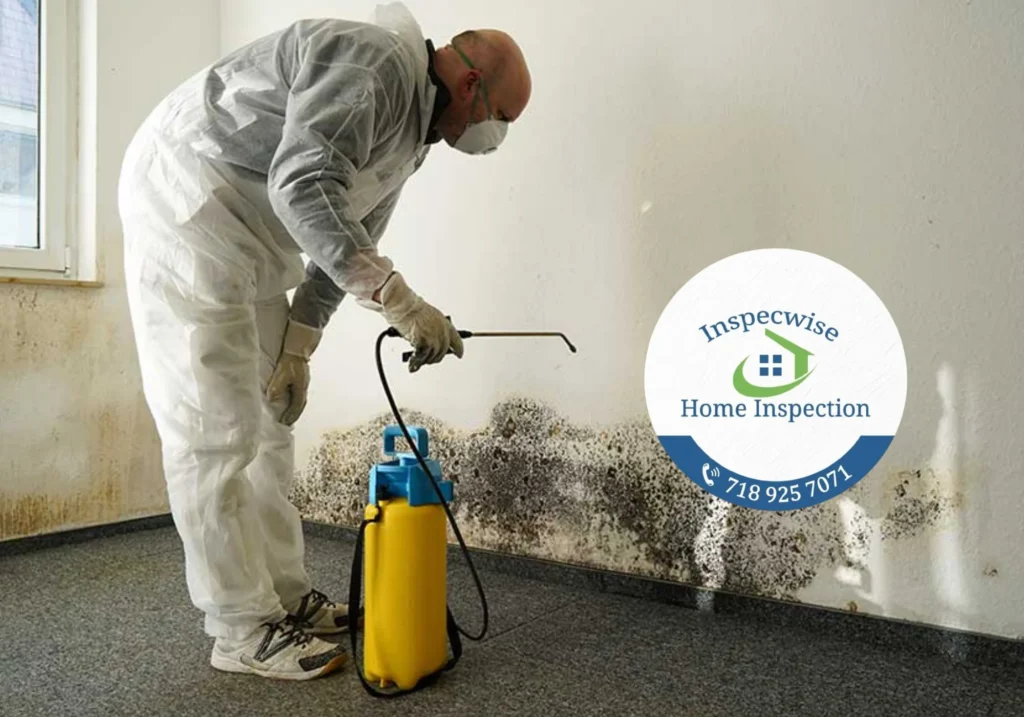
Sub-grade concrete slabs and foundation walls lack modern external waterproofing membranes in many older urban areas. Over decades, the concrete undergoes hydrostatic pressure loading, wherein groundwater is forced through microscopic pores, cold joints, and settling cracks in the foundation wall. As this moisture moves through the concrete, it dissolves mineral salts within the substrate, depositing them on the interior surface as a white, crystalline powder known as efflorescence. This mineral deposit indicates active moisture transmission, which quickly humidifies basement air and fuels mold growth behind finished basements, utility rooms, and storage spaces.
To manage these subterranean risks effectively, property owners should consider scheduling specialized inspections tailored to their specific geographic sub-markets. Securing a detailed home inspection in Staten Island can protect homes built over complex coastal soils and high water tables from undetected sump pump failures, foundation leaks, and crawlspace dampness. Similarly, arranging an environmental assessment like a home inspection in Queens offers critical protection for properties in dense, low-lying neighborhoods where heavy rains frequently overload municipal storm sewers, causing backflows into residential basements.
Mechanical Systems, HVAC Systems, and Air Quality Dynamics
Modern indoor environments rely heavily on complex forced-air heating, ventilation, and air conditioning systems to maintain thermal comfort. However, if these mechanical systems are poorly designed or neglected, they can become a primary vector for the distribution of microbial contaminants.
- Cooling Coil Condensation: During seasonal cooling operations, air conditioning evaporator coils extract massive volumes of moisture from the ambient air stream. If the underlying condensate pan is pitched improperly or the drain line is blocked by biofilm accumulation, standing water pools inside the dark plenum chamber, creating an ideal breeding ground for environmental molds.
- Internal Fiberglass Insulation Degradation: Many older duct networks are lined internally with porous fiberglass insulation to dampen sound and reduce thermal loss. Over time, fine organic dust penetrates the filtration system and settles into the fiberglass matrix; when exposed to high humidity inside the duct, this dust provides the nutrient base for widespread mold colonies along the airflow path.
- Over-Sized Equipment Cycles: Installing an oversized air conditioning system often leads to short-cycling, where the equipment rapidly cools the air temperature down to the thermostat setpoint without running long enough to remove latent humidity from the air. This operational error leaves indoor spaces feeling cold and clammy, with relative humidity staying above 65%, which can cause surface mold to form on walls, furniture, and clothing.
- Poor Return Air Balance: When return air grilles are blocked or insufficient, mechanical ventilation systems can create negative air pressure zones within building apartments. This negative pressure draws humid air inward through exterior wall cavities, electrical outlets, and floor gaps, leading to hidden condensation and localized mold growth inside building walls.
Advanced Forensic Techniques: Hidden Mold and Structural Investigation
Fungal growth is often completely hidden from plain sight, developing silently within structural cavities, under flooring layers, and behind heavy built-in cabinetry. Discovering these concealed reservoirs requires advanced diagnostic techniques and a strong understanding of building engineering.
Borescopic Wall Cavity Inspections
When moisture tracking indicates a potential hidden leak but surface inspections reveal no visible damage, technicians perform micro-invasive borescopic investigations. This process involves drilling a tiny hole, less than a half-inch in diameter, into the drywall or plaster matrix, through which a flexible, high-resolution fiber-optic camera with independent LED lighting is inserted. This allows direct visual inspection of the interior wall cavity, enabling the inspector to check studs, insulation layers, and the backside of wallboards for hidden mold growth without destroying expensive finishes.
Wall Cavity Air Sampling (Inner-Wall Testing)
To confirm the presence of hidden mold before opening a wall cavity, inspectors can collect targeted inner-wall air samples. By inserting a small, specialized brass tube through a tiny puncture hole in the wallboard, the inspector attaches a sampling pump to draw air directly from inside the stud space into an impactor cassette. If the resulting laboratory analysis shows high concentrations of dry-area spores, such as Stachybotrys or Chaetomium, inside the wall cavity while indoor room samples remain low, it confirms a hidden mold problem that requires controlled containment and structural remediation.
Forensic Material Science and Lignin Analysis
Prolonged exposure to moisture and wood-decaying fungi can damage the structural integrity of timber framing. In historic homes, wood surfaces are evaluated for signs of soft rot and lignin degradation, which weaken the load-bearing capacity of floor joists and wall studs. Environmental inspectors use specialized dental picks and wood-testing probes to evaluate structural timber stability, helping to determine if affected wood can be safely cleaned and preserved or if it must be removed and replaced by structural contractors.
Commercial Scale vs. Residential Inspections: Scope and Systems
While residential environmental diagnostics focus on individual living spaces and specific family health concerns, commercial property inspections require a broader approach that accounts for large scale infrastructure, complex mechanical systems, and stricter corporate liability standards.
To ensure all aspects of a property portfolio are protected, investors should look beyond standard residential assessments. Investing in a comprehensive commercial building inspection in the Bronx helps commercial real estate owners screen large industrial spaces, retail facilities, and multi-family complexes for costly structural issues and moisture problems before they lead to regulatory fines or lease disputes. For coastal and suburban assets, scheduling a detailed home inspection in Nassau or a targeted home inspection in Suffolk provides specialized regional assessments for luxury estates and commercial developments exposed to high humidity and severe coastal weather.
Why Choose Inspecwise
Inspecwise represents the gold standard in residential and commercial property diagnostics across the New York metropolitan area, offering unparalleled technical accuracy, regulatory expertise, and forensic engineering precision. Our elite team of environmental inspectors possess a deep understanding of structural physics, local plumbing infrastructures, and the unique architectural complexities that define the city’s diverse real estate market. Utilizing advanced diagnostic tools, including high-resolution thermal imaging cameras, precision moisture meters, and calibrated volumetric air sampling equipment, Inspecwise delivers detailed, legally defensible environmental reports that clearly identify hidden structural vulnerabilities. Property owners, institutional investors, and luxury real estate buyers rely on Inspecwise to provide clear, accurate guidance that protects valuable real estate assets, ensures compliance with strict local regulations, and maintains safe indoor air quality.
Serving All 5 Boroughs and Long Island: Manhattan • Brooklyn • Queens • The Bronx • Staten Island • Nassau County • Suffolk County
Call Inspecwise now: 718-925-7071
Licensed, Certified, and 100% NYC Local