Termite Inspection New York is an absolute necessity for anyone looking to secure, maintain, or sell commercial or high-end residential real estate across the five boroughs. In a metropolis defined by its dense structural footprint, historic framing, and complex subterranean networks, wood-destroying organisms pose an insidious threat to structural integrity and asset valuations. For local property owners, understanding the hidden vulnerabilities of a building whether it is a historic brownstone in Brooklyn, a multi-family complex in Queens, or a commercial high-rise in Manhattan demands a sophisticated, hyper-localized approach to pest management and structural due diligence. Navigating the unique architectural archetypes of New York City requires an inspector who understands not just the biology of the Eastern subterranean termite, but also how local building codes, dense urban utility corridors, and specific neighborhood geographics accelerate wood-destroying insect infestations.
Urban settings alter the behavioral patterns of wood-destroying pests, turning standard mitigation practices into complex engineering puzzles. In New York City, subterranean termites thrive in the damp, unexcavated spaces beneath older buildings, utilizing subterranean utility conduits, transit tunnels, and common brick party walls to migrate seamlessly between adjacent properties. Because buildings in dense neighborhoods like Greenwich Village or Astoria are physically connected, an infestation in one structure can easily compromise an entire block. Professional structural assessments must account for these micro-environments, utilizing advanced diagnostic tools to trace mud tubes behind historic plaster, beneath concrete slabs, and within complex timber floor joists. Property investors cannot afford to treat wood-boring insect detection as a minor add-on; it is a foundational component of modern asset preservation and risk mitigation.
The Subterranean Threat to NYC Architecture
The unique structural landscape of New York City creates exceptional conditions for wood-destroying insects, particularly the Eastern subterranean termite (Reticulitermes flavipes). Unlike structural threats in suburban environments, urban infestations are heavily influenced by the age, materials, and interconnected design of local real estate. Historic masonry-and-timber structures, such as pre-war apartment buildings and classic row houses, feature extensive wood framing that is deeply embedded into structural brick party walls. When moisture penetrates these porous brick facades, it creates a highly localized, high-humidity environment within the wall cavity, providing the exact conditions necessary for termite colonies to establish themselves and chew through structural beams unnoticed.
Historic Brownstones and Row Houses
- Timber Pocket Vulnerabilities: The structural floor joists of classic NYC brownstones are seated directly inside pockets carved into shared brick party walls, creating direct pathways for wood-boring pests traveling upward from the soil through damp masonry cavities.
- Cellar and Unexcavated Void Exposure: Many historic properties in neighborhoods like Park Slope or Harlem feature original rubble-stone foundations and unexcavated crawl spaces with exposed earth, allowing subterranean pests direct, unimpeded access to structural sill plates and load-bearing columns.
- Interconnected Structural Channels: Because row houses share common walls, a colony nesting beneath one property can easily spread through connected floor joists to adjacent structures, turning a localized pest issue into a multi-building structural emergency.
Pre-War and Multi-Family Buildings
- Hidden Pipe Chases and Utility Chutes: Multi-family buildings in Upper Manhattan and the Bronx rely on expansive, vertical utility shafts that route plumbing and heating lines throughout the structure; these dark, warm corridors serve as perfect superhighways for foraging pests.
- Porous Foundation Interfaces: Decades of structural settling create microscopic fractures along the foundation lines of pre-war properties, allowing subterranean insects to breach concrete basements and reach wood partition walls, baseboards, and flooring.
- Plaster and Lathe Complications: Traditional wood-lath backing behind historic plaster walls provides an extensive, concealed food source for wood-boring insects, making visual detection impossible without specialized infrared scanning and moisture-meter analysis.
Commercial Real Estate Vulnerabilities
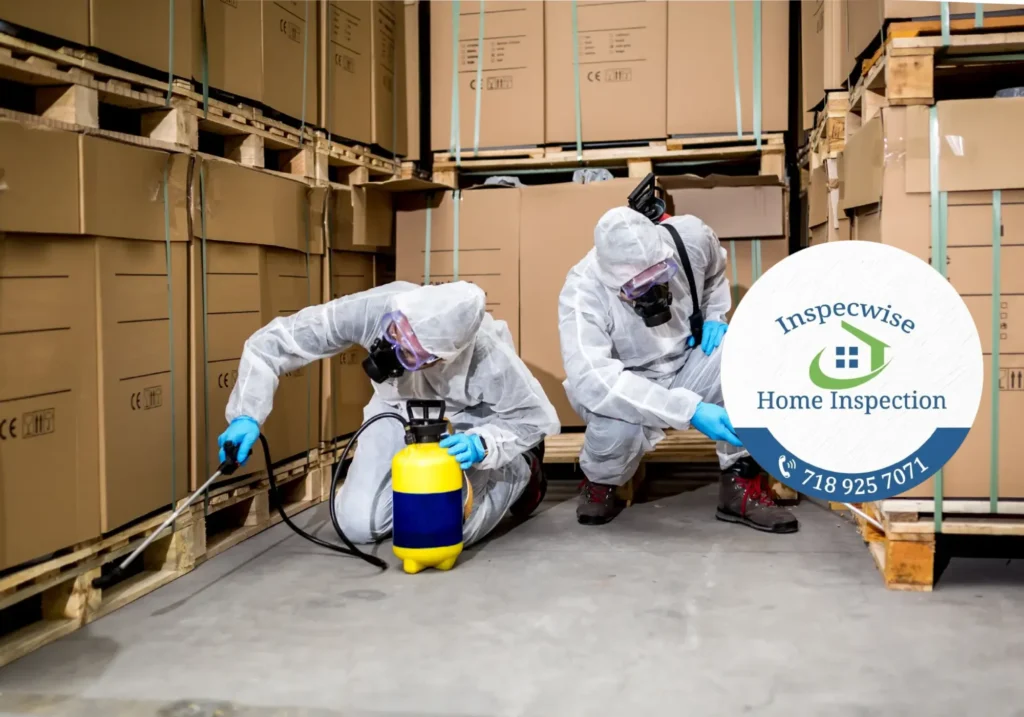
Commercial properties in New York City are far from immune to the devastating impacts of wood-destroying organisms. While modern commercial high-rises rely primarily on steel, concrete, and heavy masonry, the extensive interior build-outs, architectural finishes, and localized structural elements frequently contain substantial quantities of cellulose-based materials. When an infestation takes hold in an industrial park, retail strip, or corporate office complex, the financial ramifications extend far beyond basic repair bills, frequently involving massive business interruptions, tenants breaking leases, and severe structural devaluation during rigorous buyer due diligence periods.
Navigating these commercial risks requires an expansive understanding of how specialized facility layouts interact with environmental vectors. For example, a thorough light commercial and medical office inspection must evaluate how highly regulated, climate-controlled medical environments or ground-floor retail layouts mask the early warning signs of wood-destroying insects. Medical offices often feature extensive drywall partitions, subflooring assemblies, and detailed built-in cabinetry that can harbor wood-boring pests if any sub-slab moisture is present. Similarly, during a comprehensive office building inspection, field technicians must look past the steel beams and focus on structural vulnerable zones like loading docks, freight elevator pits, and basement storage vaults where wood pallets and document archives rest against foundation walls.
Commercial properties feature heavy slab-on-grade construction, which many owners falsely assume is completely impervious to pests. In reality, subterranean termites only require an expansion joint, a hairline settling crack, or a gap around a utility penetration measuring just 1/32nd of an inch to gain access to a building. Once inside, they exploit decorative wood column wraps, acoustic wall panels, and structural wood flooring systems common in high-end Manhattan boutique hotels and trendy Brooklyn creative offices. Protecting a commercial asset requires an aggressive, data-driven assessment protocol that targets these hidden entry vectors before structural issues compromise the building’s certificate of occupancy or derail a high-value real estate transaction.
Advanced Diagnostic Technologies
Modern structural assessments in New York City have evolved far beyond the traditional method of simply tapping a wooden beam with a flashlight and looking for hollow sounds. Due to the complex, multi-layered nature of urban building materials, detecting wood-destroying organisms requires a sophisticated suite of non-destructive diagnostic technologies. These advanced instruments allow certified field technicians to see through solid concrete, analyze thermal anomalies within historic brickwork, and track the movement of pests hidden deep inside structural columns without causing any damage to high-end architectural finishes.
Infrared Thermography and Thermal Imaging
By utilizing high-resolution thermal imaging cameras, inspectors can identify localized temperature variances within walls, ceilings, and floors. Because termite colonies generate specific metabolic heat and introduce moisture into their active mud tubes to survive, these nesting zones appear as distinct thermal anomalies on an infrared scan. This technology is incredibly valuable for inspecting historic properties with delicate plasterwork or high-end commercial spaces with custom wood paneling, as it allows inspectors to pinpoint the exact location of a colony without opening up the walls.
Termatrac T3i Radar Detection
The introduction of microwave radar technology has completely transformed the accuracy of modern wood-boring insect inspections. The Termatrac T3i is a specialized handheld device that emits calibrated radar waves capable of penetrating building materials such as drywall, concrete, brick, and wood. If the radar waves encounter any microscopic movement within the structural material, the device alerts the technician, confirming the presence of active pests behind the surface. This eliminates the guesswork, allowing inspectors to distinguish between old, inactive structural damage and an ongoing, active infestation.
Electronic Moisture Analysis and Borescope Inspections
Subterranean termites are completely dependent on high moisture levels to prevent their delicate cuticles from drying out. Technicians use precision electronic pinless moisture meters to map out structural dampness throughout a property’s foundation and framing. Any zone displaying elevated relative moisture levels is flagged for further exploration using flexible, fiber-optic borescopes. By inserting a microscopic camera through a tiny, easily patchable hole in a baseboard or mechanical chase, inspectors can visually confirm the presence of foraging pests, structural mud tubes, or compromised framing deep inside inaccessible building cavities.
Local Building Codes and Regulatory Compliance
Executing a professional property assessment in the five boroughs requires a deep familiarity with the strict regulatory landscape maintained by the New York City Department of Buildings (DOB) and the New York State Department of Environmental Conservation (DEC). Structural modifications, pest control applications, and real estate transactions are governed by distinct legal mandates that hold property owners strictly accountable for wood-destroying insect management. Failing to properly document an inspection or ignoring local compliance guidelines can lead to severe fines, delayed construction permits, and significant legal liabilities during property title transfers.
Understanding how environmental testing regulations overlap with structural inspections is essential for comprehensive risk management. For instance, commercial property buyers evaluating old industrial spaces or pre-war assets often look into a comprehensive environmental assessment, frequently inquiring about a standard radon test cost NY alongside their physical inspections to ensure complete regulatory compliance across both soil-gas and pest vectors. While radon testing focuses on interior air safety and sub-slab ventilation systems, termite inspections protect the physical framing above those same slabs. Both protocols require a specialized understanding of local soil dynamics and foundation designs to satisfy institutional lenders and local building authorities during the commercial real estate due diligence process.
Furthermore, the New York City Building Code explicitly dictates that all new construction foundations and major structural alterations must incorporate approved termite protection measures, such as physical termiticide barriers, pressure-treated lumber, or stainless steel mesh shields. When purchasing or renovating an existing commercial building, structural field technicians must verify that these original barrier systems have not been compromised by subsequent utility installations or exterior concrete work. All findings must be recorded on legally recognized reporting instruments, ensuring that your real estate assets comply fully with both local building codes and federal lending standards.
Seasonal Pest Swarming Patterns in the Five Boroughs
The behavioral and reproductive cycles of wood-destroying pests in the New York metropolitan area are closely tied to local seasonal weather shifts and the urban heat island effect. Property owners must be particularly vigilant during the spring months, as this is when mature subterranean colonies launch massive swarms of winged reproductive termites, known as alates. Recognizing the distinct timing of these swarming events and understanding how the concrete structures of the city alter natural pest behaviors is essential for catching infestations before they cause widespread structural damage.
Spring Swarming Triggers (March through May)
As temperatures rise above 60°F and spring rain showers saturate the local soil, subterranean termite colonies initiate their reproductive swarms. Thousands of alates emerge from subterranean nests through cracks in basement slabs, expansion joints, and foundation walls to mate and establish new colonies. In New York City, these swarms are frequently observed indoors near windows, glass storefronts, and light fixtures, as the insects are instinctively drawn to bright light sources after emerging from dark structural voids.
The Urban Heat Island Acceleration
The massive concentration of concrete, asphalt, steel, and subterranean steam lines across the five boroughs creates a pronounced urban heat island effect. This artificial warmth prevents the local ground from freezing as deeply as it does in surrounding suburban or rural counties. Consequently, subterranean termite colonies in dense urban centers remain active much longer into the winter months. In many heated commercial basements or properties situated directly over municipal steam tunnels, wood-boring pests can maintain a continuous, year-round feeding and tunneling cycle, accelerating structural wood loss.
Differentiating Ant Swarmers from Termite Swarmers
Property owners often confuse flying ants with termite swarmers, leading to dangerous delays in proper structural treatment. A professional inspection verifies the species by analyzing three specific anatomical features: body shape, antenna structure, and wing length. Termites possess a straight, thick waist, straight bead-like antennae, and two pairs of equal-length wings that are significantly longer than their bodies. Flying ants, conversely, display a pinched, segmented waist, distinctly elbowed antennae, and forewings that are noticeably larger than their hind wings.
Detailed Structural Field Inspection Protocol
A comprehensive property assessment for wood-destroying insects must follow a meticulous, highly structured field protocol that leaves absolutely no area unexamined. Certified inspectors must systematically analyze a building from its lowest subterranean foundations up to its roof framing, paying close attention to known urban risk zones and structural interfaces. This disciplined approach ensures that both active infestations and historical, structural wood rot are clearly identified, documented, and mapped for future engineering or remediation work.
Phase 1: Exterior Perimeter and Structural Footprint
- Soil-to-Structure Contact Analysis: Inspections begin by identifying any locations where raw soil, exterior landscaping beds, or structural mulch beds come into direct contact with the building’s siding, structural sill plates, or wooden framing.
- Expansion Joint and Curb Assessments: Inspectors examine the critical seams where concrete sidewalks, loading docks, and entry stairs meet the main foundation wall, looking for hidden shelter tubes constructed across exposed masonry faces.
- Low-Level Masonry Overhaul: Technicians check the lower courses of brickwork or stone foundations for signs of spalling, cracked mortar joints, or open weep holes that provide easy, unhindered entry pathways for foraging insects.
Phase 2: Foundation, Cellar, and Mechanical Vault Analysis
- Slab Penetration Profiling: Inside the basement, inspectors examine the perimeter of all water mains, sewer connections, electrical conduits, and floor drains, checking for gaps where insects could emerge from sub-slab soil.
- Rubble Wall and Mortar Auditing: For older historic properties, the field technician checks the integrity of original stone foundation walls, looking for instances where deteriorating lime mortar has left hollow channels inside the wall core.
- Mechanical and Boiler Room Inspections: Technicians review the high-humidity areas surrounding commercial water heaters, steam boilers, and sump pump pits, where persistent condensation creates ideal micro-climates for nesting pests.
Phase 3: Interior Structural Framing and Load-Bearing Elements
- Timber Pocket and Joist Inspections: Inspectors examine the ends of all floor joists that sit inside shared masonry party walls, using specialized sounding tools to verify the density and structural soundness of the timber.
- Partition Baseboard Scanning: Technicians look along structural baseboards, door frames, and window trims on the lower levels of the building, checking for wavy drywall finishes, blistering paint, or tiny exit holes plugged with soil.
- Storage Vault and Archive Checking: Inspectors examine basement storage lockers, inventory rooms, and paper archive vaults where dense concentrations of cellulose materials are kept near damp concrete flooring panels.
Comprehensive Reporting, Mapping, and Documentation
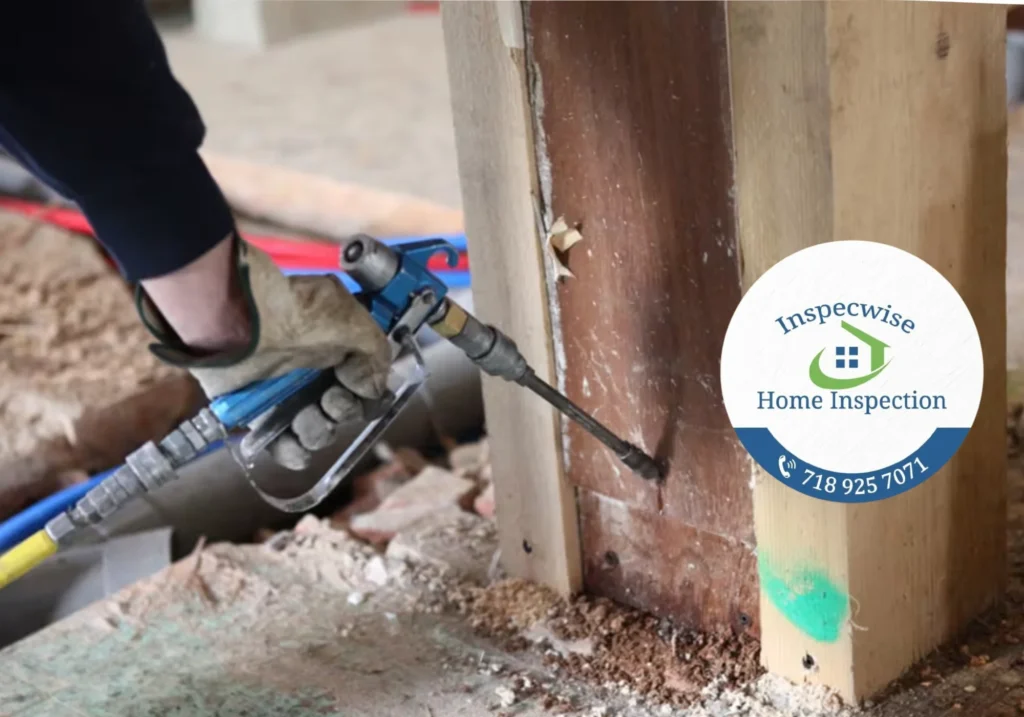
The final deliverable of a professional structural pest inspection is a detailed, legally binding diagnostic report. This document translates complex physical field observations into an actionable, highly scannable analysis that can be easily understood by building owners, engineers, legal counsel, and lenders. A premium report avoids generic checklists, relying instead on precise spatial mapping, structural annotations, and data-backed risk profiles to deliver real, measurable value to real estate stakeholders.
Every comprehensive report begins with standard national reporting forms, such as the NPMA-33 Wood Destroying Insect Infestation Inspection Report, which is required for conventional bank financing and institutional real estate transactions. This is supported by an annotated structural floor plan that maps out any active infestations, historical damage, and localized moisture zones. By using clear spatial symbols, inspectors can show exactly where mud tubes were discovered, where framing has suffered significant wood loss, and where structural engineering repairs may be needed to restore full loading capacity to the floor joists.
Additionally, reports include a comprehensive photographic log complete with high-resolution digital photographs, thermal imaging scans, and digital sounding readouts. Each photo is paired with an explanatory caption detailing the exact location of the issue and its potential impact on the surrounding building components. The report concludes with an authoritative, tailored risk mitigation plan that outlines immediate remediation steps, suggests appropriate chemical or bait-station configurations, and details structural modifications needed to eliminate moisture issues and safeguard the building from future pest activity.
Why Choose Inspecwise
Inspecwise stands as the premier commercial and high-end residential property inspection authority across New York City and Long Island, offering unmatched technical accuracy, localized expertise, and elite asset reporting. Our certified field inspectors possess a deep understanding of urban structural engineering, local building regulations, and the unique challenges presented by historic row houses, pre-war apartment complexes, and heavy slab-on-grade commercial developments. By leveraging cutting-edge diagnostic technologies including high-resolution infrared thermography, advanced digital moisture mapping, and non-destructive microwave radar tracking. Inspecwise ensures that hidden wood-destroying insect infestations and structural structural vulnerabilities are identified with absolute precision before they can impact your real estate transactions or compromise asset valuations. Every property assessment we deliver features clear, scannable, and legally compliant diagnostic reports engineered to satisfy strict institutional lending mandates, protect property buyers from hidden liabilities, and establish long-term physical risk management blueprints. When investing in the high-stakes New York real estate market, trust Inspecwise to deliver the elite, data-backed structural due diligence your property deserves.
Serving All 5 Boroughs and Long Island: Manhattan • Brooklyn • Queens • The Bronx • Staten Island • Nassau County • Suffolk County
Call Inspecwise now: 718-925-7071
Licensed, Certified, and 100% NYC Local