Well Water Testing inspection New York residential and commercial real estate assets require a meticulous operational framework to protect human health and preserve asset valuations. While most people associate the five boroughs exclusively with the municipal grid operated by the New York City Department of Environmental Protection, numerous properties on the periphery of the urban landscape rely heavily on private aquifer systems. From historical estates tucked away in the outermost sections of Queens and Staten Island to specialized commercial complexes, multi-family structures, and converted industrial zones across the metropolitan area, private wells face distinct environmental pressures. Ensuring the structural integrity and biological safety of these systems demands an advanced diagnostic process that bridges local hydrogeology with complex municipal regulatory standards.
Property owners must understand that underground water channels across the metropolitan area do not exist in isolation. They are constantly subjected to the legacy of over a century of heavy manufacturing, local industrial dumping, urban runoff, and subsurface structural shifts. When a real estate transaction occurs or a commercial facility undergoes a mandatory health compliance audit, executing a standard surface-level analysis is entirely insufficient. A true elite-level evaluation traces the subterranean mechanics of the well, checks the structural stability of the casing, and employs advanced laboratory testing protocols to detect microscopic chemical footprints and biological threats that standard inspectors frequently overlook.
Navigating these subterranean complexities also requires a keen eye for secondary environmental hazards that thrive in the damp, enclosed spaces of older New York properties. For example, a hidden leak or consistent moisture accumulation near a poorly sealed wellhead or adjacent foundation wall can easily trigger a secondary crisis inside the property walls. Integrating a comprehensive Black Mold Inspection New York protocol into your broader environmental risk assessment is highly recommended, as persistent subterranean moisture frequently translates into structural mold growth that compromises indoor air quality and violates strict local building ordinances.
Subterranean Environmental Contaminants and Local Hydrology
The geological profile of the five boroughs and adjacent suburban counties features a complex mix of dense bedrock, glacial till, and highly permeable sand aquifers. In areas like southern Queens and parts of Staten Island, shallow water tables interact directly with the surface environment, making them incredibly vulnerable to localized pollution. When inspecting these assets, an expert must look beyond natural mineral compositions and evaluate the historical land-use patterns of the surrounding neighborhood. Decades of unrecorded industrial operations, automotive repair facilities, dry cleaners, and manufacturing plants have left a dense footprint of subsurface contaminants that slowly migrate through the soil and into private drinking supplies.
Chemical and Volatile Organic Compound Profiles
- Volatile Organic Compounds (VOCs): Industrial solvents like tetrachloroethylene (used in dry cleaning) and trichloroethylene (degreasing agent) pose an ongoing threat to local well systems due to historical industrial density. These chemicals migrate easily through sandy soils, piercing unsealed well casings and corrupting deep aquifers with carcinogenic compounds that require specialized granular activated carbon filtration systems to remediate.
- Heavy Metal Accumulation: Subsurface aquifers across the metropolitan area frequently show elevated concentrations of arsenic, lead, and cadmium. While some metals dissolve into the water from natural rock formations, high lead readings are usually tied to vintage infrastructure, including old lead-soldered joints or copper pipes found in historical properties. This underscores the absolute necessity of obtaining a true first-draw tap sample after the system has been static for at least six hours.
- Nitrates and Nitrites: Agricultural fertilizers are rare in urban environments, but localized nitrate spikes are frequently driven by leaking underground sewer lines, failing commercial waste facilities, or old septic systems. High nitrate levels interfere with human oxygen delivery and can indicate that raw surface runoff or sewage is bypassing the well’s protective seals.
Biological and Microbial Threats
Urban wildlife, bird populations on rooftop structures, and failing underground utility lines create a high risk of microbial contamination in private water systems. When an aquifer’s natural filtration layers are bypassed by structural shifting or surface flooding, pathogens can multiply rapidly within the well casing. Detecting these microscopic threats requires strict collection procedures using sterile, non-aerated spigots to prevent atmospheric contamination from skewing the laboratory results.
- Total Coliform Bacteria: This broad category of microorganisms serves as the primary operational indicator for well system integrity. While not all coliform strains cause direct illness, their presence in a water sample confirms that surface water or shallow groundwater is entering the well, meaning the system is open to more dangerous pathogens.
- Escherichia coli (E. coli): A positive result for E. coli requires immediate action, confirming direct contamination by human or animal fecal waste. In the local real estate market, this problem often tracks back to cracked structural foundations or failing sewer lines intersecting with shallow well zones.
- Cryptosporidium and Giardia: These microscopic parasites form tough outer shells that survive for long periods in cold water, making them highly resistant to standard chlorine disinfection. If a well head sits in a low-lying zone prone to heavy surface pooling during intense coastal storms, these parasites can wash down the well shaft and cause severe gastrointestinal outbreaks.
Structural Anatomy and Wellhead Inspection Mechanics
A high-performance well water assessment must evaluate the physical delivery system alongside the chemical composition of the water. The physical assembly comprising the well cap, structural casing, pitless adapter, and submersible pump assembly acts as the primary defense against environmental pollutants. Our local inspectors analyze these mechanical parts with extreme care, knowing that a single structural crack or worn rubber seal can expose the entire water supply to costly environmental liabilities.
Well Head and Sanitary Cap Verification
The physical wellhead must extend at least twelve inches above the finished grade to prevent surface water from pooling around the top of the shaft during heavy rains. The inspector will check for a certified, watertight sanitary well cap equipped with intact rubber gaskets and a screened, downward-facing vent pipe. Many older residential setups still use outdated, two-piece vented caps that allow insects, rodents, and contaminated floodwaters to drop directly into the drinking water supply.
Casing Integrity and Annular Grout Evaluation
The structural casing typically constructed of heavy-duty sch 40 carbon steel or modern thermoplastic materials must be scanned for deep pitting, advanced corrosion, or structural stress fractures. The inspector will review the annular space, which is the gap between the outside of the casing and the surrounding drilled borehole. This space must be completely filled with high-density bentonite grout to form an impermeable subterranean barrier. If this grout column shrinks, cracks, or was omitted during construction, surface water will flow straight down the outside of the casing and contaminate the intake zone.
Pitless Adapter and Delivery Line Mechanics
To prevent frozen pipes during cold winters, the water line must exit the well casing below the local frost line via a mechanical component known as a pitless adapter. This specialized fitting provides a watertight, pressurized connection through the casing wall. Over decades of service, the internal O-rings and brass wedges can warp or pit, pulling contaminated soil and shallow groundwater into the household plumbing whenever the pump cycles and creates a vacuum.
Assessing the physical condition of these components requires a deep understanding of how water travels through the entire structure. A drop in water pressure or an unexplainable spike in sediment levels often points to a larger problem within the property’s main water lines. For this reason, a smart buyer will always pair an environmental water analysis with a complete Home Plumbing Inspection to ensure that aging copper lines, faulty pressure tanks, and older check valves are not actively re-contaminating the water after it leaves the wellhead.
Regulatory Standards and Compliance Frameworks
Operating a private well system within the municipal boundaries of New York requires strict adherence to a complex web of overlapping county, state, and city environmental regulations. While public water utilities manage their own water quality reporting under the Safe Drinking Water Act, private well owners bear full legal and financial responsibility for their water safety. Failing to secure certified testing data can delay real estate closings, trigger expensive stop-work orders from the local Department of Buildings (DOB), or lead to costly environmental remediation mandates.
New York State Sanitary Code Part 5 and Appendix 75-C
The New York State Department of Health (NYSDOH) establishes strict drinking water quality benchmarks through Part 5 of the State Sanitary Code. Although these metrics are primarily built for public water systems, they serve as the legal baseline for evaluating private wells during real estate transactions. Additionally, Appendix 75-C governs the structural construction standards for individual water systems, specifying precise separation distances between wellheads and potential contamination sources, such as sewer lines, grease traps, and fuel storage tanks.
Mandatory County Property Transfer Laws
- Westchester County Private Well-Water Testing Law: Chapter 707 mandates that upon signing a contract of sale for any property served by a private well, the seller must fund a comprehensive water test through a certified water operator. The formal results must be delivered to both the buyer and the local health department within five days of receipt, or the closing cannot legally proceed.
- Leased Property Requirements: Landlords operating residential or commercial rental assets served by private wells must execute full water quality testing at least once every five years. They are also legally required to provide a certified copy of the laboratory analysis to every tenant before signing a lease agreement.
- New Well Construction Regulations: Any newly drilled well must undergo a full water testing sequence and receive formal clearance from local health authorities before it can be connected to a building’s potable plumbing grid.
Maximum Contaminant Levels and Action Thresholds
The Environmental Protection Agency (EPA) and state health departments set rigid Maximum Contaminant Levels (MCL) for a variety of pollutants. For instance, the legal threshold for arsenic is strictly capped at 0.010 milligrams per liter (mg/L), while nitrates must not exceed 10 mg/L. If a laboratory analysis reveals that a primary parameter exceeds these action thresholds, the well is flagged as a public health failure. This triggers mandatory remediation steps, which may include high-dose shock chlorination, installing advanced multi-stage water filtration units, or drilling a deeper casing down into protected bedrock.
Advanced Diagnostic and Sampling Methodology
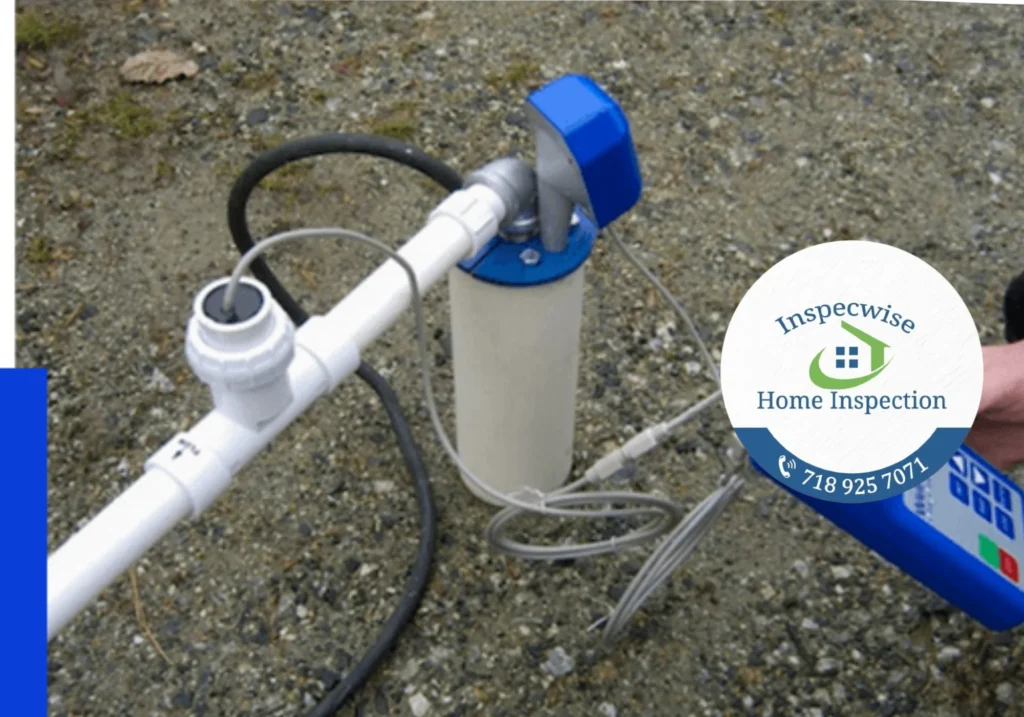
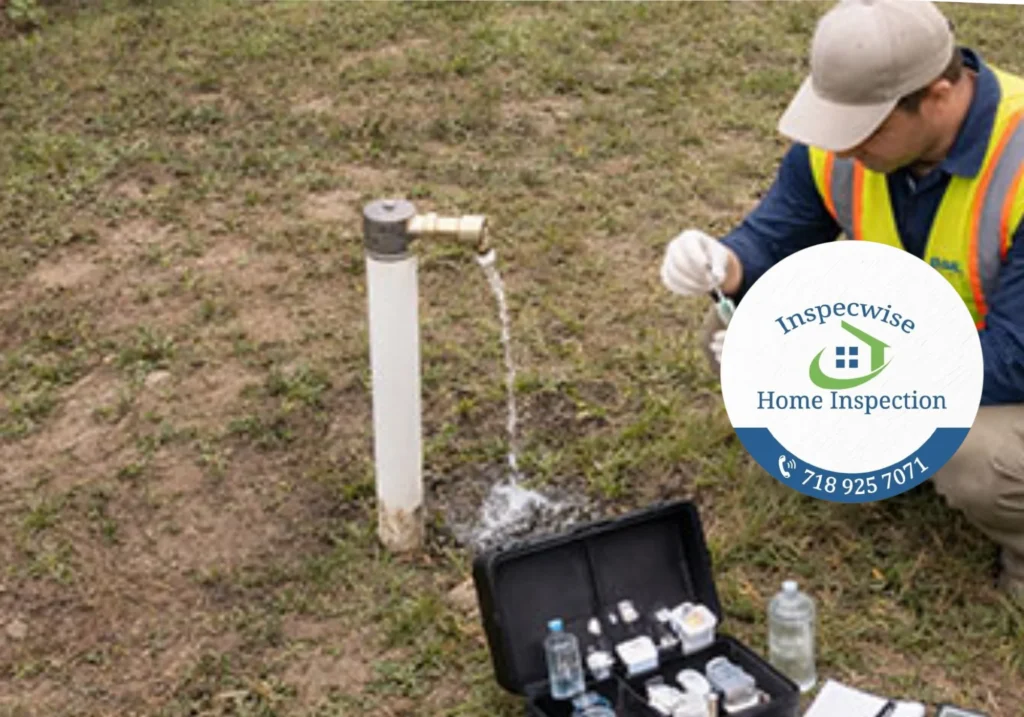
Conducting a reliable well water test requires an experienced inspector who follows strict scientific protocols. Simply holding a plastic container under a running kitchen faucet does not constitute a valid environmental assessment. To ensure accurate data that stands up to lender requirements and legal scrutiny, our certified inspectors follow strict, step-by-step collection and handling procedures.
System Purging and Pressure Zone Stagnation
The inspector must first determine whether they are capturing a static plumbing sample or a raw aquifer sample. For lead and copper analysis, the water must sit undisturbed in the interior pipes for at least six hours to measure metal leaching accurately. Conversely, evaluating the actual well water requires purging the system by running the tap for fifteen to thirty minutes until the water temperature stabilizes. This ensures that all standing water in the pressure tank is flushed out, allowing the inspector to collect a fresh sample straight from the underground aquifer.
Sterilization and Cross-Contamination Prevention
- Aerator Removal: The inspector will remove all mesh aerators, screens, and rubber washers from the sampling tap, as these components frequently harbor local bacteria and sediment that can distort the sample data.
- Sanitizing the Spigot: The metal tap structure is thoroughly sterilized using a targeted propane torch flame or a high-concentration isopropyl alcohol wipe to eliminate surface microbes before the water is drawn.
- Controlled Flow Rates: The water stream is adjusted to a slow, steady trickle to prevent turbulent splashing, which can cause volatile organic compounds to evaporate before they are captured in the testing vial.
- Preservative Vials: Samples for chemical profiling are collected in specialized laboratory bottles pre-loaded with chemical stabilizers, such as nitric acid for heavy metals or sodium thiosulfate for microbial targets.
Chain of Custody and Thermal Stabilization
Once filled, every sample vial is labeled with a unique tracking number, the exact time of collection, and the specific GPS coordinates of the wellhead. The bottles are immediately placed into insulated transport coolers maintained at a strict temperature below 4°C using engineered gel ice packs. This thermal control prevents biological organisms from multiplying or dying during transit. The cooler is then rushed to a state-certified environmental testing facility within twenty-four hours to ensure all regulatory holding windows are met.
Geotechnical Risks and Structural Vulnerabilities
The performance of an underground water system is deeply tied to the geological stability of the surrounding land. In a high-density urban environment like New York, subsurface shifting, massive construction projects, and seismic vibrations from subway lines can put significant physical stress on a well’s underground components. An expert inspector evaluates these structural factors alongside chemical testing to ensure long-term system reliability.
Over decades of service, changing soil conditions can cause microscopic movements in a building’s underlying bedrock and foundational footings. If a wellhead sits close to a building that is experiencing structural settling, those shifting forces can twist the underground water lines and crack the protective grout columns. For older estates or commercial properties showing signs of settling, smart buyers frequently pair their water analysis with a targeted Home Foundation Inspection to confirm that structural shifts are not damaging the subterranean well lines or creating paths for contaminated surface water to enter.
Bedrock Fracturing and Seismic Disruptions
Heavy construction projects involving deep blasting or pile-driving can send powerful shockwaves through nearby rock formations. These vibrations can open new pathways in the bedrock, shifting underground water channels and introducing dense silt, clay, or historical industrial pollutants into a previously clean well. Our inspectors track nearby development activity and use advanced turbidimeters to check for sudden changes in water clarity that indicate structural rock shifts.
Saline Intrusion in Coastal Aquifers
Properties located along the coastlines of Brooklyn, Queens, and Staten Island face the ongoing risk of saltwater intrusion. When a high-capacity commercial or multi-family well pumps water too aggressively, it can create a localized vacuum that draws heavy saltwater from the Atlantic Ocean or the East River into the freshwater aquifer. This rapidly spikes total dissolved solids and chloride levels, corroding mechanical plumbing components and making the water completely undrinkable without an expensive reverse osmosis desalination system.
Historical Subsurface Landfill Gas Migration
The metropolitan area contains numerous historical landfill zones and industrial dumping grounds that generate underground gases like methane and hydrogen sulfide. These gases can migrate through porous soil layers, passing right through old well casings and dissolving into the water supply. This can create a distinct rotten-egg odor, cause severe corrosion in copper pipes, and introduce highly flammable gases into interior utility closets.
Why Choose Inspecwise
Inspecwise is the premier inspection authority in New York, delivering unmatched technical accuracy, deep local knowledge, and elite environmental diagnostics for sophisticated real estate investors. Our certified field specialists understand the complex interplay between urban geology, industrial history, and strict local health codes, ensuring that every well water system is analyzed with scientific precision. Utilizing advanced sampling techniques, strict chain-of-custody protocols, and state-certified laboratory partnerships, we deliver clear, data-driven reports that identify hidden liabilities, protect human health, and safeguard your financial investments. When managing high-stakes real estate assets in the NYC market, choosing Inspecwise provides the definitive clarity and elite-level oversight required to move forward with absolute confidence.
Serving All 5 Boroughs and Long Island: Manhattan • Brooklyn • Queens • The Bronx • Staten Island • Nassau County • Suffolk County
Call Inspecwise now: 718-925-7071
Licensed, Certified, and 100% NYC Local