Commercial mold inspection looks different from a typical residential visit. A 40,000-square-foot office floor, a ground-level restaurant space, or a Long Island warehouse doesn’t behave like a house, the moisture pathways are longer, the mechanical systems are larger, and the people affected by a problem are tenants, customers, and employees rather than a single family. That’s why commercial buildings need an inspection approach built around building systems, not just visible staining on a wall.
The tricky part is timing. By the time mold is visible on a ceiling tile or baseboard, the moisture source behind it has often been active for weeks or months. Commercial buildings hide water especially well, behind curtain-wall panels, inside HVAC plenums, beneath VCT flooring, and within brick cavities that have absorbed moisture for decades. Waiting for a visible symptom means reacting late. A property owner or manager who investigates moisture proactively, after a leak, during due diligence, or in response to a tenant complaint, is in a far stronger position than one who waits for a stain to show up on the drywall.
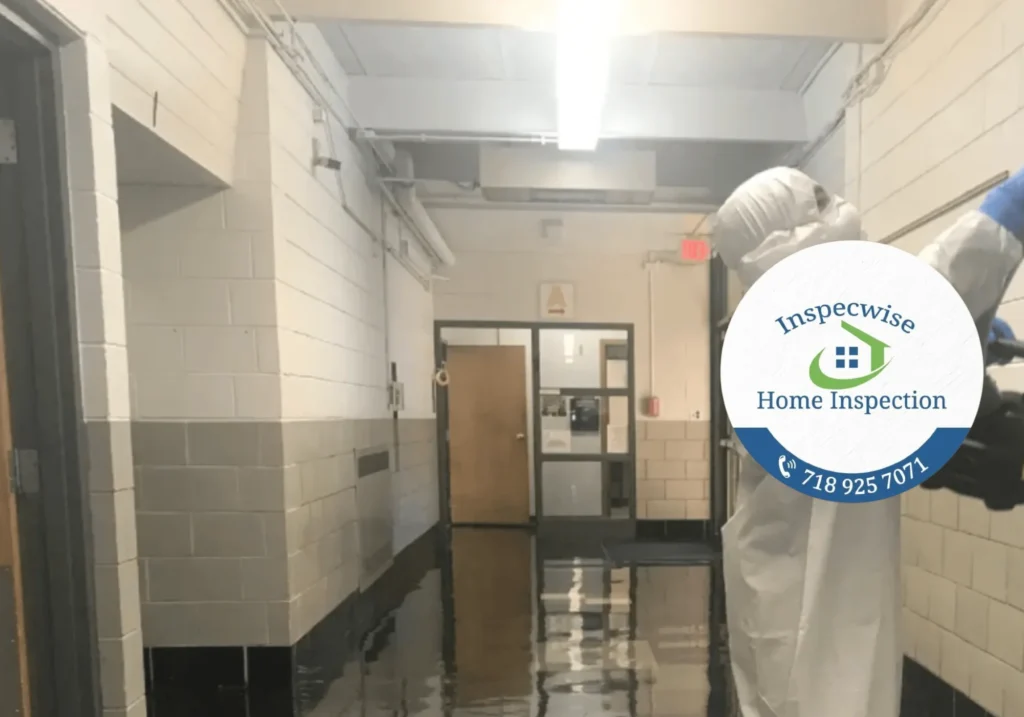
This guide walks through what commercial mold inspection actually involves, where moisture problems tend to originate in New York’s commercial building stock, how inspectors distinguish inspection from testing from formal assessment, and what New York’s regulatory framework expects from property owners. If you manage, own, lease, or are evaluating a commercial property anywhere from Manhattan to Suffolk County, this is the practical version of what you need to know before you make a decision, and a good place to start is understanding how a commercial inspection nyc actually differs from the residential process most people picture.
What Commercial Mold Inspection Actually Covers
Commercial mold inspection is a diagnostic evaluation of a commercial property to identify visible mold, moisture conditions that could support mold growth, and the sources feeding that moisture. It’s not a single test, it’s a process that combines a trained visual assessment with tools like thermal imaging and moisture meters, and it brings in laboratory sampling only when sampling is the right way to answer a specific question.
The goal isn’t simply to confirm “yes, there’s mold” or “no, there isn’t.” A useful commercial inspection tells an owner or manager where moisture is entering the building, how long it’s likely been present, which materials and building systems are affected, and what needs to happen next, whether that’s monitoring, targeted repair, or formal remediation. For a property with mechanical systems as complex as most commercial buildings, that often means the inspection needs to look past the surface and into how the building’s structure, envelope, and HVAC system interact with moisture.
Commercial spaces bring their own inspection challenges. Retail buildouts, restaurant kitchens, medical suites, and warehouse racking all limit access to certain areas, and multi-tenant buildings often mean an inspector needs to evaluate shared mechanical rooms, common corridors, and roof systems that affect several tenant spaces at once. That’s a fundamentally different scope than inspecting a single-family basement, and it’s why commercial inspection experience (not just mold knowledge) matters when you’re choosing who to hire.
Where Moisture and Mold Risk Comes From in NYC Commercial Buildings
New York’s commercial building stock spans more than a century of construction methods, and each era carries its own vulnerabilities.
Pre-war masonry buildings (common throughout Manhattan and older commercial corridors in Brooklyn) rely on multi-wythe brick walls that absorb moisture from the exterior almost by design. As the mortar joints between bricks age, water travels inward through capillary action, often reaching interior plaster or wood lath long before any staining appears on the surface. Evaluating these buildings well takes local, hands-on familiarity with how older masonry actually behaves, the kind of knowledge that comes from repeated commercial inspection manhattan work rather than a generic checklist.
Modern curtain-wall buildings, more common in newer high-rise construction, depend on sealants and gaskets rather than mass masonry to keep water out. When those seals fail from age or thermal movement, wind-driven rain can enter the wall cavity and travel down inside steel-stud framing, remaining hidden until the volume is significant enough to reach a finished surface.
Sub-grade spaces (basements, loading docks, and mechanical vaults) are a persistent concern in low-lying areas of Lower Manhattan and coastal sections of Brooklyn and Staten Island, where the water table sits close to the foundation. Continuous hydrostatic pressure pushes moisture through porous concrete over time, which is one reason below-grade commercial space so often carries a musty smell even without an obvious leak. Coastal properties tend to show this below-grade pressure more consistently than buildings set further from the waterline.
Converted industrial buildings, a defining feature of neighborhoods like Long Island City and DUMBO, frequently retain original timber decking and framing. If that structure was exposed to a past roof or window failure before the conversion, the wood may still be holding moisture that surfaces years later as an office buildout traps humidity against it.
Recognizing which risk profile applies to a given property is the first step in a useful inspection, and it’s very different from treating every commercial building as if it faces the same set of problems.
Why Choose InspecWise
Choosing an inspector for a commercial property is a different decision than choosing one for a house. The stakes are higher, the systems are more complex, and the report often needs to hold up for lenders, attorneys, insurers, or business partners, not just for personal peace of mind. Here’s what that means in practice.
Licensed NY Inspector. New York State regulates mold assessment work for a reason: it protects property owners from unqualified opinions and inconsistent findings. Working with a properly licensed New York inspector means you’re getting an evaluation grounded in the state’s framework for how mold conditions should be assessed, not an informal walkthrough. It also means the inspector understands the regional building science, how a bungalow-style commercial storefront on Staten Island differs from a Midtown high-rise, because that local knowledge, the kind built through repeated commercial inspection staten island work, shapes where and how an inspection should focus its attention.
Commercial Specialists. Commercial buildings don’t behave like homes. They have larger mechanical systems, more complex roof assemblies, multiple tenants sharing common infrastructure, and moisture pathways that can run for hundreds of feet before surfacing. An inspector who primarily works on single-family homes may miss how a rooftop HVAC unit’s condensate line connects to a moisture problem three floors down. Commercial specialization means the inspection is built around how commercial systems actually fail.
Same-Day Scheduling. Moisture problems don’t wait for a convenient week. A property manager dealing with an active leak, a buyer facing a closing deadline, or a business owner responding to a tenant complaint all need answers quickly, not in two or three weeks. Same-day scheduling means an active concern can be evaluated before it has time to get worse or complicate a transaction.
Detailed Digital Reports. A useful commercial inspection report does more than state a conclusion. It should document what was found with photographs, describe the specific locations of moisture or mold concerns, record the moisture readings and observations that led to those conclusions, and lay out clear next steps, whether that’s further monitoring, a targeted repair, or a formal remediation plan. A report without that level of detail isn’t very useful to a lender, an attorney, or a facilities team trying to act on it.
Serving NYC & Long Island. InspecWise works across the five boroughs and Long Island, which means the same team that inspects a Financial District office tower also understands the below-grade moisture concerns typical of a Nassau County strip mall, the kind of property covered under a commercial inspection nassau engagement. That range matters because commercial moisture problems are regional, what applies in one part of the metro area doesn’t always apply in another.
Competitive Pricing. Fair pricing for a commercial inspection should reflect the property’s actual scope, square footage, number of mechanical systems, complexity of access, and whether sampling is likely to be part of the job. A one-size-fits-all price doesn’t account for the real difference between inspecting a small retail space and a multi-story mixed-use building, so pricing should be scoped to the property rather than applied as a flat rate.
Thousands of Inspections Completed. Experience across thousands of inspections means patterns become recognizable, the specific way a particular roof assembly tends to fail, or the moisture signature typical of a certain construction era. That pattern recognition is part of what makes an inspection efficient and accurate rather than a slow process of trial and error.
InspecWise inspectors are also InterNACHI Certified, which reflects ongoing training in inspection methodology and building science beyond the mold-specific licensing requirement. And because reports come back with a fast turnaround, owners, managers, buyers, and other decision-makers aren’t left waiting to act on time-sensitive findings, whether that’s closing on a property, responding to a tenant, or authorizing a repair before a small problem grows.
Commercial Building Types and How Their Risks Differ
Not every commercial property faces the same moisture risk, and a useful inspection accounts for that.
Office buildings generally see moisture problems concentrated around HVAC condensation, window perimeters, and roof penetrations for mechanical equipment. Retail spaces and restaurants deal with additional risk from plumbing-heavy buildouts, grease-trap areas, and frequent tenant turnover that can leave old moisture damage undiscovered behind new finishes. Warehouses and industrial facilities, the kind common to Suffolk County’s distribution corridors and evaluated through a commercial inspection suffolk engagement, often have large, aging roof membranes and minimal climate control, which makes humidity swings and roof leaks a bigger factor than HVAC condensation. Medical facilities carry higher stakes for indoor air quality given occupant sensitivity, and often have more mechanical infrastructure (sinks, sterilization equipment, specialized ventilation) that adds moisture pathways. Apartment buildings and mixed-use properties combine several of these risks at once, since a ground-floor commercial tenant’s plumbing or HVAC issue can affect the residential units above or beside it.
Commercial basements, mechanical rooms, and older buildings with a long maintenance history deserve particular attention regardless of the property type, since these are the areas where moisture tends to go unnoticed the longest. That’s true whether the building is a mixed-use retail-and-residential property or a single-tenant office, the shared systems and multiple occupancy types change where risk concentrates.
HVAC Systems: A Leading Source of Hidden Moisture
Commercial HVAC systems are one of the most common (and most overlooked) sources of indoor moisture problems. Large cooling systems pull significant volumes of water out of humid air every day, and that water needs to drain properly through condensate lines and drip pans. When those components are clogged, disconnected, or poorly maintained, water backs up and can saturate ceiling tiles, insulation, and drywall directly above occupied space.
Building pressurization plays a role too. When a mechanical system runs at negative pressure relative to the outdoors, it continuously draws humid outside air in through small gaps in the building envelope. As that air reaches cooler interior surfaces, it can condense inside wall cavities, a process that’s invisible from the occupied space until it’s been happening long enough to reach a finished surface.
Because HVAC-related moisture is so common in commercial buildings and so easy to miss during a casual walkthrough, a dedicated commercial hvac inspection is worth scheduling on a regular basis, not just when a problem is already suspected. Catching a clogged drain pan or a failing seal early is a far smaller fix than repairing months of hidden water damage inside a ceiling plenum.
Roof and Building Envelope Moisture
A commercial roof is often the single largest surface exposed to the elements, and roof-related leaks are one of the most common sources of interior mold problems in New York’s commercial buildings. As roofing materials age or flashing details fail, water can travel well beyond the point where it entered, tracking along structural steel or roof decking before it ever reaches a visible ceiling stain.
Infrared roof scanning is a useful diagnostic tool here because it can identify wet insulation trapped beneath a roof membrane before that moisture has had a chance to migrate into the occupied space below. Catching a saturated section of roof insulation early means a targeted repair instead of a full ceiling replacement months later. A periodic commercial roof inspection is one of the more cost-effective ways to catch this kind of problem while it’s still small, particularly for flat commercial roofs that don’t get much routine attention.
Building-envelope failures aren’t limited to the roof, either. Facade sealant joints, window perimeters, and parapet walls all represent potential entry points, especially on older masonry buildings where the original waterproofing details may be decades past their intended service life.
Below-Grade Moisture and Sub-Slab Conditions
Sub-grade commercial spaces (parking garages, loading docks, mechanical vaults, and basement storage) face a different kind of moisture pressure than upper floors. Instead of dealing with rain intrusion, these areas sit against soil that’s frequently saturated, and hydrostatic pressure pushes that moisture through porous concrete over time.
Plumbing and sewer conditions below the slab add another layer of risk. A cracked or offset drain line under a concrete floor can leak into the surrounding soil, keeping the ground beneath the slab saturated and driving vapor upward through the concrete. That trapped moisture condenses beneath impermeable flooring like vinyl composition tile or commercial carpet, which is why buckling floors and a persistent musty odor in a below-grade space are often plumbing problems as much as they’re mold problems. Ruling underground drain lines in or out as a contributing factor typically requires a commercial sewer scope inspection, since the pipe condition isn’t something a visual walkthrough alone can confirm.
Properties in low-lying areas, parts of Lower Manhattan, coastal sections of Brooklyn, and pockets of the South Bronx near the waterfront, tend to see this kind of below-grade pressure more consistently than buildings on higher ground, which is one more reason a below-grade moisture evaluation should be scoped to the property’s actual location rather than treated as a generic checklist item.
Inspection vs. Testing vs. Assessment vs. Remediation: What’s the Difference?
These four terms get used interchangeably by a lot of companies, but they describe different things, and understanding the difference helps you know what you’re actually paying for.
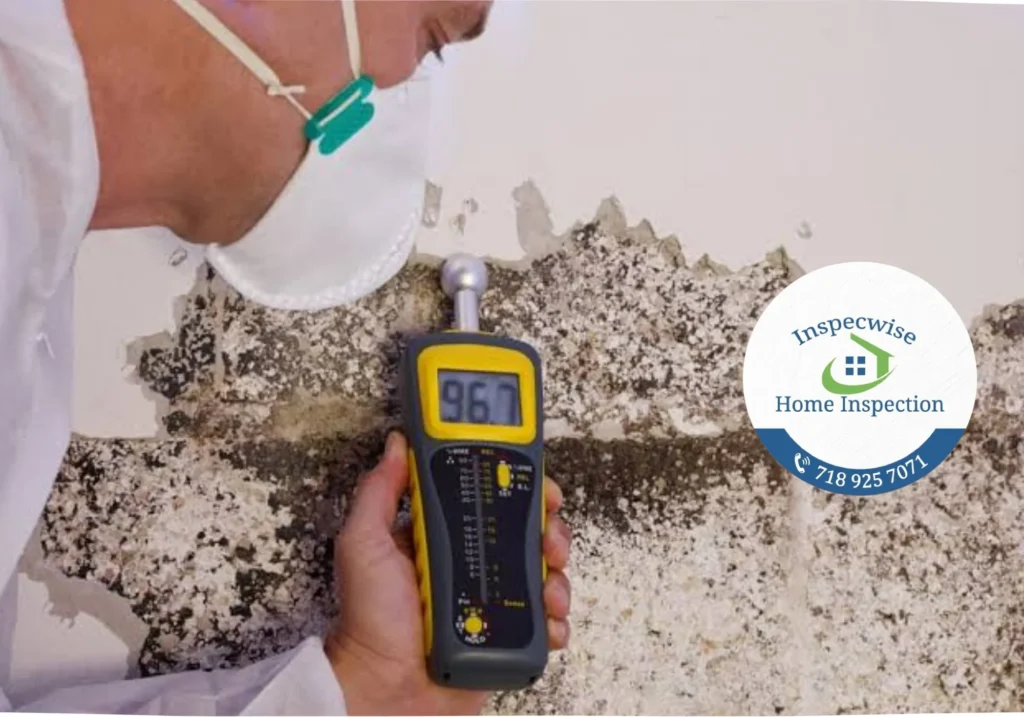
Mold inspection is a visual and diagnostic evaluation of the property. An inspector examines the building, uses tools like thermal imaging and moisture meters to identify moisture conditions, and determines whether there’s a visible or hidden mold concern worth investigating further.
Mold testing refers specifically to sampling, collecting air or surface samples and sending them to a laboratory for analysis. Testing is a tool used to answer a specific question, such as whether elevated spore counts exist in an occupied space compared to outdoor air, or whether staining on a surface is active fungal growth. Not every inspection requires testing; testing is warranted when the visual and moisture findings raise a question that only lab analysis can answer.
Mold assessment is a more formal term, generally referring to the kind of evaluation New York requires before remediation work can proceed on a qualifying project. An assessment documents the scope and location of mold conditions and can form the basis for a remediation plan.
Mold remediation is the actual removal and cleanup process, the physical work of addressing contaminated materials and correcting the moisture source that allowed mold to grow.
Post-remediation verification, sometimes called clearance testing, happens after remediation work is complete. It’s a separate evaluation to confirm that the remediation objectives were met and that the space is ready to be reoccupied.
Knowing which of these you actually need (and which one a company is offering to sell you) is one of the most useful things a property owner can walk away from this article understanding.
How a Commercial Mold Inspection Works
A professional commercial inspection follows a consistent sequence rather than a random walkthrough, whether it’s a single-tenant office building or a mixed-use retail-and-residential property handled through a commercial inspection queens engagement.
Property history and consultation. The process starts with a review of the building’s maintenance records, any past leaks or water events, and tenant complaints, since this history points an inspector toward the areas most likely to have an unresolved problem.
Visual inspection. The inspector walks the property systematically, paying particular attention to mechanical rooms, plumbing chases, window perimeters, roof access areas, and any zones with a documented history of moisture.
Moisture assessment. Moisture meters are used to check suspect materials (walls, flooring, structural framing) for elevated moisture content, giving the inspector objective readings rather than relying on visual impression alone.
Thermal imaging, where appropriate. Infrared cameras can highlight temperature differences associated with damp materials across large surface areas quickly, helping identify hidden moisture behind finished walls or ceilings without demolition.
Building-system evaluation. HVAC condensate drainage, roof condition, and below-grade conditions are evaluated as potential moisture sources based on what the visual inspection and moisture readings suggest.
Determining whether sampling is warranted. Based on everything found so far, the inspector decides whether air or surface sampling is actually necessary to answer an outstanding question, not every inspection needs it.
Sampling and laboratory analysis, when appropriate. If sampling is warranted, air samples are typically collected from the area of concern alongside an outdoor control sample, and surface samples are taken from any suspect staining. Samples go to an accredited laboratory for analysis.
Interpretation and reporting. Findings are compiled into a digital report with photographs, documented moisture readings, sample results if collected, and clear recommendations for next steps.
This sequence is what separates a genuine diagnostic process from a quick look-and-guess visit, and it’s the standard a commercial property should expect regardless of which company performs the work.
When Is Mold Testing Actually Necessary?
Testing isn’t automatically part of every inspection, and a good inspector will tell you when it isn’t needed. Sampling makes sense when there’s a specific question that a visual inspection can’t answer on its own, for example, confirming whether staining behind a wall is active fungal growth rather than old water staining, or determining whether an occupied space has elevated spore levels compared to outdoor air after a tenant reports symptoms. This comes up often in older manufacturing buildings along the waterfront, the kind of property covered under a commercial inspection bronx engagement, where past water events can leave staining that’s easy to misjudge without a sample.
Air sampling typically involves collecting samples from the area of concern, an adjacent area without complaints, and an outdoor location, so a laboratory can compare indoor conditions against a natural outdoor baseline. Surface sampling (tape-lift or swab samples) is used when there’s visible staining or discoloration that needs to be confirmed as fungal growth rather than cosmetic discoloration.
Testing is also common in due-diligence situations, insurance claims, and post-remediation verification, where documented, lab-confirmed results carry more weight than a visual opinion alone.
Commercial Due Diligence: Why This Matters Before You Buy, Lease, or Renovate
This is one of the most overlooked reasons to schedule a commercial mold inspection, and it’s worth its own section.
A moisture or mold problem discovered after closing on a commercial property, signing a long-term lease, or starting a renovation is far more expensive to deal with than one caught beforehand. Inspection before a transaction gives a buyer or tenant leverage to negotiate repairs or price adjustments, and it protects against inheriting a moisture problem that was never disclosed because the seller genuinely didn’t know it existed.
A pre-purchase or pre-lease inspection is particularly valuable for:
- Purchasing a commercial property, especially an older building or one with an unclear maintenance history
- Signing a major lease where the tenant will be responsible for the buildout or ongoing maintenance
- Renovating a space, since opening up walls or ceilings can expose long-hidden moisture damage
- Taking possession of a building after a previous tenant’s occupancy
- Reoccupying a space after a water event, flood, or storm
- Investigating repeated tenant complaints about odors or air quality
- Evaluating a property with a documented history of roof or plumbing leaks
Commercial due diligence work is common enough across Long Island’s commercial corridors that a commercial inspection long island engagement specifically for a pending transaction is one of the more frequent reasons property investors reach out before a deal closes.
New York’s Mold Assessment and Remediation Framework
New York State regulates mold assessment and remediation work, and understanding the basic structure of that framework helps property owners know what to expect and who they’re legally supposed to be hiring.
The state separates mold assessment from mold remediation, and requires each to be performed by professionals licensed for that specific role. This separation exists in part to prevent a conflict of interest, a company shouldn’t be able to “find” a mold problem during an assessment and then profit from selling remediation work for the same job, so New York generally requires that the assessor and the remediation contractor be different, independent parties.

When remediation is required, state requirements generally call for a written remediation plan based on the assessment findings, addressing not just visible mold removal but the underlying moisture source that allowed the growth to occur in the first place, because removing mold without fixing the moisture problem just invites it to come back. After remediation work is complete, a post-remediation assessment (clearance) is typically required to confirm the work met the objectives laid out in the remediation plan before the space is reoccupied.
This framework exists largely as a consumer protection measure, giving property owners a documented, licensed process to point to rather than relying on informal assurances from a single contractor handling both sides of the job. For the complete regulatory details, the New York State Department of Labor’s mold assessment and remediation guidance is the authoritative source. A property owner working through a commercial inspection brooklyn engagement should expect the same licensing separation to apply as anywhere else in the state, since these requirements aren’t set at the county or borough level.
What Happens When Mold Is Found
Finding mold during an inspection isn’t the end of the process, it’s the point where the next steps get determined. If the inspection and any testing confirm an active mold condition, the underlying moisture source needs to be identified and corrected first; removing mold without fixing what’s feeding it is a temporary solution at best.
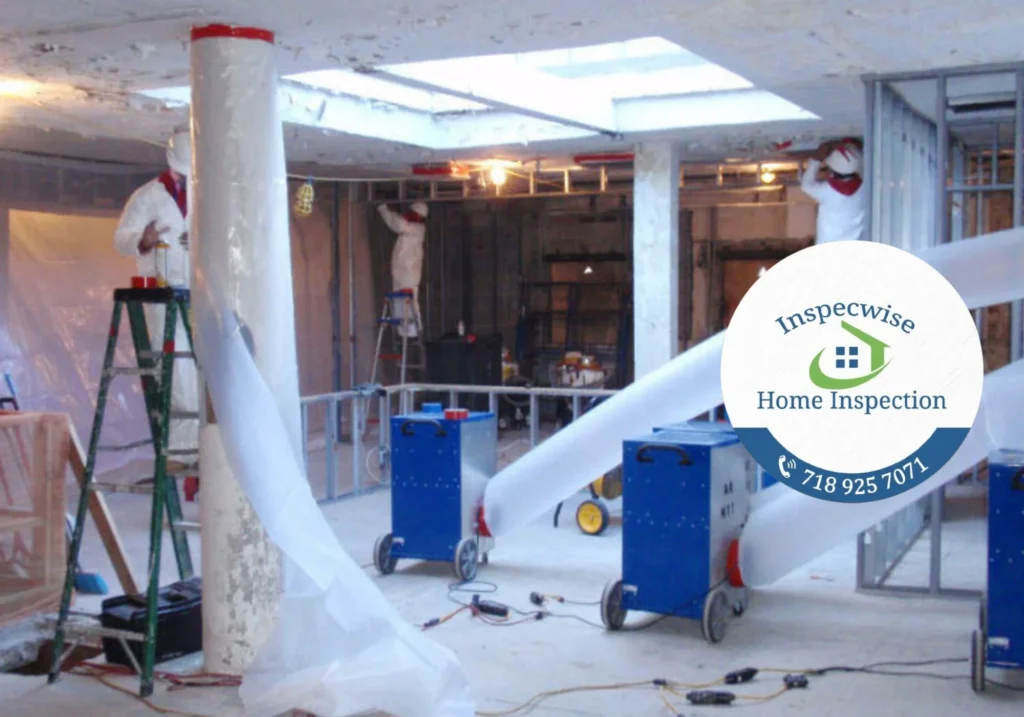
For a qualifying scope of work, this typically means a licensed remediation contractor develops a remediation plan based on the assessment findings, which addresses both the contaminated materials and the moisture source itself. Containment procedures are used to isolate the work area and prevent spores from spreading into unaffected parts of the building during removal, and affected materials that can’t be cleaned are removed and disposed of properly. The U.S. EPA’s guidance on mold remediation in schools and commercial buildings is a useful reference for the general principles behind this kind of work.
Once remediation is complete, post-remediation verification confirms whether the space is ready to be reoccupied. This step matters because it provides documented evidence (not just a contractor’s assurance) that the remediation objectives were actually met, which is often important for insurance purposes, lease compliance, or simply peace of mind for returning occupants.
What a Commercial Mold Inspection Report Should Include
A commercial inspection report is only as useful as the detail it contains. At minimum, a report worth relying on should include clear photographs documenting any moisture or mold concerns, the specific locations where those concerns were identified, the moisture readings that support the findings, laboratory results if sampling was performed, and actionable recommendations for next steps.
This level of detail matters because commercial inspection reports frequently get used for more than the owner’s own reference, they get shared with lenders during a transaction, referenced by attorneys in a lease dispute, submitted to an insurance carrier, or handed to a remediation contractor who needs to understand exactly what they’re being asked to fix. A vague report with a one-line conclusion doesn’t hold up well in any of those situations. If a commercial property also includes residential units, it’s worth noting that a home mold inspection follows a similar documentation standard, just scaled to a smaller, single-family scope.
Commercial Mold Inspection FAQs
How long does a commercial mold inspection take? It depends on the size and complexity of the property. A small retail space might take an hour or two, while a multi-story office building or large warehouse can take significantly longer, especially if mechanical rooms, roof access, and multiple tenant spaces need to be evaluated.
Does every inspection include air or surface sampling? No. Sampling is used when there’s a specific question that a visual inspection and moisture readings can’t answer on their own. Many inspections conclude without any sampling because the source and extent of the moisture issue is already clear.
Can a commercial mold inspection happen while the building is occupied? In most cases, yes. Inspections are generally non-disruptive and can be scheduled around business hours, though access to specific areas like mechanical rooms may need to be coordinated in advance.
What’s the difference between mold assessment and mold inspection under New York law? Inspection is the general diagnostic process an inspector performs to evaluate a property. Assessment is the more formal term tied to New York’s regulatory framework, typically required before remediation work can proceed on a qualifying scope of contamination.
Should I get a mold inspection before buying a commercial property? It’s one of the more cost-effective steps in commercial due diligence. A pre-purchase inspection can uncover a moisture problem before it becomes your liability, and it gives you leverage to negotiate repairs or pricing before closing.
How quickly can a commercial inspection be scheduled? Same-day scheduling is available for active concerns, which matters when a property manager, buyer, or business owner is working against a deadline or dealing with an urgent moisture issue.
Schedule a Commercial Mold Inspection
Whether you’re managing an active moisture concern, preparing to buy or lease a commercial property, responding to tenant complaints, or simply making sure a building is being maintained the way it should be, a professional inspection gives you documented answers instead of guesswork. InspecWise provides licensed, InterNACHI-certified commercial mold inspection across the five boroughs and Long Island, with same-day scheduling and detailed digital reports built to hold up for lenders, attorneys, insurers, and your own records.
If you need documentation for a transaction, an inspection for a suspected leak, or a straightforward answer about what’s happening inside your walls, call InspecWise at 718-925-7071 to schedule an inspection.
GET IN TOUCH
Schedule a Visit
Serving All 5 Boroughs and Long Island: Manhattan • Brooklyn • Queens • The Bronx • Staten Island • Nassau County • Suffolk County
Call Inspecwise now: 718-925-7071
Licensed, Certified, and 100% NYC Local