Commercial HVAC systems are among the most valuable assets in any commercial property. Whether you’re purchasing an office building, retail space, warehouse, apartment complex, or mixed-use property in New York City, a professional HVAC inspection helps uncover hidden defects, deferred maintenance, safety concerns, and code compliance issues before they become costly surprises. Inspecwise provides comprehensive Commercial HVAC Inspection NYC services for buyers, investors, landlords, property managers, and business owners throughout the five boroughs.
✓ Licensed Inspectors
✓ Fast Digital Reports
✓ Commercial Property Specialists
✓ Serving All 5 Boroughs
✓ Same-Day Scheduling Available
Why Commercial HVAC Inspections Matter
Most commercial HVAC problems don’t show up as a puddle on the floor or a strange noise they show up as a number on a repair invoice, six months after closing. Deferred maintenance hides well. A rooftop unit can look fine from the ground and still be five years from total failure. A boiler can heat the building today and still be sitting on a violation that costs thousands of dollars a day if it’s not resolved.
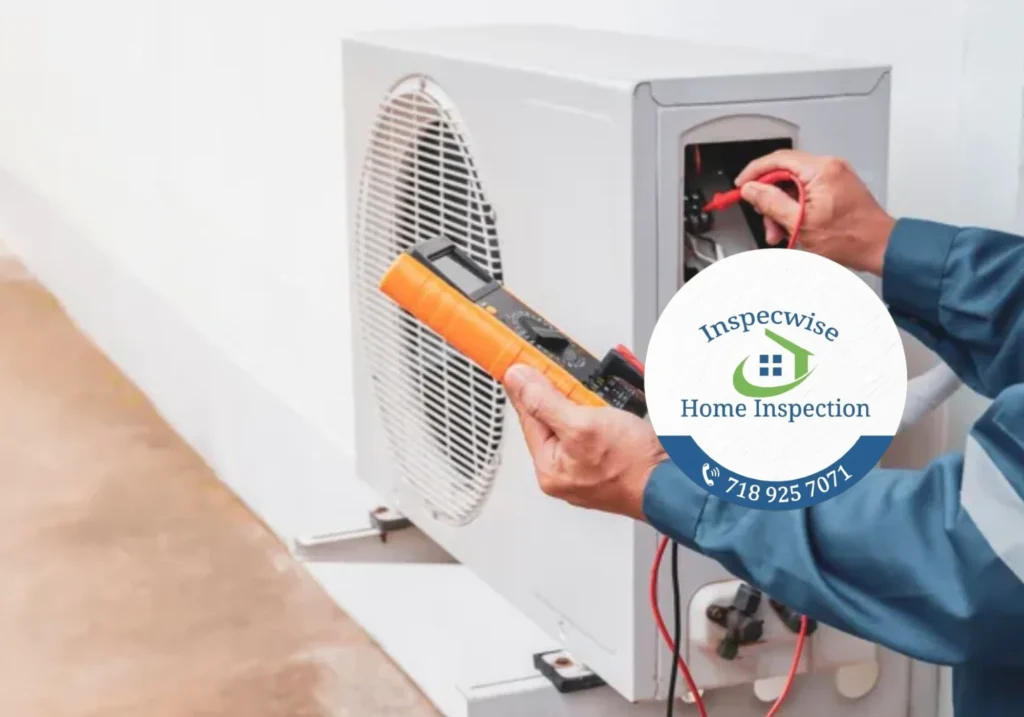
A professional inspection protects you in a few concrete ways:
- It exposes hidden repair costs before they become your responsibility instead of the seller’s.
- It flags deferred maintenance that signals how the previous owner or manager actually ran the building.
- It shows you real operational efficiency, not just whether the system turns on, but whether it’s running the way it should be — and what that’s costing in utility bills.
- It protects your investment by giving you documented equipment condition and expected remaining life, which matters for financing, insurance, and resale.
- It strengthens your position in lease negotiations, whether you’re a tenant asking a landlord to fix a system or a landlord defending the condition of your building.
- It supports due diligence with a clear paper trail you can hand to lenders, partners, or legal counsel.
In a city where a large share of a building’s energy use and therefore its exposure to local emissions penalties comes directly from heating and cooling, an inspection isn’t a formality. It’s financial risk management, whether the building sits in a dense downtown corridor or a low-rise industrial stretch of the outer boroughs.
Why Get a Commercial HVAC Inspection Before Buying?
- Identify hidden repair costs
- Estimate remaining equipment life
- Negotiate purchase price
- Avoid emergency replacements
- Plan future capital expenses
- Understand code compliance
A pre-purchase inspection turns a guessing game into a documented negotiation point — giving you the facts to ask for a price adjustment, a repair credit, or simply walk away with your eyes open.
Who Needs This Service
A commercial HVAC inspection is standard practice for anyone with financial exposure to a building’s mechanical systems, including:
- Commercial Property Buyers — verifying what you’re actually purchasing before you close.
- Commercial Real Estate Investors — protecting capital and forecasting future capex accurately.
- Property Managers — staying ahead of failures instead of reacting to them.
- Business Owners — confirming the space you’re leasing or buying can actually support your operation.
- Landlords — documenting system condition to manage tenant disputes and plan upgrades.
- Developers — assessing existing infrastructure before renovation or repositioning.
- Facility Managers — building a maintenance roadmap based on real data, not guesswork.
Whatever your role, the goal is the same: know the true condition of the equipment before it becomes your problem.
What’s Included in Our Commercial HVAC Inspection
Our inspections cover every major system that affects comfort, cost, and compliance in a commercial building.
✓ Rooftop Units The most common source of unexpected replacement costs — we assess condition and remaining service life.
✓ Boilers We check for warning signs of failure and safety issues that can shut a building down in winter.
✓ Chillers Central to cooling large commercial spaces and expensive to replace — we evaluate operating condition and efficiency.
✓ Cooling Towers We review structural condition and confirm required maintenance and water treatment records are current.
✓ Air Handling Units The equipment that moves conditioned air through the building — wear here affects comfort building-wide.
✓ Ventilation Systems Proper ventilation affects tenant health, code compliance, and how the building feels day to day.
✓ Ductwork Leaks and blockages quietly waste money and unbalance temperatures floor by floor.
✓ Thermostats Small components that, when miscalibrated, can drive up utility costs across an entire building.
✓ Building Automation Controls We confirm the systems that schedule and manage your equipment are actually working as intended.
✓ Refrigerant Leaks Leaks reduce efficiency, shorten equipment life, and can trigger compliance issues.
✓ Air Quality Concerns Indoor air quality affects tenant satisfaction, retention, and in some cases legal liability.
✓ Safety Controls We verify shutoffs, alarms, and safety mechanisms function as designed.
✓ Mechanical Wear General wear patterns tell us how much useful life remains in major equipment.
✓ Deferred Maintenance We identify what’s been skipped or delayed — often the clearest signal of a building’s true condition.
✓ Equipment Life Expectancy A realistic estimate of how many years you have before major components need replacement.
✓ Maintenance Review We examine available service records to understand how the equipment has actually been treated over time.
Our Inspection Process
Book Inspection → On-Site Evaluation → Digital Report → Recommendations
Step 1 — Scheduling We work around your timeline, whether you’re on a tight due diligence window or planning routine facility maintenance.
Step 2 — On-Site Inspection Our licensed inspectors conduct a hands-on assessment of every major HVAC component, using the right tools for the job without turning the visit into a lab study.
Step 3 — Documentation Findings are recorded with photos and notes as we go, so nothing gets lost between the walkthrough and the report.
Step 4 — Detailed Report You receive a clear, organized report covering system condition, remaining life estimates, and any red flags — delivered fast, because slow reports don’t help you in a live deal.
Step 5 — Recommendations We tell you what needs attention now, what can wait, and roughly what it will cost — so you can plan, negotiate, or budget with confidence.
What You’ll Receive
- Detailed digital inspection report
- Photos of deficiencies
- Equipment condition summary
- Remaining life estimates
- Safety observations
- Maintenance recommendations
- Repair priorities
- Compliance observations
You’ll know exactly what you’re paying for and exactly what to do with the findings.
NYC HVAC Code & Local Law Considerations
New York City regulates commercial mechanical systems more closely than most jurisdictions, and non-compliance carries real financial consequences. Our inspections are done with these requirements in mind, including:
- Local Law 97 — buildings that fall short of the city’s carbon emissions limits face significant annual penalties, and HVAC performance is one of the biggest factors driving that number.
- Cooling Tower Regulations — the city requires regular maintenance logs and testing for cooling towers, and gaps in documentation can trigger fines or enforcement action.
- Boiler Compliance — we check for open violations, missed inspections, or unresolved issues tied to a building’s boiler filings.
- Ventilation Requirements — proper ventilation is tied to occupancy and safety codes, and deficiencies here can affect a building’s certificate of occupancy status.
We’re not offering legal advice we’re making sure you know where mechanical compliance stands before it becomes someone else’s leverage against you.
Common HVAC Problems We Find
Across hundreds of NYC commercial properties, the same issues come up again and again:
- Poor maintenance history — the single biggest predictor of future breakdowns.
- Failing rooftop units — often near the end of their service life without any visible warning.
- Dirty coils — quietly driving up energy bills and reducing cooling capacity.
- Improper airflow — leads to uneven temperatures and tenant complaints.
- Corroded components — common in older buildings and coastal-exposed rooftops.
- Boiler issues — from scale buildup to safety control failures.
- Cooling tower deterioration — a compliance and structural concern, not just a mechanical one.
- Ventilation deficiencies — affecting both comfort and code compliance.
- Refrigerant leaks — a slow but steady drain on efficiency and equipment life.
- Deferred maintenance — the underlying cause behind most of the problems above.
For buyers, each of these findings translates into something concrete: a repair cost to negotiate, a timeline to plan around, or a risk to walk away from. We make sure you see it before you sign, not after.
Commercial Properties We Inspect
- Office Buildings
- Apartment Buildings
- Mixed-Use Properties
- Warehouses
- Retail Stores
- Shopping Centers
- Restaurants
- Medical Offices
- Hotels
- Industrial Facilities
- Schools
- Religious Buildings
Why Choose Inspecwise
Inspecwise is built specifically for New York City’s commercial real estate market — not adapted from a generic national inspection model.
- Local NYC expertise — we understand the difference between a pre-war steam-heated building in Manhattan and a rooftop-package-unit warehouse in the Bronx, and we inspect accordingly.
- Commercial inspection experience — our work is focused on commercial mechanical systems, not residential add-ons.
- Fast reporting — you get findings quickly, because due diligence timelines don’t wait.
- Clear findings — no jargon, no filler. Just what’s wrong, what it means, and what it costs.
- Professional recommendations — practical next steps, not vague warnings.
- Objective inspections — we work for you, not for the seller or the listing agent.
- Licensed and certified inspectors — every report is backed by real credentials and real field experience.
- Investment protection — our entire process is designed around one outcome: helping you make a financially sound decision.
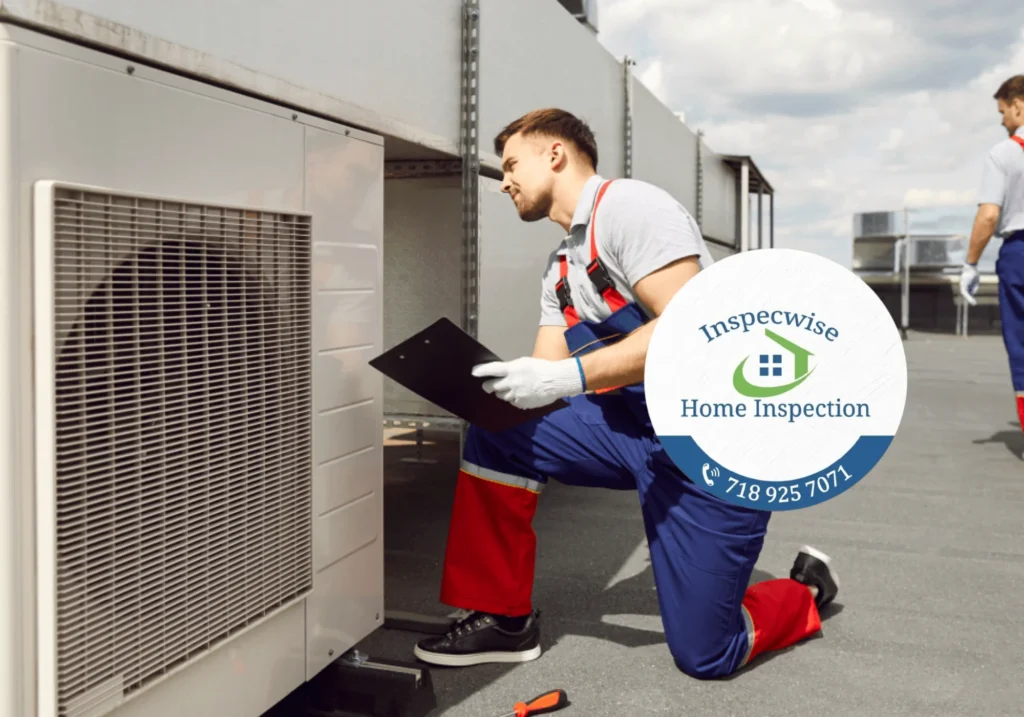
Every inspection follows a consistent, documented process using visual evaluation, operational testing where accessible, and industry-recognized inspection practices. Our goal is to provide objective findings not sell repairs or maintenance services.
Areas We Serve
Inspecwise provides commercial building inspections across the New York metro area, including:
- Manhattan
- Brooklyn
- Queens
- The Bronx
- Staten Island
- Long Island (Nassau & Suffolk)
- Westchester County
Every borough brings its own mechanical quirks from district steam systems downtown to industrial rooftop units in the outer boroughs and our inspectors know what to look for in each one.
FAQs
How long does a commercial HVAC inspection take? Most inspections take a few hours on-site, depending on building size and system complexity. Larger properties with multiple mechanical systems may take longer.
Do you inspect rooftop HVAC units? Yes. Rooftop units are one of the most common and most expensive components we evaluate, since they’re a leading source of unplanned replacement costs.
Do you inspect boilers? Yes. We assess boiler condition, safety controls, and compliance status, which is especially important in older NYC buildings that rely on steam or hydronic heat.
Can you inspect HVAC before buying commercial property? Absolutely. Pre-purchase inspection is one of the most common reasons clients contact us it gives you leverage to negotiate price or repairs before you close.
What is included in a commercial HVAC inspection? We evaluate rooftop units, boilers, chillers, cooling towers, air handling units, ventilation, ductwork, controls, and safety systems, and provide a full report with findings and recommendations.
Do you inspect apartment buildings? Yes, including multi-family and mixed-use commercial properties with centralized or distributed HVAC systems.
Can HVAC issues affect property value? Yes. Major mechanical deficiencies directly affect appraised value, financing terms, and negotiating leverage, since buyers and lenders both factor in near-term capital expenditure.
How soon will I receive my report? Reports are typically delivered quickly after the on-site visit, so you have what you need for time-sensitive decisions like due diligence deadlines.
Do you check for code compliance issues? Yes. We flag mechanical-related compliance concerns, including open violations and documentation gaps tied to local regulations.
Is the inspection objective, or do you work for the seller? We work exclusively for the client who hires us. Our findings are independent and unaffected by the transaction itself.
Protect Your Investment Before You Sign
A commercial HVAC system is one of the largest hidden costs in any New York City real estate transaction and one of the easiest to get wrong without an expert set of eyes on it. Whether you’re purchasing an office tower in Manhattan, a warehouse in Brooklyn, or a retail property elsewhere in New York City, understanding the condition of the HVAC system before closing helps you make informed financial decisions.
Related Commercial Inspection Services
- Commercial Inspection Manhattan
- Commercial Inspection Brooklyn
- Commercial Inspection Queens
- Commercial Inspection Bronx
- Commercial Inspection Staten Island
- Commercial Inspection Long Island
Serving All 5 Boroughs and Long Island: Manhattan • Brooklyn • Queens • The Bronx • Staten Island • Nassau County • Suffolk County
Call Inspecwise now: 718-925-7071
Licensed, Certified, and 100% NYC Local