Home Inspection Manhattan is the single most important step a buyer can take before closing on an apartment in one of the most competitive real estate markets in the country. Whether you are evaluating a pre-war co-op on the Upper West Side or a new-construction condo in Tribeca, the physical condition of the unit and the building around it rarely matches what a listing photo suggests. Manhattan’s housing stock spans more than a century of construction methods, and what appears behind fresh paint or new flooring is not always what it seems.
Buying in Manhattan takes more than financial readiness. It takes technical due diligence. In a borough where every square foot carries a premium price, understanding whether a property’s systems are functional, safe and reasonably maintained can be the difference between a sound investment and a costly surprise. This guide explains how a Manhattan home inspection works, what it covers, what it does not, and how public building records fit into a buyer’s broader due diligence.

What Makes a Home Inspection Essential in Manhattan
Manhattan’s real estate market moves quickly, and that pace often pressures buyers to treat the inspection contingency as optional. Skipping it is a significant gamble in a market where a single system failure can cost tens of thousands of dollars to correct. A qualified inspector has no financial stake in whether the deal closes, which is what makes an independent, visual, non-invasive assessment valuable.
A general home inspection evaluates the readily accessible components of a property: structural elements, electrical systems, plumbing, heating and cooling, and visible signs of moisture or deferred maintenance. It does not guarantee future performance or certify that a property is free of every defect. What it provides is a documented, professional opinion of the property’s condition on the day of the inspection, giving the buyer real information before signing a contract.
Manhattan’s density adds a layer most other markets do not have to consider. An Apartment Inspection in a shared building is not the same evaluation as a single-family home inspection in the suburbs, because so much of what affects a unit originates outside its four walls. Risers, shared steam lines, common electrical infrastructure and building-wide mechanical systems all interact with the unit a buyer is purchasing, even though the buyer will not own most of that infrastructure directly.
What Makes Manhattan Home Inspections Different?
Manhattan’s building stock falls into a few recognizable eras, and each comes with characteristic conditions an inspector watches for. Pre-war buildings, typically constructed before 1940, often have decorative plaster, solid masonry construction and cast iron plumbing that can corrode internally over decades, gradually reducing water pressure and creating hidden leaks. Post-war buildings from the 1950s through the 1980s frequently use perimeter HVAC convector units below windows, which age predictably and can fail or leak if not maintained. Newer luxury construction introduces different concerns, including installation defects and unfinished punch-list items a rushed schedule can leave behind.
Because most Manhattan residential inspections involve a single unit inside a larger building, the inspector’s role is necessarily more limited than in a detached home. The inspection evaluates what is visible and accessible inside the unit, along with directly connected systems, but it cannot serve as a complete assessment of the entire building’s infrastructure, roof, facade or areas controlled by management or the board.
Home Inspection Manhattan by Property Type
Each Manhattan property type carries its own pattern of concerns, and understanding these patterns helps buyers know what to expect from an inspection report.
Pre-war co-ops and condos are prized for solid construction and generous ceiling heights, but their age means plumbing, electrical and window systems have often been through multiple renovation cycles, some done well and some done poorly. Inspectors pay close attention to kitchens and bathrooms, since these “wet areas” reveal the most about how a unit has actually been maintained.
Post-war high-rises commonly rely on convector or fan coil units for heating and cooling, and these mechanical components have a finite service life. A failing convector can leak internally and cause water damage that is not always visible until it reaches the ceiling below.
Modern luxury and new construction properties are not immune to defects. Builders working on tight schedules can leave window seals incomplete, ventilation improperly balanced or outlets installed incorrectly. Identifying these issues before closing gives a buyer leverage to have them corrected as part of the developer’s punch list rather than paying for repairs later.
Manhattan townhouses introduce elements rarely found in apartment buildings, including private roofs, foundations and, in many older properties, chimneys. Where a chimney is present, a general inspection can note visible condition issues, but a dedicated Chimney Inspection is the appropriate way to evaluate the flue and firebox, particularly before the first use of a fireplace.
| Property Type | Typical Ownership Structure | Common Concerns | Inspection Focus |
|---|---|---|---|
| Pre-war co-op | Shares in a cooperative corporation | Aging plumbing, outdated wiring, renovation quality | Wet areas, electrical panel, window and door condition |
| Pre-war condo | Real property (deeded unit) | Same structural-era issues as co-ops, plus unit-specific finishes | Plumbing, electrical, moisture indicators |
| Post-war high-rise | Co-op or condo, varies by building | Convector/HVAC age, parquet floor wear, cinderblock partition cracking | HVAC function, window seals, floor and wall condition |
| Luxury/new construction | Condo, deeded unit | Installation defects, incomplete finishing, punch-list items | Windows, ventilation, outlets, plumbing connections |
| Townhouse | Fee simple ownership | Roof, foundation, chimney, multiple mechanical zones | Full building envelope, foundation where accessible, mechanical systems |
Co-op vs Condo Inspection in Manhattan
The distinction between co-op and condo ownership affects what a buyer’s inspection can realistically evaluate, even though it does not change the physical inspection process itself. In a condo, the buyer owns the unit as real property and typically has a defined share of responsibility for certain building elements. In a co-op, the buyer owns shares in a corporation that in turn owns the building, and many building-wide systems fall under the responsibility of the co-op board rather than the individual shareholder.
This matters because a unit-level inspection evaluates the apartment and its directly connected systems, not the building’s roof, facade, elevators or shared mechanical plant. A Co-op & Condo Inspection Manhattan should be understood by the buyer as a thorough assessment of what the inspector can access and observe, paired with an understanding that some conditions, particularly those affecting shared risers, party walls or the building’s mechanical core, are ultimately the building’s responsibility rather than the unit owner’s, even though a defect there can still affect the buyer’s daily experience of the apartment.

What is the most important inspection for a house? There is no single inspection that applies universally to every Manhattan property. A general home inspection is the foundation of buyer due diligence for nearly every purchase, since it identifies the overall condition of accessible systems and components. Depending on the property’s age, visible conditions or building history, additional evaluations such as mold assessment, chimney inspection or a more detailed structural review may be appropriate on top of that baseline inspection.
Common Problems Found During a Manhattan Home Inspection
Certain conditions show up repeatedly across Manhattan apartments regardless of neighborhood. Aging supply and drain lines in pre-war buildings can reduce water pressure or develop slow leaks inside walls. Electrical panels and outlets in older units sometimes have not been updated to safely support modern appliance loads. Steam radiators and convector units can develop leaks or uneven heating as components wear. Windows frequently show deteriorated seals or frames that no longer close fully, affecting both comfort and efficiency. Uneven floors and hairline wall or ceiling cracking are common in settled pre-war structures and are not automatically a sign of a serious structural problem, though they warrant a closer look.
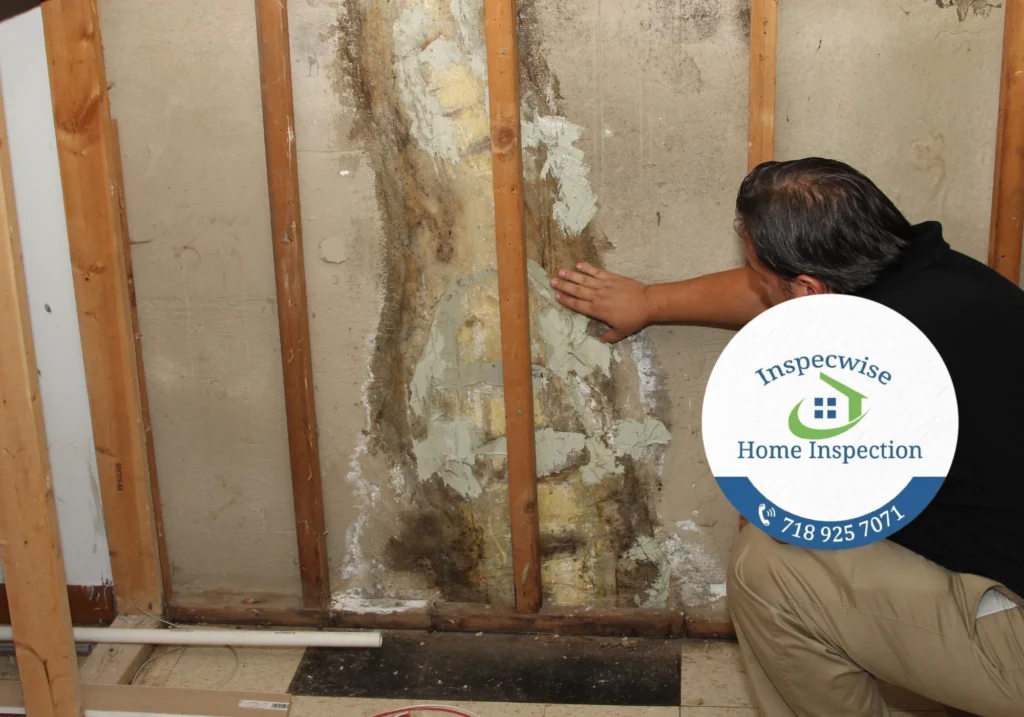
What are the biggest red flags in a home inspection? The findings that generally warrant the most attention include significant water intrusion, unsafe electrical conditions such as exposed wiring or overloaded panels, structural concerns like substantial cracking or sagging, active plumbing leaks, extensive moisture, and safety hazards involving missing or non-functional alarms. Not every defect is a deal breaker. Many issues are routine maintenance items typical of the property’s age, and the inspector’s job is helping the buyer sort out what deserves serious attention.
Where an inspector identifies visible moisture staining, musty odors or conditions that suggest hidden water intrusion, a more focused Home Mold Inspection can provide the kind of targeted assessment a general visual inspection is not designed to deliver, since confirming the presence of mold typically requires sampling rather than a visual walkthrough alone.
What a Home Inspection Does Not Include
A general home inspection is broad but not unlimited, and buyers benefit from understanding its boundaries before relying on it as their only source of information. A standard inspection does not include destructive testing, meaning the inspector will not open walls, remove finished surfaces or dismantle equipment to look behind them. It also does not include a structural engineering evaluation, lab-confirmed environmental testing for mold or radon, a formal asbestos survey, a termite or wood-destroying-insect inspection, a sewer scope, a dedicated chimney evaluation, or legal or building-code consulting. These specialized services exist because a general inspection cannot substitute for them, as the table below outlines.
| Service | Primary Purpose | When It May Be Appropriate |
|---|---|---|
| General home inspection | Visual assessment of accessible structural, mechanical and safety systems | Every residential purchase, as the baseline evaluation |
| Mold inspection | Sampling and lab analysis to confirm mold presence and type | Visible staining, musty odors or prior water damage history |
| Radon testing | Measures indoor radon gas levels over a testing period | Ground-floor units, or as requested by a buyer’s lender or attorney |
| Chimney inspection | Detailed evaluation of flue, firebox and venting | Townhouses or properties with a working or unused fireplace |
| Foundation/structural evaluation | Engineering assessment of load-bearing elements | Visible major cracking, sloping floors or settlement signs |
| Sewer scope | Camera inspection of the sewer lateral line | Older townhouses or buildings with a history of drainage issues |
A general inspection also does not extend to portions of a building beyond a unit’s accessible boundaries. For a structural concern that appears to involve load-bearing elements, a dedicated Home Foundation Inspection provides a more focused evaluation, though most Manhattan apartment buyers will not need one unless the general inspection flags a specific concern worth investigating further.
How Much Does Home Inspection Manhattan Cost?
What is the average cost of a home inspection in New York City? Pricing varies based on property type, square footage, scope and accessibility. A studio or one-bedroom condo typically costs less to inspect than a large pre-war co-op or a multi-story townhouse, and add-on services such as mold sampling or thermal imaging affect the total. Rather than relying on a single quoted figure, buyers should request a scope-specific quote based on the unit’s size and age.
Set against a Manhattan closing that often runs into hundreds of thousands or millions of dollars, an inspection fee is a small fraction of the transaction, and its findings can meaningfully affect the negotiated price.
What Happens During the Inspection Process
A Manhattan home inspection follows a structured, non-invasive process. The inspector visually examines accessible structural components, tests electrical outlets and panels, checks plumbing fixtures for function and leaks, evaluates heating and cooling equipment, and inspects windows, doors, walls, floors and installed safety equipment such as smoke and carbon monoxide alarms. The inspector documents findings with photographs and notes, distinguishing between conditions that need immediate attention and those that are routine maintenance items.
Is it worth it to hire a home inspector? In a market as expensive as Manhattan’s, yes, for most buyers the answer is straightforward. The cost of an inspection is minor compared to the potential cost of discovering a major plumbing, electrical or structural issue after closing, when the buyer has no leverage left to negotiate a price adjustment or repair credit. An inspection converts an unknown risk into a documented, negotiable fact before the purchase becomes final.
Can I do my own home inspection? A buyer can and should walk through a property carefully, testing faucets, opening windows and looking for obvious damage. That walkthrough is useful, but it is not a substitute for a professional inspection. A trained inspector brings a systematic checklist, tools such as moisture meters and thermal cameras, and experience recognizing patterns an untrained eye is likely to miss. Even a professional cannot identify every hidden defect, but training plus equipment produces a more thorough assessment than a walkthrough alone.
Manhattan Building Records and Buyer Due Diligence
A physical inspection is one part of due diligence, and public building records are another. The NYC Department of Buildings maintains a public database of permits, complaints, prior inspections and occupancy information for buildings across the city. Reviewing a building’s history through this resource can reveal patterns an inspector cannot observe during a single site visit, such as recurring complaints tied to a specific system or permit activity suggesting significant past renovation work.

The distinction matters. A home inspector evaluates the physical condition of a unit on the day of the visit, while public building records reflect the regulatory and permitting history of the building over time. Neither replaces the other. A buyer moving beyond a single residential purchase toward a larger investment, such as acquiring a multi-family building, will find that a Home Inspection NYC approach scales the same due-diligence principles across property types throughout the boroughs.
Manhattan Property Violations and What Inspectors Can’t Tell You
Beyond permit and complaint history, buyers should also understand whether a building has open violations, since these can affect a seller’s ability to close, refinance or sell in the future. The NYC Department of Buildings’ violation records are public and searchable, and reviewing them is a reasonable step for any buyer evaluating a Manhattan co-op or condo, particularly in older buildings with more complex maintenance histories.
It is important not to confuse this step with what a home inspector does. An inspector assesses the physical condition of the unit and does not perform the City’s official violation search on a buyer’s behalf. These are two distinct but complementary layers of due diligence: the inspector reports on what is physically observable inside the unit, while public violation records reflect the building’s regulatory standing with the City. A careful buyer reviews both before finalizing a purchase decision.
How to Prepare for Your Manhattan Home Inspection
A few simple steps help ensure the inspection produces the most accurate and complete report possible. Buyers should attend the inspection whenever their schedule allows, since it is a valuable opportunity to ask questions directly and understand the property’s quirks firsthand. Before the inspector arrives, confirm that the electrical panel, HVAC equipment and any storage closets containing mechanical systems are unlocked and accessible, and that utilities are operational so systems can be tested under normal conditions.
- Clear clutter away from the electrical panel and any mechanical closets
- Confirm the seller or agent will have all areas unlocked and accessible
- Make sure utilities are on so plumbing and HVAC systems can be tested
- Prepare a list of specific questions about the property’s systems and maintenance history
- Ask the inspector about routine maintenance recommendations during the walkthrough
Sellers preparing to list a Manhattan property benefit from a similar process in reverse. A Pre Listing Inspection Manhattan identifies issues before a buyer’s inspector does, giving the seller the opportunity to address them proactively or price the property accordingly rather than facing a surprise during the buyer’s due-diligence period.
Understanding Your Home Inspection Manhattan Report
A professional inspection report organizes findings into categories, typically distinguishing material defects, major concerns and routine maintenance items, and it should include photographs and clear explanations rather than a bare checklist. A long report is not automatically a bad sign. Nearly every property, including brand-new construction, generates a list of observations, and the value of the report lies in helping the buyer prioritize what actually matters.
What are the most common home inspection fails? A general home inspection does not assign a pass or fail grade to a property. Instead, it documents conditions for the buyer’s review, describing what exists rather than certifying the unit as acceptable. Certain findings recur often enough to be considered common, including aging plumbing with reduced pressure, outdated electrical components, HVAC systems nearing the end of their service life, and window or door seals that no longer perform as intended. The report should document these clearly enough for the buyer to decide how to respond.
Can Inspection Findings Affect Your Negotiation?
An inspection report is often the most useful negotiating tool a buyer has during the closing process. If the inspection identifies a material defect, that documentation gives the buyer a factual basis to request a price adjustment, a repair credit, or, in the case of a serious issue, to reconsider the purchase altogether.
What is a deal breaker in a home inspection? There is no universal answer. What counts as a deal breaker depends on the buyer’s tolerance for risk, the estimated repair cost, and how much uncertainty surrounds the underlying cause. Serious structural issues, significant water intrusion, unsafe electrical conditions or major system failures are the findings most likely to materially affect a decision, but the choice of whether to proceed, renegotiate or walk away belongs to the buyer, informed by the inspector’s findings rather than dictated by them.

Why Choose InspecWise for a Manhattan Home Inspection?
Choosing an inspector is its own form of due diligence, and a few factors consistently separate a useful inspection from a superficial one.
Licensed and InterNACHI-Certified. InspecWise inspectors hold New York State licensing and InterNACHI certification, which reflects adherence to a recognized standard of practice and ongoing education in current inspection methods.
Detailed digital reports. A report built around clear photographs, organized findings and plain-language explanations helps a buyer actually understand the property’s condition, rather than deciphering a dense checklist alone.
Same-day scheduling and fast turnaround. Manhattan transactions often move on tight timelines, and having an inspection scheduled quickly, with a report delivered promptly afterward, helps buyers stay on track with contract deadlines.
Competitive, transparent pricing. Buyers receive a scope-based quote before booking, so there are no surprises about what is and is not included in the inspection.
How to get a free home inspection? Legitimate professional inspections generally involve a fee tied to the scope of work performed, and buyers should be cautious of offers marketed as entirely free. These arrangements can come with limited scope, hidden obligations or aggressive upselling of unrelated services. A transparent, fee-based inspection performed by a licensed professional remains the most reliable way to get an accurate, unbiased assessment of a Manhattan property, which is worth more than a discount with strings attached.
Most Manhattan buyers are purchasing a place to live, but the borough’s density means the line between residential and investment property is often thin. For buyers evaluating a larger acquisition, the same disciplined approach applies to a Commercial Inspection Manhattan, which extends the inspection framework to properties intended for business use rather than personal residence. The underlying methodology, visual and non-invasive assessment of accessible structural, mechanical, electrical and safety systems, stays consistent, even though the specific components and code considerations shift once a property is no longer a personal residence.
That framework scales further for larger or more complex assets. Multi-unit and larger commercial structures involve building-wide systems that a single-apartment residential inspection would not typically cover, including elevators, common mechanical plants, life-safety infrastructure and facade condition. A Commercial Building Inspection NYC applies that broader level of scrutiny across the city, giving an investor a documented view of a property’s condition before committing capital to it.
Some investors are focused specifically on professional or corporate space rather than retail or industrial property. An Office Building Inspection is tailored to that property type’s particular systems, from HVAC zoning across multiple tenant suites to fire and life-safety equipment required for commercial occupancy, considerations that differ meaningfully from what a residential inspection evaluates.
Manhattan also has a significant number of buildings that combine residential units with ground-floor retail or commercial space, a configuration common throughout neighborhoods like Chelsea and the Upper West Side. A Mixed Use Building Inspection accounts for the interaction between these different uses within a single structure, which is a distinct evaluation from either a purely residential or a purely commercial inspection on its own.
Home Inspection Manhattan: Making an Informed Decision
Buying property in Manhattan is a significant financial commitment, and a thorough inspection is one of the clearest ways to reduce the uncertainty involved in that decision. Understanding what a general home inspection covers, what it does not cover, and how it fits alongside public building records gives a buyer a much more complete picture than relying on any single source of information alone.
InspecWise brings licensed, InterNACHI-certified inspectors with direct experience across Manhattan’s pre-war co-ops, post-war high-rises, new construction and townhouses. Whether the purchase is a first apartment or a larger investment property, a clear, well-documented inspection report gives buyers the specific information they need to negotiate confidently and close with a realistic understanding of what they are buying.
GET IN TOUCH
Schedule a Visit
Serving all Manhattan Neighborhoods: Financial District • Tribeca • SoHo • Greenwich Village • Chelsea • Hell’s Kitchen • Upper West Side • Upper East Side • Harlem • Washington Heights
Call Inspecwise now: 718-925-7071
Licensed, Certified, and 100% NYC Local