A home inspection Staten Island buyers and sellers can rely on has to account for something most generic inspection companies miss: this borough is not one housing market, it is several. A Victorian two-family in St. George, a high ranch in Eltingville, a raised bungalow near the water in Tottenville, and a new-construction townhouse in New Dorp each carry a different set of risks. At InspecWise, our home inspections in Staten Island are built around that reality. We look at the property in front of us, not a generic checklist written for the suburbs.
This guide walks through what a Staten Island home inspector actually looks for, what a report includes, what it costs, and how buyers and sellers can use the findings to make better decisions. It is written the way we explain things on a walkthrough: plainly, and without inflating what an inspection can and cannot tell you.

Why Choose InspecWise for Home Inspection Staten Island
Homeowners have options when it comes to hiring an inspector, so it is worth explaining what actually matters when you are comparing them.
Licensed New York inspector. Every inspection is performed by a licensed New York State home inspector, which means the person walking your property has met the state’s education, examination, and continuing-education requirements. That license is the baseline, not the whole story, but it is the first thing to confirm before you hire anyone.
Commercial specialists. Beyond single-family and multi-family residential work, our team handles commercial due diligence as well, so an investor evaluating a mixed-use building or retail space gets the same depth of review as a homebuyer, through our commercial building inspection NYC services.
Same-day scheduling. Staten Island real estate transactions often move on tight timelines, particularly when a mortgage commitment date or attorney review period is involved. We prioritize fast scheduling so an inspection contingency deadline does not become a source of stress.
Detailed digital reports with fast turnaround. Reports are delivered digitally, organized by system and area, and supported by photographs of the conditions we describe. Turnaround is fast enough that you can review findings while there is still time to act on them, whether that means requesting repairs, adjusting an offer, or simply understanding what you are buying.
Serving NYC and Long Island. While Staten Island is a core part of our service area, we also inspect properties throughout the rest of New York City and Long Island, which keeps our inspectors current on the range of construction types, ages, and code eras found across the region.
Competitive pricing without cutting corners on scope. We price inspections based on the property in front of us rather than a flat rate that ignores size, age, or accessibility, and we explain that pricing before you book.
Thousands of inspections completed. That volume of fieldwork, across older housing stock, new construction, condos, and commercial buildings, is what informs how we approach a property the first time we walk in the door.
Staten Island-Specific Home Inspection Concerns
Staten Island’s geography and building history create a handful of recurring themes that inspectors pay close attention to. None of this means every property has a problem. It means an experienced local inspector knows where to look more carefully.
Coastal and Flooding Risks
Neighborhoods closer to the shoreline, including parts of the South Shore near Great Kills and Annadale and pockets of the East Shore, sit closer to tidal influence and stormwater exposure than homes further inland. In these areas, an inspector pays closer attention to signs of previous water intrusion, basement and crawlspace moisture, foundation staining or efflorescence, grading and drainage around the perimeter, exterior material condition, and the placement of mechanical or electrical equipment in areas that could be vulnerable during heavy rain or coastal flooding. This does not mean a home near the water is automatically at risk. It means these items deserve a closer look than they might elsewhere.
Hurricane Sandy Legacy Issues
More than a decade after Hurricane Sandy, some Staten Island properties that experienced flooding or storm damage were repaired to a high standard, while others received less thorough work. A visual inspection cannot confirm the full repair history of a home, but an inspector who understands the borough’s storm history knows to look for signs of prior water damage, inconsistent repair materials, or mechanical equipment that appears to have been replaced or relocated. We do not assume a specific property was affected unless there is visible or documented evidence, but we do look for the patterns that past flood repairs tend to leave behind.
Older Housing Stock
Staten Island’s North Shore and hill neighborhoods, including areas around Grymes Hill and West Brighton, include a meaningful share of pre-war and mid-century housing. Older homes can come with aging electrical systems, older plumbing materials, outdated heating equipment, masonry that has settled or weathered over time, roof coverings nearing the end of their service life, foundation movement, moisture intrusion, and alterations completed without much documentation. None of this is unusual for a home of that age, and it does not mean the property is a poor choice. It means the inspection needs to identify current condition clearly enough that a buyer can budget for what comes next. Because many of these homes predate 1978, a lead paint inspection is often worth discussing separately, since a general home inspection is not a substitute for lead-based paint testing.
Oil Tanks
Older Staten Island homes, particularly those built before natural gas heating became standard, may have used oil heat at some point in their history. An inspector looks for visible evidence of an active oil tank, a tank that appears to have been abandoned in place, or signs that a tank was removed, such as fill and vent pipes with no corresponding tank. Identifying these conditions is within the scope of a general inspection, but confirming proper tank removal, testing soil for contamination, or resolving DEC compliance questions requires a specialized environmental contractor. We flag what we observe and explain when further evaluation makes sense.
Termites and Wood-Destroying Insects
Termite and other wood-destroying insect activity shows up periodically across the borough, particularly in homes with wood-to-soil contact, moisture-prone crawlspaces, or older detached garages and sheds. A general home inspection includes a visual review for obvious signs of infestation or damage, but it is not the same as a certified wood-destroying insect (WDI) inspection, which many lenders require as a separate report. If we see conditions that suggest possible activity, we recommend a licensed pest professional complete a dedicated evaluation.
Moisture and Mold
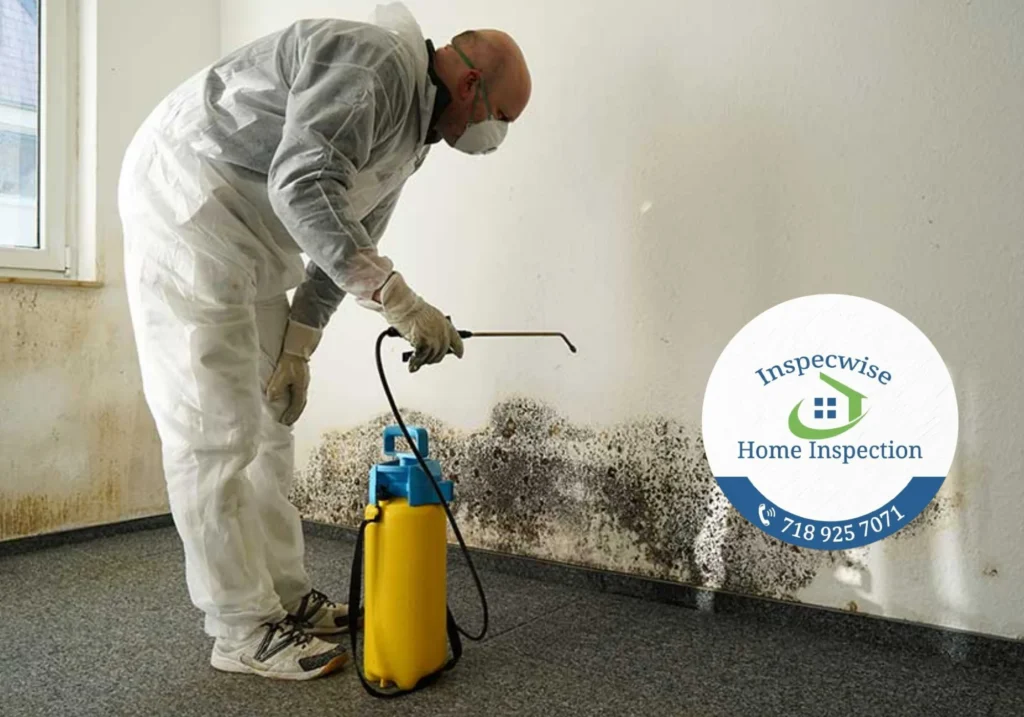
Moisture is the common thread running through much of Staten Island’s housing stock, from coastal-adjacent homes to older basements with imperfect drainage. Persistent dampness can create conditions where microbial growth becomes more likely, particularly in basements, crawlspaces, and areas around plumbing fixtures. A visual home inspection can identify staining, active moisture, musty odors, and conditions conducive to mold, but it cannot definitively confirm mold contamination or air quality. When conditions warrant it, we recommend a certified mold inspection with laboratory sampling rather than relying on a visual assessment alone.

What Does a Home Inspection Cover?
A InspecWise home inspection is a visual, non-invasive evaluation of a property’s major systems and components at the time of the inspection. Here is how we break the property down.
Roof and Exterior
We evaluate the roof covering, flashing, gutters, and downspouts for wear, damage, or improper installation, along with siding, exterior doors, windows, and any visible signs of water intrusion. Grading and drainage around the foundation get particular attention here, since poor grading is one of the most common contributors to basement moisture on Staten Island. Decks, porches, and other attached exterior structures are reviewed for structural and safety conditions where accessible.
Foundation and Structural Components
We document visible foundation cracks, signs of settlement, and structural movement, along with moisture conditions and accessible framing. In basements and crawlspaces, we look at how the structure has responded over time to soil conditions, drainage, and past moisture exposure. A home inspection identifies visible indicators of structural concern; it does not replace a structural engineering evaluation, and we will recommend one when what we observe warrants a closer look.
Electrical System
The electrical evaluation covers the main panel, visible wiring methods, outlets, switches, grounding and bonding, and the presence of GFCI and AFCI protection where it is expected. Older Staten Island homes sometimes retain outdated wiring types or amperage that no longer matches modern usage, and we document those conditions clearly. If a property’s electrical system shows conditions that need a closer look than a general inspection provides, a dedicated home electrical inspection can offer that deeper evaluation before or after closing.
Plumbing System
We review supply piping, drainage, fixtures, water pressure, visible leaks, the water heater, and shutoff valves where accessible. Older galvanized or aging supply lines, common in parts of Staten Island’s older housing stock, are noted along with their current condition. When a property’s plumbing history is unclear or the visible system suggests deeper issues, a separate home plumbing inspection or sewer scope can provide more detail than a general walkthrough allows.
HVAC
Heating and cooling systems are reviewed for age, visible condition, operation through normal controls, and basic maintenance indicators such as filter condition and unit cleanliness. For gas-fired furnaces, boilers, and water heaters, we look at venting and general installation conditions, and where questions come up about gas piping or appliance installation, they are evaluated with an understanding of the NYC fuel gas code requirements that govern that equipment. Ductwork and distribution are checked where visible and accessible.
Attic and Insulation
In the attic, we look at insulation type and coverage, ventilation, visible roof framing, and any signs of past or active leakage. Insufficient attic ventilation is a common contributor to both moisture problems and higher energy bills in older Staten Island homes, and it is one of the easier issues to flag clearly in a report.

Interior
Interior review covers ceilings, walls, floors, windows, doors, stairs, and railings, with particular attention to safety conditions such as loose railings, trip hazards, or window egress issues in bedrooms.
Basement and Crawlspace
Given how often moisture and drainage issues show up in Staten Island basements and crawlspaces, this area gets dedicated attention rather than a quick pass. We look for active or past water intrusion, sump pump function, foundation wall condition, and any signs that previous moisture problems were addressed only superficially rather than at the source.
Inspection Considerations by Property Type
Not every property is evaluated the same way, and it helps to understand where the scope of a general home inspection starts and stops.
Single-family and detached homes get the most complete version of a general inspection, since the buyer or owner is responsible for every system on the property, from the roof to the foundation to the yard drainage.
Townhouses are typically inspected similarly to single-family homes for the interior and private systems, though shared walls, party-wall conditions, and any shared exterior elements are noted where relevant.
Condos are inspected for the private unit interior and any systems that belong exclusively to that unit. Building-wide systems, common elements, and anything controlled by the condo association generally fall outside the scope of a unit inspection and are addressed through building financial documents and reserve studies instead.
Co-ops follow a similar logic. The inspection focuses on the interior of the unit, while structural and building-wide systems remain the responsibility of the co-op corporation and are typically reviewed through board documentation rather than a unit-level walkthrough.
Multi-family homes require evaluating each unit’s systems along with shared building components such as the roof, foundation, and common mechanical spaces, which takes more time than a single-family inspection of comparable square footage.
New construction should never be assumed to be defect-free simply because it is new. Skipped insulation, incomplete trim-out, and plumbing or electrical oversights happen during active construction, which is why timing matters. For homes still under construction, a pre drywall inspection allows an inspector to see framing, rough electrical, rough plumbing, and insulation before walls are closed up, catching issues that become far more expensive to fix once drywall goes up.
Older properties need the added attention to aging systems, past alterations, and moisture history described earlier in this guide, since the inspection is often the clearest picture a buyer will get of decades of accumulated wear and repair.
Home Inspection for Staten Island Buyers
Timing matters more than most buyers expect. In most Staten Island contracts, the inspection happens during a defined attorney review or inspection contingency period, so scheduling it promptly after going into contract protects your ability to act on the findings, whether that means renegotiating, requesting repairs, or in rare cases walking away.
We encourage buyers to attend the inspection whenever possible. Reading a report is useful, but standing in the basement while we explain what we are seeing, or watching us test the electrical panel, gives you context that a written report alone cannot fully capture. It is also your chance to ask questions directly: how urgent is this repair, what would it likely cost, is this a maintenance item or something more serious.
Not every finding carries the same weight. A missing outlet cover or a furnace filter overdue for replacement is a maintenance item. A cracked foundation wall with active water intrusion, or a panel with double-tapped breakers and no grounding, is a significant defect that deserves a specialist’s opinion and, often, a conversation with your attorney about next steps. Learning to tell the difference is one of the most useful things an inspection teaches a first-time buyer.
Inspection findings can absolutely factor into negotiations, whether that means a price adjustment, a seller credit, or a request for specific repairs before closing. What an inspection does not do is guarantee a problem-free property. Every home, including new construction, has issues of some kind. The goal is understanding which ones matter.
Pre-Listing Home Inspection for Staten Island Sellers
Sellers across Staten Island increasingly order a pre-listing inspection before putting a property on the market, and the logic is straightforward. Identifying defects before a buyer’s inspector does gives you control over the timeline. You can decide which repairs to make before listing, which to disclose and price into the sale, and which to leave for the buyer to address on their own terms.
A pre-listing inspection also reduces the odds of a surprise mid-contract. Few things slow down a transaction like an unexpected discovery during the buyer’s inspection that forces a renegotiation under time pressure. Knowing your property’s condition in advance lets you prepare disclosures more accurately and set expectations with buyers from the start.
It is worth being direct about the limits here: a pre-listing inspection does not guarantee a faster sale or a higher price, and it does not replace the buyer’s right to order their own inspection. What it does is put you in a stronger, better-informed position heading into negotiations.
How Much Does a Home Inspection Cost in Staten Island?
Home inspection cost in Staten Island depends on several factors rather than a single flat number: the size of the property, the type of property (condo, single-family, multi-family, or commercial), its age, how accessible the systems and structure are, the overall scope of the inspection, and whether you are adding services like radon testing, mold testing, or a sewer scope.
A small condo naturally takes less time to inspect than a large detached home with a basement, attic, and multiple mechanical systems, and pricing reflects that difference. Older homes with more complex or aging systems, or properties where access is limited, can also take longer to evaluate thoroughly. We walk through this pricing with you before booking so there are no surprises, and we can bundle specialty testing with a general inspection at a combined rate.
It is worth being cautious about inspections priced dramatically below the local market. A lower price is sometimes a sign of a shorter time on site, a thinner report, or a narrower scope of what actually gets checked. An inspection is meant to inform a decision worth hundreds of thousands of dollars, and the value of that decision depends on how thorough the underlying inspection actually was.
What Happens During a Staten Island Home Inspection?
1. Scheduling. We coordinate timing around your contract deadlines and confirm access to the property, including any lockbox codes or keys needed.
2. Pre-inspection preparation. Sellers or agents should have utilities on, all areas accessible, and pets secured before the inspector arrives.
3. Exterior evaluation. We start outside, reviewing the roof, siding, grading, drainage, and any visible exterior systems.
4. Interior evaluation. Moving inside, we review each room for functional and safety issues, along with finishes, windows, and doors.
5. Major systems review. Electrical, plumbing, and HVAC systems are tested through normal operating controls and visually evaluated throughout.
6. Accessible areas. Attics, basements, and crawlspaces are reviewed as far as safe access allows.
7. Discussion with the client. We walk through key findings on site, especially anything significant, so you leave with a clear picture rather than waiting entirely for the written report.
8. Report preparation. Findings, photographs, and recommendations are compiled into the digital report.
9. Follow-up questions. After you review the report, we remain available to answer questions as you work through next steps with your agent or attorney.
Inspection length varies with the property. A condo may take under two hours, while a larger detached home with a basement and multiple systems can take longer. We would rather take the time a property actually requires than rush through it to hit a fixed schedule.
What Is Included in a Home Inspection Report?
Our digital reports are organized by system and area, so you can move through roof, exterior, structure, electrical, plumbing, HVAC, and interior findings without hunting for information. Each finding includes a clear description of what we observed, supporting photographs, and an indication of whether it is a safety concern, a significant defect, or a maintenance item. Where a condition falls outside the scope of a general inspection, such as suspected mold, radon, or termite activity, the report notes that a specialist evaluation is recommended rather than offering a conclusion beyond what a visual inspection can support. Reports also note the limitations of the inspection itself, including areas that were not accessible on the day of the walkthrough. Reports are delivered digitally and quickly, so you have time to act on the findings while your contract timeline is still open.
What Happens After the Home Inspection?
Reviewing the Report
Start by reading the full report rather than skimming the summary. Photographs and detailed descriptions often explain context that a short bullet point cannot.
Prioritizing Findings
Not every item carries equal weight. It helps to sort findings into categories: safety concerns that need prompt attention, major defects that affect the property’s condition or value, expensive repairs that require budgeting, ordinary maintenance items, and anything flagged for a specialist’s evaluation.
Repair Negotiations
The inspection report is a tool for informed conversation, not a binding repair list. It can support a request for credits, price adjustments, or specific repairs, but the seller is not automatically obligated to fix everything identified. What gets negotiated ultimately comes down to the contract terms and the discussion between both parties, usually guided by their attorneys.
Reinspection
When repairs are completed as part of a negotiated agreement, a reinspection of just those items can confirm the work was done properly before closing. This is especially useful for significant repairs like foundation work, roof replacement, or electrical panel upgrades, where visual confirmation matters more than a contractor’s word alone.
Specialty Inspections and Testing
A general home inspection is broad by design, covering the major systems and visible condition of a property. Some conditions call for a narrower, more technical evaluation on top of that.
Mold inspection with laboratory sampling goes beyond the visual review included in a general inspection, particularly useful when moisture history or musty odors raise questions a walkthrough cannot fully answer.
Radon testing measures a gas that cannot be seen or smelled, using monitoring equipment placed in the home over several days. Because radon levels vary by soil conditions and can differ from one Staten Island property to the next regardless of age or price point, radon testing is worth considering for most home purchases, not just older homes.
Lead paint inspection applies primarily to homes built before 1978, when lead-based paint was still in common use, and requires specialized testing rather than a visual assessment.
Termite and wood-destroying insect (WDI) inspection is a separate certified report, often required by lenders, that goes beyond the general visual review for insect activity.
Dedicated plumbing and electrical evaluations make sense when a general inspection identifies aging systems or conditions that warrant a closer, more technical look than the scope of a standard walkthrough allows.
Sewer scope inspections use a camera to evaluate the condition of the underground sewer lateral, which is especially relevant for older homes where tree root intrusion or pipe deterioration is common but invisible from the surface.
Chimney evaluations are useful for older masonry chimneys, where internal flue condition often cannot be fully assessed through a general visual inspection alone.
NYC Codes and Staten Island Home Inspections
Home inspectors work from a different frame of reference than code officials. An inspection describes the current, visible condition of a property; it does not certify code compliance, and it is not a substitute for a Department of Buildings review or permit history search. That said, understanding the basics of applicable codes helps put certain findings into context.
New York City’s construction codes, including the NYC residential code provisions that apply to one- and two-family homes, set the technical standards that new construction and major renovations are built to meet. Homes built or altered under earlier code versions are not automatically considered deficient; codes change over time, and older construction is generally evaluated against the code in effect when it was built or last permitted. You can review the current New York City Construction Codes directly through the Department of Buildings.
It is also worth knowing that NYC’s building regulations are actively evolving. The city enacted a new Existing Building Code in January 2026, which will govern the alteration and maintenance of existing buildings once it takes effect, and the Department of Buildings continues to publish updated guidance as new provisions roll out. Staten Island’s older housing stock, in particular, will be affected by how these updated rules apply to renovations and alterations over time. Current information on these updates is available through the Department of Buildings’ Existing Building Code resources.
Commercial Property Inspections in Staten Island
Investors and business owners evaluating commercial property on Staten Island, from retail space in New Dorp to warehouse and light-industrial buildings elsewhere on the island, need a different level of technical review than a residential walkthrough provides. Commercial systems tend to be larger, more complex, and governed by a different set of code requirements than one- and two-family homes. A commercial inspection Staten Island engagement looks at the building’s structure, roofing, electrical capacity, plumbing, and HVAC systems with that added complexity in mind, giving investors a clearer picture of deferred maintenance and potential liabilities before closing.
Frequently Asked Questions
How much does a home inspection cost in Staten Island? Cost depends on property size, type, age, and scope, along with any added specialty testing like radon or mold. We provide a specific price based on your property before you book, rather than a single flat rate that ignores those differences.
How long does a home inspection take? Most residential inspections run roughly two to four hours, though a small condo may take less time and a large home with a basement and multiple systems can take longer.
Should I attend my Staten Island home inspection? It is not required, but we recommend it. Being on site lets you see conditions firsthand and ask questions in real time, which is often more useful than reading the report alone.
What does a home inspection include? A general home inspection covers the roof, exterior, structure, electrical, plumbing, HVAC, attic, insulation, interior, and basement or crawlspace, evaluated visually and non-invasively at the time of the walkthrough.
What does a home inspection not include? It does not include destructive testing, code compliance certification, or specialized testing like mold sampling, radon monitoring, lead paint testing, or termite certification, which require separate evaluations.
Is a home inspection required when buying a home in Staten Island? It is not legally required, but most purchase contracts include an inspection contingency, and skipping the inspection means buying without a clear picture of the property’s actual condition.
Should I get a home inspection on a new construction home? Yes. New construction can still have skipped insulation, incomplete work, or installation errors, and an inspection, ideally including a pre-drywall stage inspection, helps ensure issues are corrected before you close.
Can a home inspection find mold? A general inspection can identify moisture and conditions conducive to mold growth, but it cannot definitively confirm mold contamination. That requires a separate mold inspection with laboratory sampling.
Should I get radon testing? Radon levels vary by property regardless of age or price, and since the gas cannot be detected without equipment, testing is a reasonable step for most Staten Island home purchases.
What happens if the inspector finds major problems? Major findings do not necessarily end a deal. They typically lead to a conversation with your agent and attorney about repair requests, credits, price adjustments, or in some cases further specialist evaluation before deciding how to proceed.
Can a home inspection help with negotiations? Yes. A clear, well-documented report gives buyers a factual basis for requesting repairs or credits, though the seller is not automatically obligated to address every item found.
Do sellers benefit from a pre-listing inspection? Many do, since it identifies issues before a buyer’s inspector finds them, allowing sellers to address, disclose, or price around known conditions rather than negotiating under pressure mid-contract.
When is a reinspection necessary? Reinspection is useful after significant negotiated repairs, such as foundation work, roof replacement, or electrical upgrades, to confirm the work was completed properly before closing.
Schedule Your Staten Island Home Inspection
A home inspection is one of the clearest tools you have for understanding what you are actually buying, selling, or maintaining on Staten Island, from a St. George row house to a new build in Great Kills. InspecWise combines licensed, locally experienced inspectors with detailed digital reporting and fast turnaround, so you have real information in hand while your contract timeline is still open. We serve every corner of the island, from Tottenville to West Brighton, alongside our broader work across home inspection NYC and Long Island.
GET IN TOUCH
Schedule a Visit
`
`
Serving all Staten Island Neighborhoods: St. George • New Dorp • Tottenville • Eltingville • West Brighton • Grymes Hill • Great Kills • Annadale
`
Call Inspecwise now: 718-925-7071
Licensed, Certified, and 100% NYC Local
`