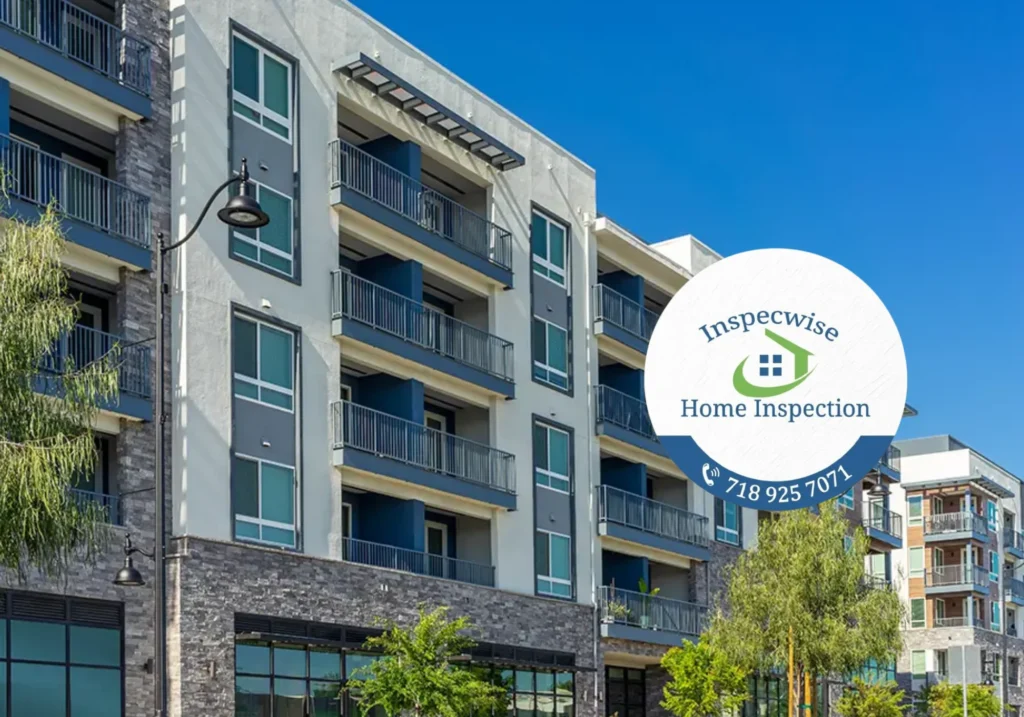
If you’re evaluating an apartment building anywhere from Washington Heights to Bay Ridge, the inspection is the single most important step between an accepted offer and a closed deal. An apartment building inspection NYC investors can rely on goes far beyond the surface it tells you what you’re actually buying before you sign anything.
I’ve walked hundreds of multi-family buildings across the five boroughs, and the pattern is always the same: the units that show well are rarely the ones with the real problems. The boiler room, the roof, and the parapet walls tell the true story. This guide covers what an apartment building inspection actually includes, why it matters, and what to expect if you’re buying, financing, or managing one.
What Is an Apartment Building Inspection?
An apartment building inspection is a structured, room-by-room and system-by-system evaluation of a residential property with multiple units typically four or more performed before purchase, refinancing, or major renovation. Unlike a walkthrough with a broker, it’s a documented physical assessment of the building’s structure, mechanical systems, life safety infrastructure, and common areas.
The goal isn’t to pass or fail the building. It’s to give you an accurate, evidence-based picture of what you’re inheriting: what works, what’s failing, what’s near the end of its useful life, and what it will cost to maintain over the next five to ten years.

Apartment building inspections are often performed alongside environmental services such as Radon Testing NYC, Mold Inspection NYC, and Sewer Scope Inspection when buyers want a more complete understanding of the property’s condition before closing.
Why Apartment Building Inspections Matter
A single mechanical failure in a multi-family building doesn’t affect one household it affects every unit tied to that system. When a centralized boiler goes down in January, you’re not dealing with one unhappy tenant. You’re dealing with a building full of them, an emergency repair bill, and potentially a violation from the city if heat isn’t restored within the legal window.
This is the core difference between apartment building inspections and single-family home inspections: the failure points are shared, the liability is shared, and the financial exposure scales with the number of units. A cracked heat exchanger, a failing roof membrane, or a blocked fire escape isn’t a $500 fix it’s a five- or six-figure problem, and it’s the kind of thing a cosmetic walkthrough will never catch.
Who Needs an Apartment Building Inspection?
- Buyers purchasing a multi-family building, co-op, or condo as their next home or investment
- Investors acquiring rental property for cash flow, appreciation, or portfolio expansion
- Property owners doing routine due diligence, refinancing, or preparing for sale
- Commercial real estate professionals advising clients on acquisitions or dispositions
- Co-op and condo boards evaluating building-wide systems ahead of capital planning or a reserve study
- Lenders and insurance underwriters who require a physical condition report before approving financing or coverage
If you’re on either side of a transaction involving a building with shared systems and common areas, an inspection protects you from surprises that don’t show up in a listing photo.
What Does an Apartment Building Inspection Include?
Structural Systems
The inspector examines the building’s foundation, load-bearing walls, floor framing, and in older NYC buildings masonry condition. Pre-war apartment buildings common throughout Manhattan and parts of Brooklyn often have brick-and-joist construction that’s held up remarkably well, but decades of water infiltration, deferred pointing, or unpermitted alterations can compromise it in ways that aren’t visible from inside a unit.
What inspectors check: foundation cracking and settlement, floor and ceiling deflection, masonry bond and mortar condition, and signs of prior structural repair.
Why it matters: structural issues are expensive to fix and can affect insurability and financing.
Common defects: stair-step cracking in brick facades, spalling at parapets, sagging floor systems in older walk-ups.
Investment risk: structural repairs can run into six figures and may require vacating units during work a direct hit to cash flow.
Roofing Systems
Most NYC apartment buildings use flat or low-slope roofs, not shingles, and the failure modes are different. A membrane that looks fine from the street can be trapping moisture underneath, quietly rotting the deck below.
What inspectors check: membrane condition (EPDM, TPO, or built-up asphalt), seams and flashing at penthouses and vents, ponding water, parapet wall and coping condition, and drainage capacity.
Why it matters: roof replacement is one of the largest single capital expenses a building will face.
Common defects: blistering membranes, clogged scuppers, deteriorated coping caps, soft spots from trapped moisture.
Investment risk: a full membrane replacement on a large apartment complex can be one of the costliest line items in a capital plan knowing its remaining life before closing lets you negotiate accordingly.
Mechanical, Electrical & Plumbing
During inspections of older apartment buildings throughout Manhattan, Brooklyn, and the Bronx, our inspectors frequently identify deferred roof maintenance and aging steam heating systems that don’t appear during routine property walkthroughs.
This is where the building’s day-to-day livability lives or dies. Centralized heating, domestic hot water, electrical distribution, and plumbing risers all serve dozens of units at once, so a single point of failure has an outsized impact.
What inspectors check: boiler condition and safety controls, hot water recovery and storage capacity, electrical panel condition and load, distribution piping, and riser condition in older buildings.
Why it matters: these systems are shared infrastructure when they fail, every tenant feels it simultaneously.
Common defects: aging low-pressure steam boilers nearing end of life, corroded circulation pumps, undersized electrical service in buildings that have added units or amenities over time, leaking or under-insulated risers.
Investment risk: a failing boiler or undersized electrical panel isn’t just a repair cost it’s a potential Housing Preservation & Development (HPD) violation if heat or hot water service is interrupted.
Fire Safety & Building Code Compliance
New York enforces some of the strictest fire and life safety codes in the country, and non-compliance carries real financial teeth from fines to insurance complications to, in serious cases, occupancy restrictions.
What inspectors check: fire alarm control panel function and service records, sprinkler and standpipe systems where present, egress corridors and stairwells, emergency lighting and illuminated exit signage, and self-closing fire doors.
Why it matters: this is the system responsible for getting tenants out safely in an emergency and the one the city scrutinizes most closely.
Common defects: expired sprinkler certification tags, obstructed egress paths, non-functioning emergency lighting, missing or damaged self-closing hardware on fire doors.
Investment risk: unresolved fire safety violations can delay a sale, trigger escrow holdbacks, or increase insurance premiums significantly.
Common Areas & Exterior
Slip-and-fall claims and premises liability lawsuits are among the most common legal exposures for apartment building owners, and they almost always originate in common areas.
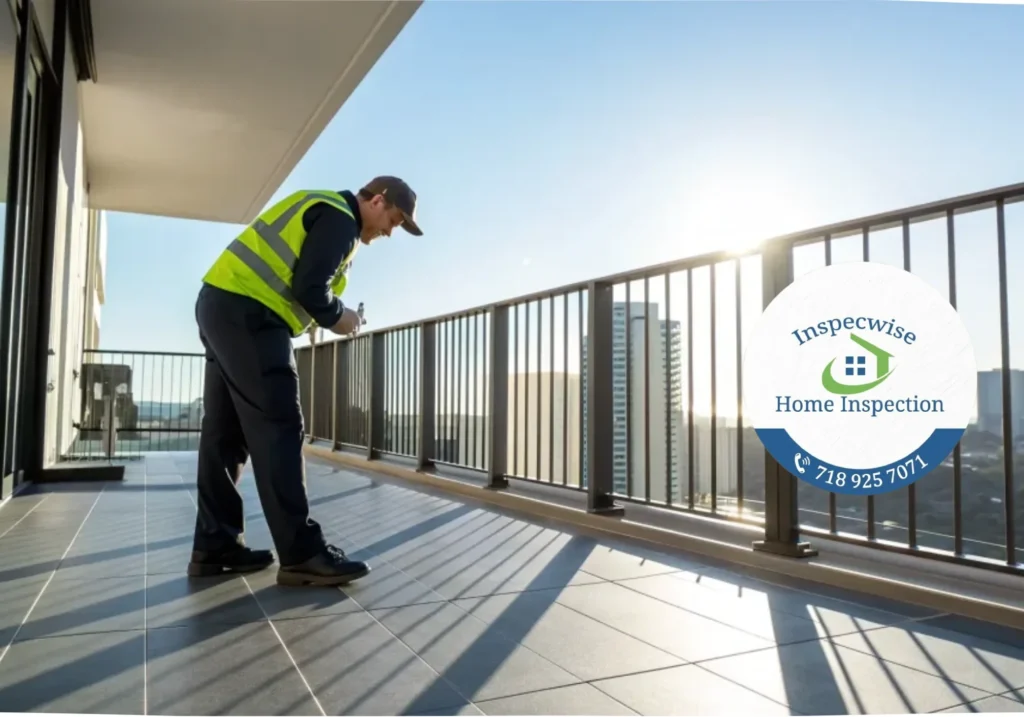
What inspectors check: sidewalks, courtyards, and parking areas; balconies, decks, and fire escapes; lobby and hallway conditions; entry security systems and intercoms.
Why it matters: as the owner, you carry legal responsibility for maintaining shared spaces in reasonably safe condition.
Common defects: cracked or heaved sidewalk slabs, rusted fire escape brackets, non-functioning door locks or intercoms, inadequate exterior lighting.
Investment risk: these are relatively inexpensive to fix individually, but neglected together they represent real liability exposure and can affect your insurance premium.
NYC-Specific Inspection Challenges
Every borough brings its own building stock, and its own inspection considerations.
Manhattan is dense with pre-war elevator buildings often beautiful, often original in ways that make aging plumbing and electrical systems a recurring theme. If you’re evaluating a single unit rather than a full building, our Home Inspection Manhattan team can help.
Brooklyn mixes classic walk-up buildings with larger elevator apartment buildings and converted mixed-use properties with ground-floor commercial space. If a smaller residential property is more your focus, Home Inspection Brooklyn covers that.
Queens has a wide range of building types, from mid-century apartment complexes to newer construction, and inspection priorities shift accordingly. For single-family or smaller multi-family evaluations, see Home Inspection Queens.
The Bronx includes many large apartment complexes and walk-up buildings where centralized heating systems are often original or near end-of-life. For non-commercial residential inspections in the borough, Home Inspection The Bronx is available.
Staten Island trends toward smaller multi-family buildings and mixed-use properties. If you need a residential inspection rather than a commercial one, Home Inspection Staten Island is the right resource.
Long Island, including Nassau and Suffolk counties, has its own mix of garden-style apartment complexes and larger multi-building communities. We also offer Home Inspection Long Island, Home Inspection Nassau, and Home Inspection Suffolk for buyers focused on single-family or smaller residential properties in those areas.
Buildings that combine ground-floor retail or commercial space with residential units above are common across all five boroughs if that describes your property, our Retail Space Inspection resource covers the additional considerations those layouts require.
Inspection Process
A typical apartment building inspection follows a consistent sequence:
- Document review — prior inspection reports, boiler and elevator certificates, violation history, and available building records.
- Exterior and roof assessment — facade, roofing systems, parapets, drainage, and site conditions.
- Mechanical systems evaluation — boiler room, electrical service, domestic water systems.
- Common area walkthrough — lobbies, hallways, stairwells, and shared amenities.
- Representative unit sampling — a selection of individual units to assess interior conditions and confirm system performance at the point of use.
- Fire safety and life safety review — alarm systems, sprinklers, egress, and code compliance items.
- Report delivery — a documented report with photographic evidence, prioritized findings, and context for negotiation or capital planning.
The full process for a mid-sized apartment building typically takes several hours on site, with larger complexes requiring additional time or multiple visits.
Buyers new to commercial or multi-family properties may also find our Home Inspection Checklist useful for understanding the inspection process and common defects inspectors evaluate before closing.
Apartment Building Inspection Cost
There’s no honest way to quote a flat price for an apartment building inspection, because the scope changes so much from one property to the next. What actually drives cost:
- Building size and unit count — more units and more square footage mean more systems and more common areas to evaluate
- Building age — older buildings, particularly pre-war construction, often require more time to assess aging mechanical and structural systems
- Accessibility — roof access, boiler room condition, and whether units are occupied or vacant all affect how efficiently an inspection can be completed
- Additional environmental inspections — services like lead-based paint testing, radon testing, mold assessment, or sewer scoping add to scope and cost when requested or required
Rather than publish pricing that won’t reflect your specific building, we recommend contacting Inspecwise directly for a customized quote. For general pricing context, see our Home Inspection NYC page.
When Investors Should Schedule an Inspection
The best time to inspect is during your due diligence period, before the purchase and sale agreement becomes binding ideally with enough time built into the contract to review the report and renegotiate if needed. Waiting until after closing means any defects found become entirely your financial responsibility with no leverage to address them.
Beyond the pre-purchase inspection, many owners and investors schedule periodic follow-up inspections often every few years, or ahead of refinancing to track the condition of major systems and plan capital expenditures proactively rather than reactively.
Frequently Asked Questions
What is included in an apartment building inspection?
A full evaluation of structural systems, roofing, mechanical/electrical/plumbing systems, fire safety and code compliance, common areas, and exterior conditions, typically supported by a representative sample of individual units.
How long does an apartment building inspection take?
It depends on building size and complexity, but most inspections take several hours on site, with larger properties sometimes requiring more than one visit.
Do investors need an apartment building inspection?
Yes. It’s the primary tool for understanding a building’s true physical condition, forecasting capital expenditures, and negotiating price or repairs before closing.
Is an apartment inspection different from a home inspection?
Yes. Apartment building inspections cover shared, high-capacity systems and common area liability that don’t apply to single-family homes. If you’re actually evaluating a single-family property, a standard Home Inspection NYC is the more appropriate service.
How often should apartment buildings be inspected?
Beyond the pre-purchase inspection, many owners schedule a follow-up every few years or ahead of major financing events to stay ahead of capital planning.
Does the inspection include common areas?
Yes lobbies, hallways, stairwells, courtyards, parking areas, and exterior walkways are all part of a full inspection.
Can an inspection help during negotiations?
Absolutely. A documented report with photographic evidence gives buyers concrete leverage to request price reductions, seller-funded repairs, or escrow holdbacks for known issues.
Is a sewer scope recommended?
For older buildings or properties with a history of drainage issues, a sewer scope is a worthwhile add-on to rule out cracked or blocked lines before they become a costly emergency.
Does the inspection cover lead-based paint or environmental hazards?
These are typically offered as add-on services rather than part of the standard scope, and are especially relevant for pre-war buildings where lead-based paint is more likely to be present.
What if the building includes commercial space on the ground floor?
Mixed-use properties require some additional considerations beyond a standard residential-only evaluation see our Mixed Use Buildings Inspection guide for what that scope adds.
Do apartment building inspections include every unit?
Typically no inspectors evaluate a representative sample of units alongside all shared systems and common areas, since inspecting every unit in a large building usually isn’t practical or necessary to assess overall condition.
Can an apartment building inspection uncover deferred maintenance?
Yes. Deferred maintenance is often the single biggest thing an inspection uncovers aging boilers, neglected roof membranes, and postponed repairs rarely show up during a standard walkthrough but carry real cost implications for a new owner.
Why Choose Inspecwise
We inspect apartment buildings across Manhattan, Brooklyn, Queens, the Bronx, Staten Island, and Long Island every week, and we’ve seen firsthand what separates a building that performs from one that quietly drains an owner’s cash flow. Our inspectors use thermal imaging to identify hidden moisture and electrical issues, moisture meters to trace active leaks, and sewer camera equipment when drainage systems need a closer look.
We’re not generalists who occasionally look at multi-family properties apartment and multi-family buildings are a core part of what we do, alongside related property types like Industrial Warehouse Inspection for investors diversifying into logistics assets. Every report we deliver is built to give you leverage: clear findings, supporting photos, and the context to make an informed decision, whether that means moving forward with confidence or walking away from a bad deal.
Serving All 5 Boroughs and Long Island: Manhattan • Brooklyn • Queens • The Bronx • Staten Island • Nassau County • Suffolk County
Call Inspecwise now: 718-925-7071
Licensed, Certified, and 100% NYC Local