Home electrical inspection services are a non-negotiable prerequisite for maintaining structural safety, regulatory compliance, and peace of mind across the five boroughs of New York City. The dense, layered architectural history of metropolitan properties means that an electrical infrastructure can range from century-old distribution systems to state-of-the-art smart grids. Navigating these systems requires a profound understanding of both historical building techniques and modern municipal mandates. Property buyers and owners often prioritize cosmetic enhancements while completely overlooking the hidden network of conduits, branch circuits, and service panels pulsing behind the drywall. Failing to proactively evaluate these hidden elements drastically increases the risk of catastrophic asset loss, localized utility failures, and severe municipal penalization.
Securing a rigorous assessment from a certified authority guarantees that every component, from the main service entrance conductors to the furthest convenience receptacle, functions within safe parameters. In NYC, where multi-family residential frameworks share walls and structural footprints, an isolated electrical failure can easily escalate into a widespread disaster. Comprehensive evaluations do not simply look for basic functional continuity; they meticulously analyze system load capacities, verify physical integrity, and identify hazardous amateur workmanship or outdated materials that violate modern safety criteria. Engaging in regular diagnostics safeguards human life, protects high-value modern electronic appliances, and ensures the long-term viability of your real estate investments.
Investing in a targeted physical evaluation becomes particularly critical when navigating complex environmental transitions, such as evaluating an older asset for hidden moisture issues. Property owners frequently discover that hidden water infiltration from compromised building envelopes or degraded domestic supply lines can migrate directly into structural framing spaces, saturating branch wiring and causing catastrophic tracking faults. Integrating a specialized Home Mold Inspection alongside your physical electrical evaluation allows asset owners to detect hidden moisture reservoirs before they corrode metallic conduit systems or degrade non-metallic sheathed cable jackets. This holistic approach ensures that underlying structural moisture problems are completely remediated before new, code-compliant infrastructure is deployed, keeping your property safe from both biological hazards and hidden fire risks.
Navigating the Maze of Local Codes
The legal architecture governing metropolitan utility systems is extraordinarily demanding, dictated primarily by the New York City Electrical Code and its continuous local amendments to the National Electrical Code (NEC). The New York City Department of Buildings (DOB) enforces stringent, hyper-localized regulations that are significantly more restrictive than general national standards due to the unique risks of high-density urban living. For instance, the widespread use of non-metallic sheathed cable, commonly known as Romex, is strictly prohibited in the vast majority of commercial applications and multi-family residential structures throughout the city. Instead, local ordinances mandate the use of heavy-duty metal-clad cable (MC cable) or rigid electrical metallic tubing (EMT) to provide robust physical protection against physical damage and persistent urban rodent activity.
Staying compliant with these evolving municipal frameworks requires a deep understanding of current safety milestones, such as the mandatory implementation of Arc-Fault Circuit Interrupter (AFCI) and Ground-Fault Circuit Interrupter (GFCI) protection across expanded residential zones. According to recent updates aligned with modern NFPA 70 standards, GFCI protection is now explicitly required for all kitchen receptacles regardless of their specific distance from a sink basin, completely eliminating historical distance limitations. Furthermore, current local mandates require comprehensive surge protection devices (SPDs) at the main distribution level for all newly constructed or fundamentally modernized multi-family residential properties. Navigating these shifting regulations without professional guidance is an immense liability that can quickly lead to severe financial penalties, formal building violations, and the complete denial of insurance coverage in the event of an emergency.
Navigating these regulatory frameworks requires careful planning, particularly when managing multi-family assets or commercial real estate footprints across the outer boroughs. Property owners frequently encounter complex building violations when unpermitted modifications are made to primary service equipment or when systemic utility defects are identified by municipal inspectors. Securing a professional Home Inspection Manhattan ensures that your premium real estate assets remain entirely compliant with the latest local administrative codes, effectively eliminating the risk of costly stop-work orders or punitive municipal fines. Whether you are dealing with a historic brownstone near Central Park or a modern high-rise development, verifying the structural and systemic integrity of your asset protects your capital and satisfies strict underwriting criteria.
Evaluating Service Panels and Overcurrent Protection
The primary electrical panel, often referred to as the service equipment or main distribution board, serves as the central nervous system of any residential utility infrastructure. During a comprehensive evaluation, an inspector’s primary objective is to verify that the overall service capacity, measured in amperes, is fully capable of supporting the property’s total calculated operational load. Many older residential units in the outer boroughs still operate on legacy 60-amp or 100-amp services, which are entirely inadequate for modern households equipped with high-draw appliances like electric vehicles, induction cooktops, and multi-zone split-system heat pumps. An expert inspector will carefully calculate the demand load according to local code criteria to determine if a comprehensive service upgrade to a modern 200-amp configuration is necessary.
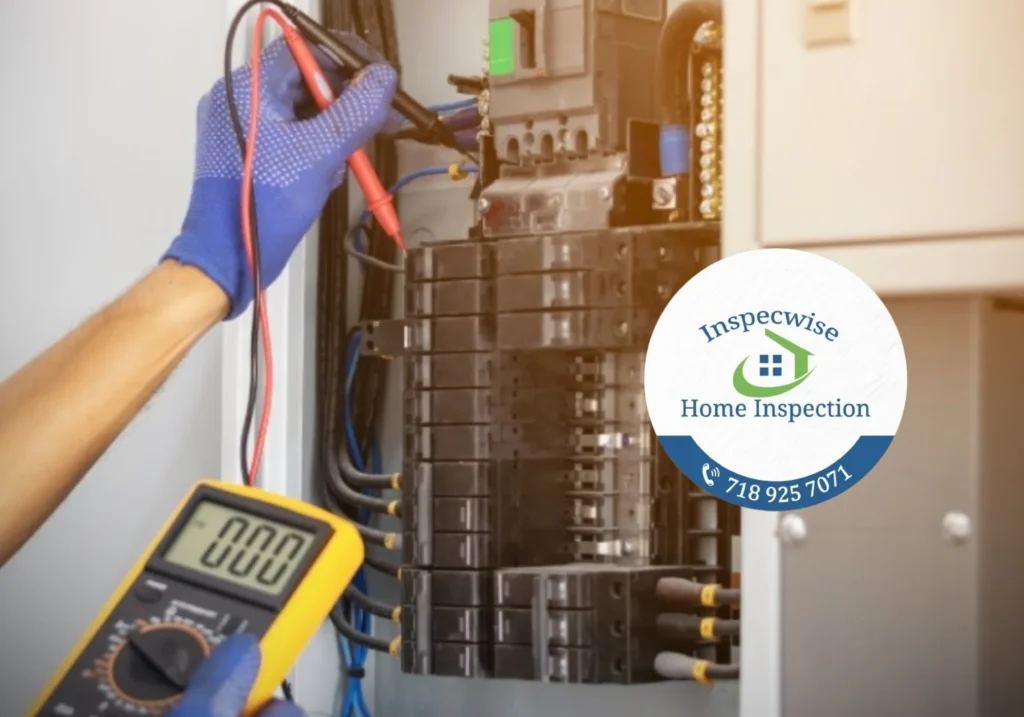
Beyond raw capacity, the physical condition and manufacturing history of the overcurrent protective devices must be meticulously examined for latent defects. Legacy components, particularly unclassified Zinsco panels or Federal Pacific Electric (FPE) Stab-Lok circuit breakers, represent a severe, well-documented hazard due to their systemic mechanical failure rates. These defective units frequently exhibit a dangerous condition known as “no-trip,” where the internal bi-metallic strip fails to separate during a sustained electrical overload or direct short circuit, allowing lethal amounts of current to heat the branch wiring to catastrophic levels. A professional diagnostic assessment involves removing the dead-front cover of the enclosure to inspect for:
- Evidence of severe localized thermal discoloration or direct arcing along the main busbar assemblies.
- Improperly matched overcurrent protective devices, such as a 20-amp breaker erroneously feeding a lighter 14-gauge copper conductor, which creates a critical fire hazard.
- Illegally double-tubed or “double-baffled” circuit terminations, where two independent branch conductors are jammed into a single terminal screw not explicitly rated for multiple wires.
- The presence of ungrounded or poorly bonded enclosure shells that fail to provide a reliable path to ground during a fault event.
Identifying Historical and Hazardous Wiring Methods
Uncovering historical, obsolete wiring methods is one of the most common challenges encountered when analyzing classic real estate assets across older metropolitan neighborhoods. Chief among these legacy hazards is knob-and-tube wiring, an open-air distribution methodology utilized from the late 1880s through the 1940s that relies on ceramic knobs for structural support and porcelain tubes to shield conductors passing through wooden framing members. While functionally sound when perfectly intact and operating under minimal loads, this ungrounded, two-wire system is inherently incompatible with modern safety requirements. Because it relies on free-air dissipation to cool the individual conductors, the common practice of blowing modern cellulose or fiberglass insulation directly on top of legacy knob-and-tube configurations creates an immediate fire hazard by trapping heat.
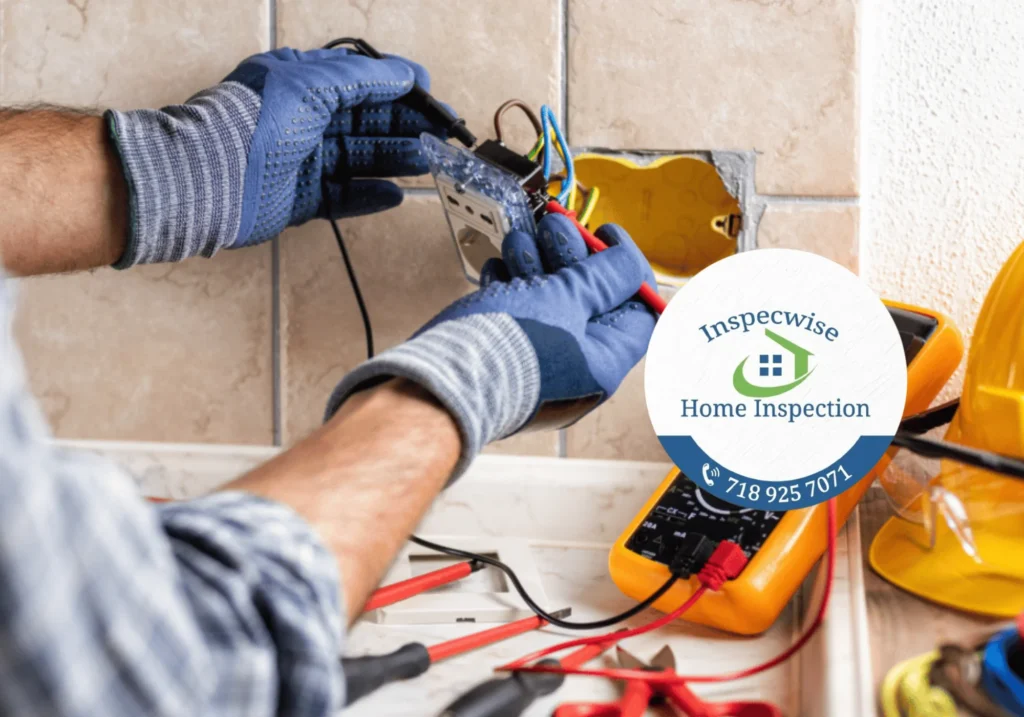
Another critical historical hazard frequently uncovered during residential evaluations is legacy aluminum branch-circuit wiring, which was widely used as a cost-effective substitute for copper between 1965 and 1973. Solid aluminum conductors possess unique physical properties, including a significantly higher rate of thermal expansion and a susceptibility to creeping under continuous mechanical pressure. These characteristics cause the wire to gradually work itself loose from standard terminal screws over time, creating high-resistance connections that generate intense localized heat. Furthermore, exposed aluminum rapidly develops a thin layer of aluminum oxide, an electrical insulator that further restricts current flow and accelerates thermal degradation. Inspectors look for approved remediation methods, such as specialized CO/ALR rated devices or certified Copalum crimp thermal connections, to ensure these systems are stable and safe.
Maintaining a highly functional and reliable infrastructure requires evaluating all interconnected mechanical systems that support modern property operations. For example, modern high-efficiency HVAC units and home automation networks require flawless voltage stability, which cannot be achieved if the property has undetected vulnerabilities in adjacent utilities. Scheduling a comprehensive Home Plumbing Inspection allows property owners to simultaneously address two of the most critical systems in an asset, verifying that domestic waste lines are safely isolated from electrical distribution pathways. Eliminating the risk of cross-contamination between hidden pipe leaks and branch circuit raceways prevents catastrophic short circuits and keeps your property operating efficiently.
Assessing Branch Circuits and Outlets
The final distribution points of any residential electrical system the branch circuits, lighting fixtures, and convenience receptacles require exhaustive field testing to confirm operational safety. A skilled investigator utilizes specialized diagnostic instruments, such as an asymmetric loop impedance tester or a high-end circuit analyzer, to evaluate the integrity of individual outlets. One of the most pervasive issues identified in older, un-modernized homes is the presence of ungrounded three-prong receptacles. This hazard occurs when a modern three-prong outlet is installed on an older two-wire system without a functional equipment grounding conductor, falsely signaling to occupants that their sensitive electronic equipment or heavy appliances are safely grounded.
To resolve these ungrounded outlet issues without rewiring the entire room, local building regulations allow for the strategic installation of GFCI receptacles labeled as “No Equipment Ground.” This modification protects human life by interrupting current flow during a ground fault, although it does not provide an actual ground path for surge protection. Furthermore, an inspector will methodically verify the integrity of polarity across all connected devices, checking for inverted hot and neutral connections that leave appliances energized even when switched off. The physical placement and functionality of specialized safety devices are examined against strict performance criteria:
- Confirming that all AFCI devices correctly identify low-level, intermittent arcing patterns caused by frayed appliance cords or loose terminations behind walls.
- Testing GFCI mechanisms manually and via induced ground faults to ensure they interrupt current within the mandated millisecond thresholds.
- Checking for the presence of tamper-resistant receptacles (TRR) in all residential units to prevent childhood injury from foreign object insertion.
- Evaluating the structural alignment and physical retention force of outlet contacts to prevent loose plugs from generating localized resistive heating.
Special Regional Considerations for New York Boroughs
The geographical diversity across the different regions of New York dictates distinct logistical and physical challenges that influence the scope of an electrical evaluation. For instance, properties situated within low-lying coastal sectors require specialized protection measures due to their vulnerability to severe weather events and rising water tables. Infrastructure in these high-risk zones must feature elevated service equipment, NEMA 4X weather-proof enclosures, and corrosion-resistant components to withstand prolonged exposure to salt air and potential flooding. Conversely, dense urban areas present unique challenges due to their reliance on interconnected sub-panels, complex multi-meter configurations, and complex shared utility basements.
Property buyers navigating these diverse regional markets must tailor their due diligence based on the specific architectural styles dominant in each borough. Whether you are purchasing a historic masonry townhouse in Brooklyn, a detached single-family home in Queens, or an estate out east, understanding local environmental risks is paramount to a secure transaction. Partnering with localized experts who offer dedicated assessments throughout the Bronx, Brooklyn, Queens, Staten Island, Nassau, and Suffolk counties ensures that your inspection covers regional vulnerabilities, from subterranean water entry to legacy industrial grid tie-ins. This extensive geographical knowledge helps you anticipate infrastructure issues before they disrupt your operations.
The age of the local housing stock across these outer communities also drastically increases the likelihood of encountering hazardous unpermitted modifications or DIY electrical work. Over decades of changing ownership, amateur landlords frequently run improper extension cords through walls, install sub-panels without proper overcurrent protection, or overload legacy circuits to accommodate modern air conditioning demands. A professional inspection untangles these historical modifications, ensuring the property is structurally sound and fully compliant with all local ordinances. This comprehensive approach provides clarity and confidence for any prospective buyer or real estate investor entering these competitive markets.
Advanced Diagnostic Methods and Thermal Imaging
Modern property diagnostic evaluations have evolved far beyond simple visual check-outs and basic voltage readings. Today’s elite inspectors leverage cutting-edge technology like infrared thermography to detect hidden anomalies without destroying finishes or opening walls. By utilizing high-resolution thermal imaging cameras, an inspector can scan closed circuit breaker panels, hidden junction boxes, and structural wall spaces under full operational load. This non-invasive process identifies hidden “hot spots” caused by loose terminations, overloaded conductors, or unbalanced phases long before these issues escalate into full-scale system failures or electrical fires.
Analyzing these thermal profiles requires extensive training and professional certification to accurately differentiate between normal operating temperatures and true structural defects. A high-resistance connection at a breaker terminal screw, for example, will display a distinct thermal signature, pinpointing exactly where a technician needs to intervene. Additionally, advanced inspectors utilize megohmmeter testing (commonly known as “meggering”) to evaluate the insulation resistance of older or submerged conductors. This test applies a controlled high voltage to the wiring system to detect microscopic breakdowns in the protective jacket, catching hidden safety hazards before they trip a breaker or shock an occupant.
Why Choose Inspecwise
Inspecwise stands as the premier authority for high-end residential and commercial property inspections throughout the New York metropolitan region, delivering unmatched technical precision and elite reporting. Our elite team of certified inspectors possesses a profound understanding of the complex architectural history, shifting municipal codes, and unique environmental demands that define New York real estate. Utilizing advanced diagnostic equipment, including high-resolution infrared thermography and comprehensive circuit analysis tools, we meticulously analyze every element of your building’s infrastructure. When you partner with Inspecwise, you receive a detailed, highly sophisticated digital report that clearly translates complex technical findings into actionable insights, protecting your financial assets and ensuring absolute safety. Whether you are acquiring a landmark brownstone, a sprawling multi-family complex, or a luxury coastal estate, Inspecwise provides the elite clarity and confidence required to safeguard your investments in the world’s most competitive market.
Serving All 5 Boroughs and Long Island: Manhattan • Brooklyn • Queens • The Bronx • Staten Island • Nassau County • Suffolk County
Call Inspecwise now: 718-925-7071
Licensed, Certified, and 100% NYC Local