Commercial building inspection NYC require an exceptional level of technical diligence. Navigating the sheer complexity of local real estate, preserving centuries of architectural history, and complying with some of the most stringent municipal regulations in the world means there is absolutely zero room for oversight. For property owners, institutional investors, asset managers, and commercial tenants across the five boroughs, navigating the intricate web of structural, mechanical, electrical, and life-safety systems requires more than a standard overview. This localized guide breaks down the essential components of elite commercial property inspections, providing the deep technical insights and critical compliance knowledge necessary to safeguard high-value metropolitan real estate assets.
Comprehensive commercial property inspections in NYC demand a deep understanding of local architectural history. No two New York City properties are alike, meaning a rigorous physical assessment must adapt to the distinct structural characteristics found within each borough. Whether inspecting century old brickwork in a historic neighborhood or evaluating the intricate engineering of a modern high-rise, our approach changes based on the specific architectural demands of the local area. Whether analyzing a steel-frame high-rise office tower in Midtown, a heavy timber industrial warehouse, or a mixed-use pre-war property, a commercial building inspection NYC must deploy advanced property condition assessments (PCAs) that align with ASTM E2018 standards while incorporating local structural realities. To protect your investment due diligence must go deeper than the surface. Our assessments uncover hidden latent defects and outline clear projections for immediate and long-term capital expenditures. Through detailed physical condition surveys, we determine the Remaining Useful Life (RUL) of core building systems giving you the exact data needed for accurate financial forecasting.
Navigating the Structural Realities of NYC Commercial Property Type
- Pre-War Cast-Iron and Heavy Timber Framing: Many historic commercial properties, particularly those found in the Soho, Tribeca, and Dumbo industrial corridors, utilize structural cast-iron columns paired with heavy timber floor joists. Evaluating historic structural support systems requires an expert eye. We meticulously assess critical structural members for deflection, scanning timber framing for dry rot, active moisture degradation, and wood-boring insect damage before they compromise the building.At the same time, we inspect critical cast-iron components for hairline fractures or structural settling that could signal deeper foundational issues.
- Reinforced Concrete and Structural Steel High-Rises: The structural core of a modern high-rise relies entirely on two systems: robust reinforced concrete shear walls or fireproofed structural steel frames. To protect these vital assets, our inspections focus heavily on the subterranean level. We thoroughly check foundational vaults and basements for settling cracks and damaged concrete. By catching things like shifting water tables or subway vibrations early, we stop minor issues from turning into major structural problems.
- Mixed-Use Unreinforced Masonry Buildings: For mixed-use properties built with load-bearing unreinforced masonry (URM), maintaining lateral stability is a top priority. We provide intensive structural scrutiny of exterior brickwork, lintels, and joist pockets accurately identifying shifting, bulging facades, and failing mortar joints that put the asset at risk.
- Commercial Storefronts and Curtain Wall Assemblies: Modern corporate office spaces utilize complex glass and aluminum curtain walls or specialized storefront framing. We inspect critical building systems for failed thermal seals, degrading structural anchors, and air or water leaks. Our rigorous evaluation ensures minor envelope issues don’t spiral into massive energy loss or hidden interior structural damage.
Mechanical, Electrical, and Plumbing Infrastructure Breakdown
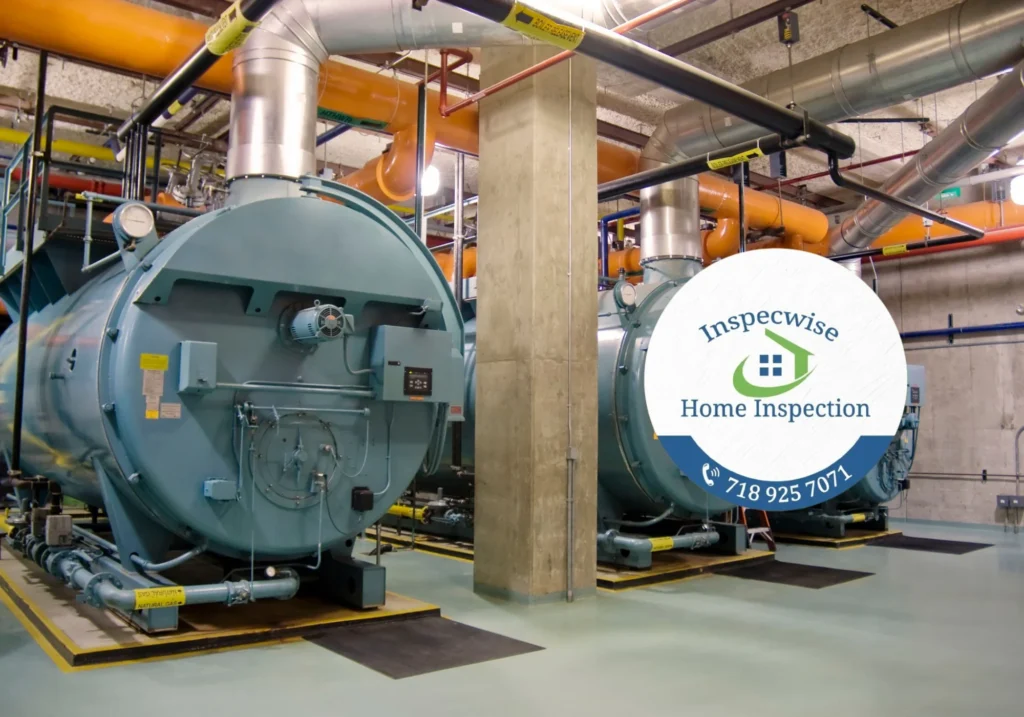
Think of a large NYC commercial building like a living organism its mechanical system is the heartbeat, and it is incredibly complex. When you walk into the basement, you’ll usually see a wild mix of vintage, historic machinery running right alongside brand-new systems. A real, honest inspection means rolling up our sleeves and checking all of it: the massive heating setups, the giant cooling systems, and the maze of electrical wiring. This local context matters immensely. If you are buying an old, converted waterfront warehouse, booking a specialized Commercial Inspection Brooklyn profile is essential because you are inheriting the building’s industrial past. Those old factories often leave behind heavily modified or overworked systems that need an extra-careful look before you sign on the dotted line.
Heating these massive traditional properties usually comes down to giant steam boilers running on gas or oil. We get right in there to check the tanks for nasty mineral buildup, inspect the heat-resistant linings for cracking, and test the safety valves so nothing overheats. For cooling these buildings use heavy-duty chiller plants and giant rooftop cooling towers.
The electricity running through a commercial building needs a deeply careful look. We trace the power from the main lines coming in off the street all the way down to the individual breaker panels. To do this safely and accurately, we use special infrared thermal cameras to scan inside the main electrical boards. This lets us literally “see” hidden hot spots, loose wires, or overloaded circuits before they ever have a chance to spark a fire. Lastly, we make sure the building has enough raw power to handle busy daily operations, and we test the backup generators so that if the neighborhood grid blanks out, your critical safety and communication lines stay up and running.
Mandatory New York City Building Code and Safety Compliance
- Local Law 152 Gas Piping Inspections: Commercial building owners must comply with strict periodic gas piping safety inspections executed by a Licensed Master Plumber (LMP). The building inspection checks all exposed gas lines from the point of entry into the structure, through common public spaces, boiler rooms, and commercial tenant areas to identify atmospheric corrosion, illegal gas line extensions, or active methane leaks, requiring electronic filing via the DOB NOW digital platform.
- Local Law 11 Facade Inspection Safety Program: Properties rising higher than six stories are legally mandated to undergo a meticulous facade evaluation every five years under the Façade Inspection Safety Program (FISP). A Qualified Exterior Wall Inspector (QEWI) evaluates the exterior envelope including brickwork, terracotta ornaments, stone panels, and mortar joints classifying the building status as Safe, Safe with a Repair and Maintenance Program (SWARMP), or Unsafe to mitigate the public danger of falling masonry debris.
- Local Law 126 Parking Structure Inspections: Any commercial property that incorporates an attached or standalone parking garage structure must undergo periodic structural observations conducted by a Qualified Parking Structure Inspector (QPSI). This mandate involves an in-depth review of concrete decks, post-tensioned cables, structural columns, drainage installations, and joint seals to catch concrete spalling or structural deterioration caused by continuous exposure to vehicular loads, moisture, and deicing salts.
- Annual Boiler, Elevator, and Fire Alarm Certifications: The New York City Department of Buildings mandates annual safety testing and third-party certifications for all high-pressure and low-pressure boilers, commercial elevator traction or hydraulic devices, and fire alarm control panels. Inspectors check that current inspection certificates are visibly displayed, logging all open or past violations listed in the public Building Information System (BIS) database to prevent heavy administrative fines and stop-work orders.
Environmental Due Diligence and Capital Risk Mitigation
Environmental factors play an enormous role in defining the risk profile of commercial real estate investments within the dense metropolitan area. An elite building inspection must consider potential environmental liabilities by incorporating Phase I Environmental Site Assessments (ESAs) to uncover recognized environmental conditions (RECs). In historical business districts, like those evaluated during a comprehensive Commercial Inspection Manhattan project, old printing shops, dry cleaning facilities, or underground storage tanks (USTs) can harbor subsurface chemical plumes or heavy oil contamination that requires costly mitigation or active vapor intrusion barrier systems.
Interior environmental hazards are also highly prevalent in older commercial builds. Inspectors look for asbestos-containing materials (ACM) commonly found in historic pipe insulation, fireproofing sprays, floor tiles, and roofing materials, which demand strict remediation protocols if the building is to undergo future renovation. Furthermore, lead-based paint (LBP) on structural steel components, mold infestations inside HVAC duct networks due to unmanaged humidity control, and elevated radon concentrations in below-grade commercial basements or subterranean vaults must be thoroughly investigated to protect indoor air quality and prevent significant future legal liabilities.
The financial health of a commercial real estate asset is inextricably linked to the precise projection of future capital expenses required to keep the building functional and code-compliant. When assessing vast portfolios across different geographic sectors, including industrial hubs that require an expert Commercial Building Inspection Bronx approach, identifying deferred maintenance is crucial. Uncovering systemic roof deck deflections or failing commercial electrical subpanels allows investors to structure strategic price reductions during contract negotiations, ensuring they are not saddled with immediate, unexpected multi-million dollar capital outlays post-acquisition.
Roof Assemblies, Exterior Envelope, and Moisture Intrusion Barriers
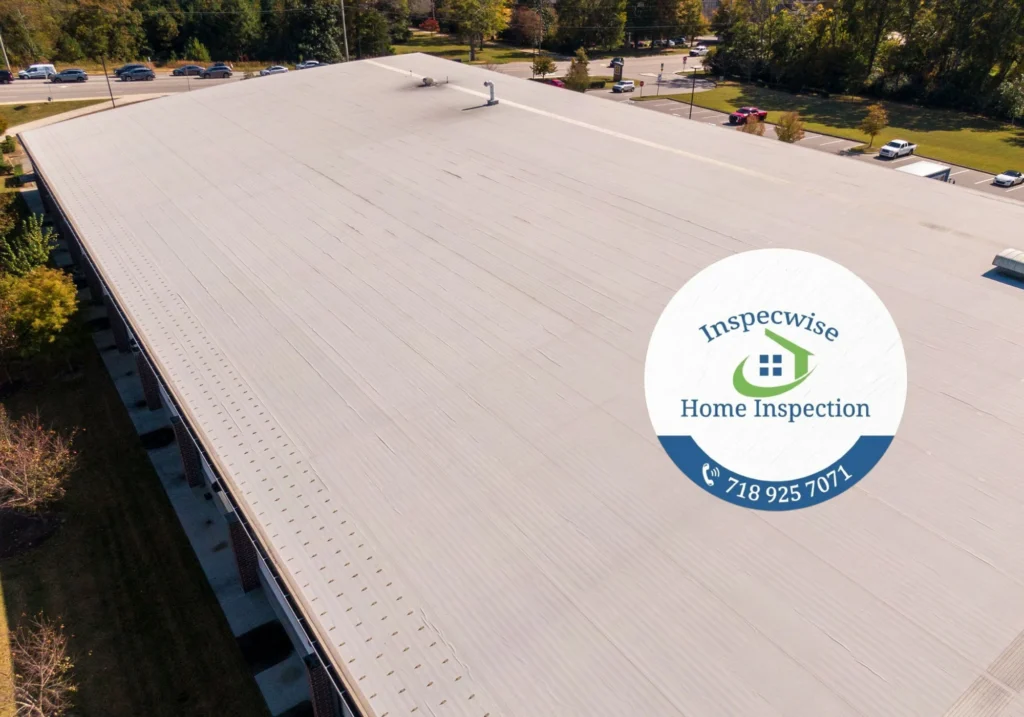
The roof assembly of a commercial property represents its primary line of defense against severe weather patterns, making its evaluation a critical phase of the physical condition survey. Commercial buildings typically deploy low-slope flat roof systems, including Modified Bitumen, EPDM (Ethylene Propylene Diene Monomer) rubber membranes, or multi-layer Built-Up Roof (BUR) assemblies. Inspectors carefully examine the entire field membrane for signs of blistering, ponding water, open lap seams, or mechanical punctures. Special attention is dedicated to roof penetrations, gravel stops, counter-flashing details, and parapet walls, ensuring that copings are securely anchored and free of structural cracks that allow moisture to penetrate behind the exterior cladding.
Moisture intrusion through the exterior envelope is one of the most destructive forces a commercial asset can encounter. Inspectors leverage high-resolution thermal imaging cameras during post-rain assessments to trace hidden moisture pathways traveling through exterior brick veneers, concrete blocks, or synthetic stucco systems. For property owners managing multi-borough portfolios, cross-referencing these findings with an exhaustive Commercial Property Inspection Queens profile highlights the critical value of moisture mapping, especially near coastal or highly exposed areas where wind-driven rain can easily breach degraded window caulking, failed expansion joints, or improperly installed weep hole networks.
Fire Protection Systems and Life-Safety Infrastructure
- Automatic Fire Sprinkler System Piping: Inspectors evaluate the entire fire suppression network, checking for corrosion on black steel sprinkler piping, assessing the condition of upright, pendent, or sidewall sprinkler heads, and confirming that the main control valves are locked in the open position and electronically supervised by the building’s central monitoring system.
- Fire Pump and Standpipe Assemblies: For tall commercial structures, specialized diesel or electric fire pumps are checked to ensure they provide adequate hydraulic head pressure to upper levels. The standpipe systems including dry and wet configurations are evaluated for structural soundness, ensuring that fire department connections (FDC) on the building exterior are clear, capped, and fully operational for emergency personnel.
- Fire Alarm Control Panels and Detection Devices: The central fire alarm control unit is inspected for active fault lights, ground faults, or communication errors. The field assessment covers smoke detectors, thermal sensors, manual pull stations, and duct smoke detectors designed to shut down supply fans instantly, preventing the dangerous migration of toxic smoke through the building’s central ventilation pathways.
- Egress Paths, Fire Doors, and Emergency Lighting: Exit enclosures, stairwells, and primary egress corridors must be kept completely free of obstructions. Inspectors verify that fire-rated doors are equipped with operational self-closing hinges and positive latching hardware, while confirming that emergency exit signs and battery-powered backup lighting units function properly during simulated main breaker disconnect tests.
Accessibility, Americans with Disabilities Act, and Egress Compliance
Ensuring compliance with the Americans with Disabilities Act (ADA) Title III is an essential component of due diligence during a commercial real estate transaction. Failure to provide an accessible path of travel can expose commercial property owners to costly civil litigation, civil penalties, and expensive mandatory retrofits. Inspectors evaluate the primary property arrival points, checking accessible parking space dimensions, curb ramps, and exterior walkways for steep slopes or abrupt vertical changes that exceed strict statutory limits.
Inside the commercial space, the structural survey covers door opening widths, threshold heights, and interior ramp configurations. Restroom facilities are evaluated extensively, measuring toilet seat heights, grab bar placements, knee clearance spaces beneath lavatory sinks, and the operational force required to manipulate faucets and dispenser hardware. For older urban centers, such as those covered within a detailed Commercial Inspection Staten Island review, balancing ADA accessibility requirements with the architectural limitations of historic structures is an art form, requiring strategic planning to implement compliant modifications without destroying the building’s historic facade or structural framing.
Energy Efficiency, Sustainability, and Carbon Emissions Mandates
Commercial energy management has shifted from a voluntary operational strategy to a strict legal obligation driven by pioneering municipal sustainability mandates. Most notably, Local Law 97 establishes stringent carbon emissions limits for buildings exceeding 25,000 square feet, imposing severe financial penalties on property owners who fail to reduce their greenhouse gas footprints. A comprehensive commercial building inspection NYC analyzes energy-consuming systems to identify inefficient infrastructure, evaluate insulation values, and provide actionable building upgrade paths to avoid massive municipal fines.
Inspectors analyze the building envelope’s thermal performance, checking for drafts around window banks, evaluating the R-value of roof insulation, and identifying massive thermal bridging points across concrete slab edges. Mechanical systems are scrutinized for energy-wasting operations, such as constant-volume HVAC configurations lacking variable frequency drives (VFDs), single-stage boilers operating without outdoor reset controls, or antiquated interior lighting layouts that do not utilize low-wattage LED retrofits and smart occupancy sensors.
For real estate portfolios stretching deep into suburban commercial zones, extending these rigid energy reviews via a Commercial Inspection Suffolk plan ensures that sprawling warehouse complexes and retail strip centers are fully optimized against rising utility costs. Similarly, incorporating a focused Commercial Inspection Nassau protocol allows suburban office park owners to benchmark their central cooling loops, commercial glazing, and energy footprints against modern green building standards, protecting their market valuation and attracting premium commercial tenants who prioritize environmental sustainability.
Comprehensive Due Diligence, Reporting, and Risk Mitigation
The ultimate deliverable of a professional commercial inspection is a highly detailed, legally defensible property condition report that serves as the foundation for high-stakes financial decision-making. This report aggregates all field findings, infrared thermographic imagery, compliance violation histories, and environmental test results into an actionable executive summary. By compiling an exhaustive Immediate Costs schedule alongside a 12-year Capital Reserve Plan, inspectors give investors the exact data required to calculate the accurate internal rate of return (IRR) for the target commercial asset.
Armed with an elite property assessment, commercial buyers can confidently step to the negotiating table. If the commercial building inspection reveals a failing curtain wall assembly, an outdated fire alarm panel, or an unmitigated environmental liability, the buyer can leverage these highly concrete technical details to secure substantial price concessions or require the seller to remediate the deficiencies prior to closing title, transforming the property inspection from a simple administrative task into an invaluable asset protection tool.
Why Choose Inspecwise
Inspecwise represents the premier engineering and commercial property inspection authority operating across the complex real estate markets of New York City and its surrounding regions. Backed by a team of elite structural specialists, licensed master professionals, and expert thermographers, Inspecwise delivers unparalleled technical accuracy, meticulous due diligence assessments, and comprehensive property condition reports that satisfy the highest institutional investment standards. Our deep, hyper-local mastery of the New York City Department of Buildings regulations, complex local laws, historical pre-war architecture, and modern mechanical high-rise systems ensures that every potential capital risk, hidden structural defect, and municipal compliance issue is identified before it can impact your financial bottom line. When navigating high-stakes metropolitan real estate acquisitions, corporate leasing agreements, or portfolio asset management, choosing Inspecwise means securing the absolute highest echelon of technical oversight, operational clarity, and elite risk mitigation available in the commercial industry today.
Serving All 5 Boroughs and Long Island: Manhattan • Brooklyn • Queens • The Bronx • Staten Island • Nassau County • Suffolk County
Call Inspecwise now: 718-925-7071
Licensed, Certified, and 100% NYC Local